The British Museum’s exhibition on the Japanese master printmaker Utagawa Hiroshige (1797-1858) includes Van Gogh’s own copy of a print which he used in a painting in homage. Fresh research reveals how he copied the Hiroshige.
Hiroshige: Artist of the Open Road (until 7 September) showcases the work of one of the 19th-century’s greatest Japanese artists, with over 100 prints (many from the American collector Alan Medaugh). Although Van Gogh plays a secondary role in the London exhibition, the British Museum has secured rare loans which emphasise how Japanese art inspired avant-garde European artists.
It was while Van Gogh was living in Paris in 1886-88 that he discovered Japanese art, buying over 600 prints from the noted dealer Siegfried Bing. Most of these survive at the Van Gogh Museum in Amsterdam, and they include no fewer than 78 by Hiroshige.
Van Gogh’s tribute to Hiroshige is expressed most dramatically in two paintings that were based on the Japanese artist’s prints. The first was inspired by Hiroshige’s The Plum Garden at Kameido (1857), an early morning view of blossom in a district in Edo (now Tokyo).
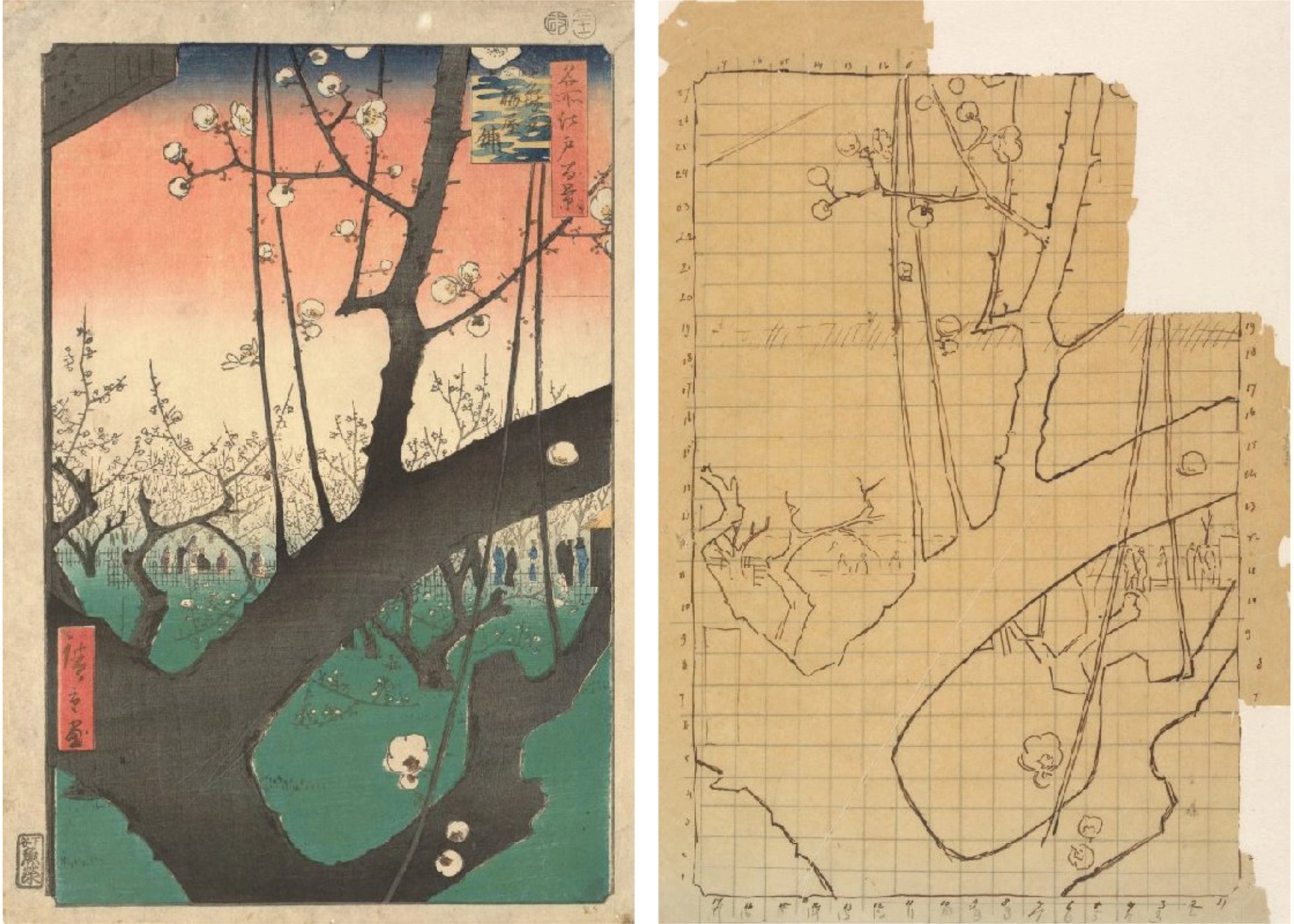
Van Gogh’s own copy of Hiroshige’s print The Plum Garden at Kameido (1857) and Van Gogh’s squared-up tracing used for his painting (October-November 1887)
Van Gogh Museum, Amsterdam (Vincent van Gogh Foundation)
Van Gogh’s copy of the print of The Plum Garden at Kameido is on display in the British Museum exhibition, on loan from Amsterdam. The Dutch artist’s own surviving copies of Japanese prints are only very occasionally lent by the Van Gogh Museum, for conservation reasons, and this particular one has been loaned only once, when it went to Hamburg in 2002.
Van Gogh’s copy of Hiroshige’s print has long ago faded, but this reflects the fact that during the Dutchman’s time in Paris Japanese prints were inexpensive and treated casually. Van Gogh paid an average of 15 centimes—the French currency of the time—per print, not much more than the price of a coffee. Copies of The Plum Garden at Kameido typically now sell for around £50,000.
Having acquired a copy of the print, Van Gogh made a tracing of the composition. He then carefully squared it up, enlarging it slightly for his painting. This tracing is also at the British Museum.
Capucine Korenberg, a British Museum senior scientist, has just made an important discovery. She noticed a short pencil line (five centimetres long) on the upper-right side of the print, just where the background changes from pink to cream. It links up exactly with the cut part of Van Gogh’s tracing. This confirms that this example of the print was used by the Dutch artist for the composition—as a guide to place his tracing paper over the print.
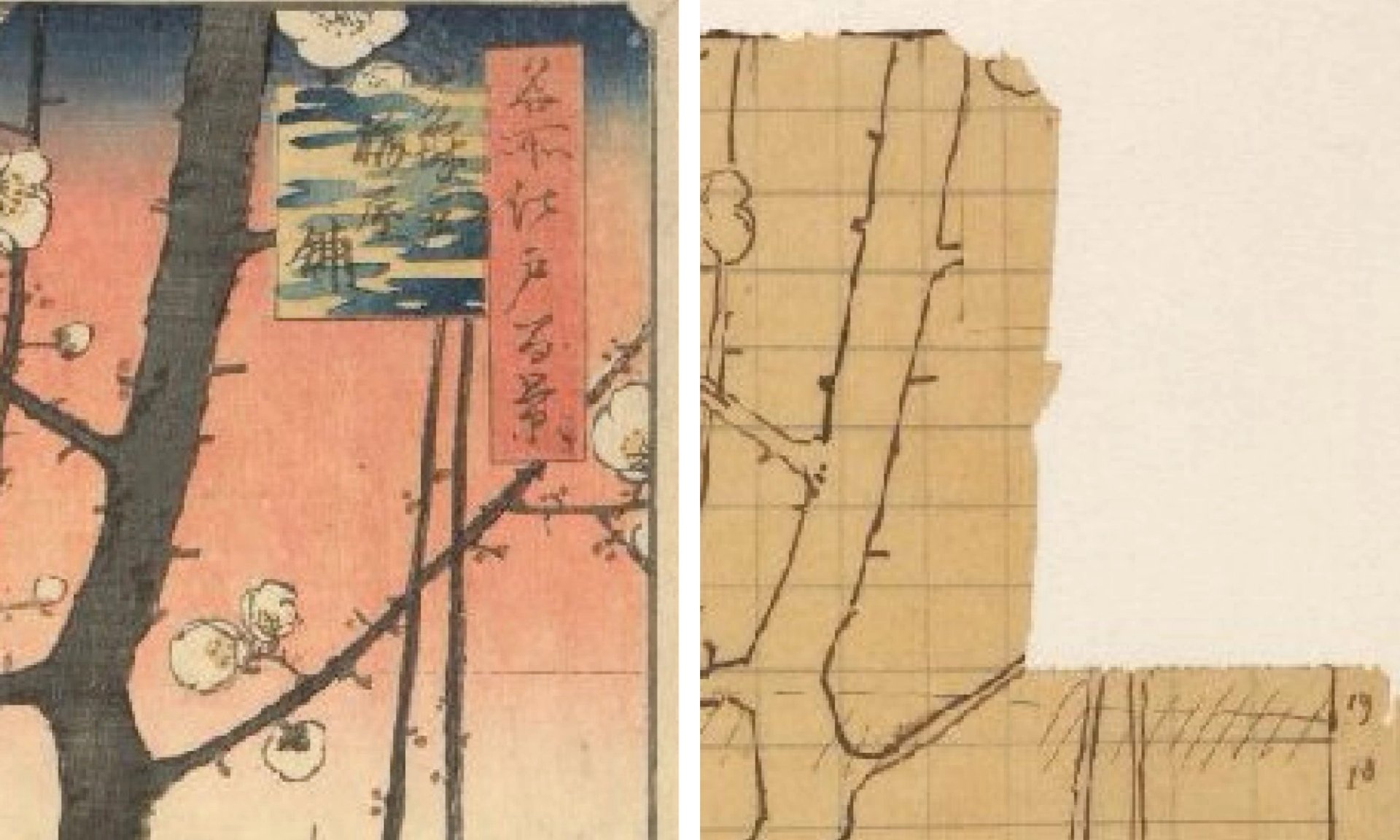
Upper-right corners of Van Gogh’s copy of Hiroshige’s The Plum Garden at Kameido and Van Gogh’s tracing
Van Gogh Museum, Amsterdam (Vincent van Gogh Foundation)
In the resulting painting, Van Gogh diverged from Hiroshige’s composition by adding two prominent vertical strips of Japanese characters on the sides. These are based on real Japanese words, but taken from other prints and are unrelated to the garden scene. Van Gogh presumably wanted to emphasise that his painting was a Japanese-inspired work.
It should come as no surprise that Van Gogh chose to depict a blossom scene, since they are common in Japanese art and he himself loved flowering trees in spring. Soon after his move to Arles, in early 1888, he made more than a dozen paintings of fruit blossom.
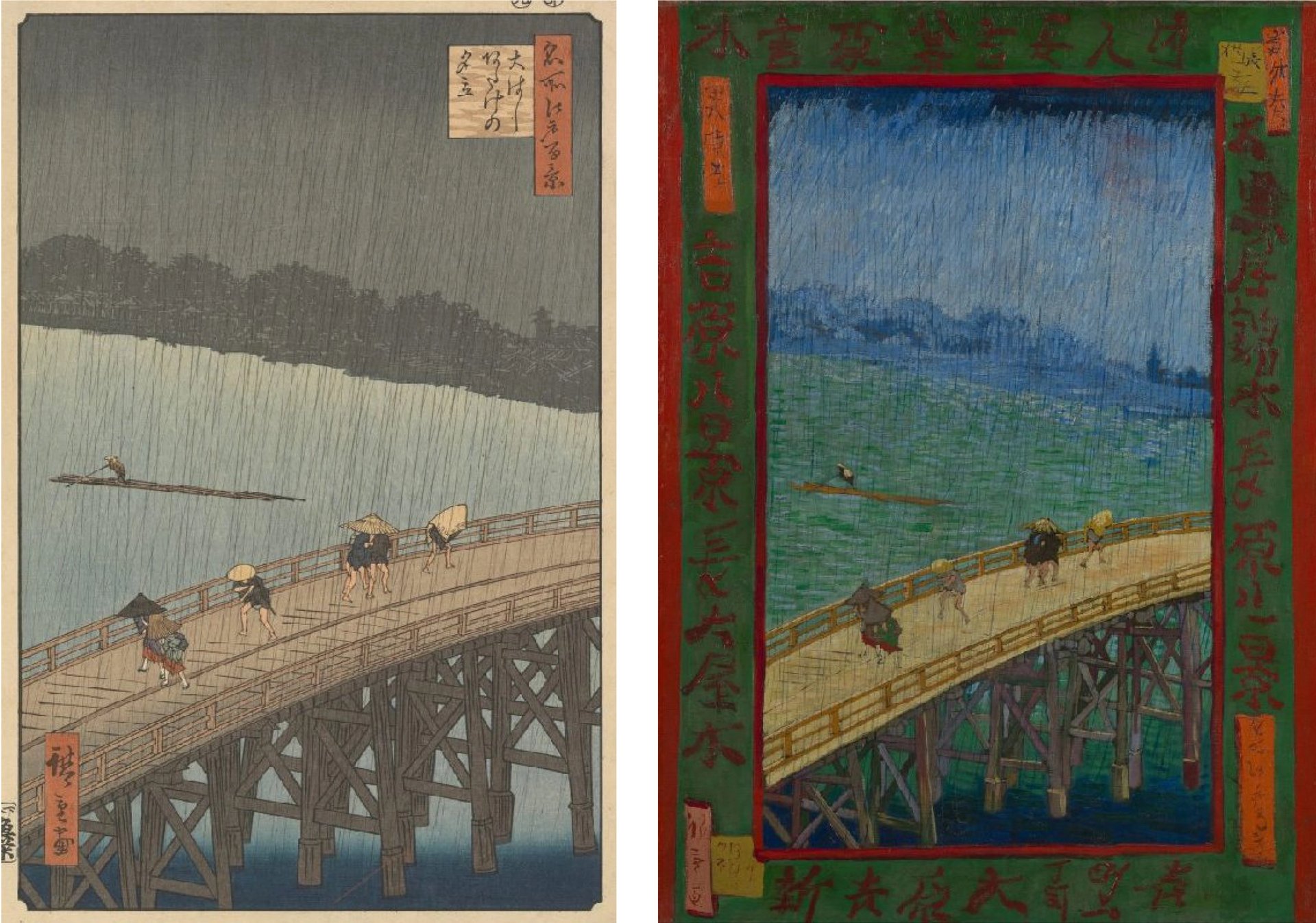
Hiroshige’s print Sudden Shower over Ohashi and Atake (1857) and Van Gogh’s painting Bridge in the Rain (October-November 1887)
Van Gogh Museum, Amsterdam (Vincent van Gogh Foundation)
Van Gogh’s other painting directly inspired by Japanese art was based on Sudden Shower over Ohashi and Atake (1857), another Edo view. Hiroshige has depicted the riverscape from three viewpoints: looking down at the bridge, across to the opposite shore and up to the dark clouds.
The resulting painting by Van Gogh, Bridge in the Rain (October-November 1887), also has a border with Japanese characters. This frame-like device, in red and green, is in complementary colours which Van Gogh loved to use. Unfortunately neither of the Van Gogh paintings based on Hiroshige prints were available for the British Museum exhibition (they were last lent outside Amsterdam around 35 years ago).
The inspiration continued after Van Gogh left Paris. He was probably thinking of Hiroshige’s streaks of falling water when be made one of his last paintings, Rain – Auvers (July 1890).
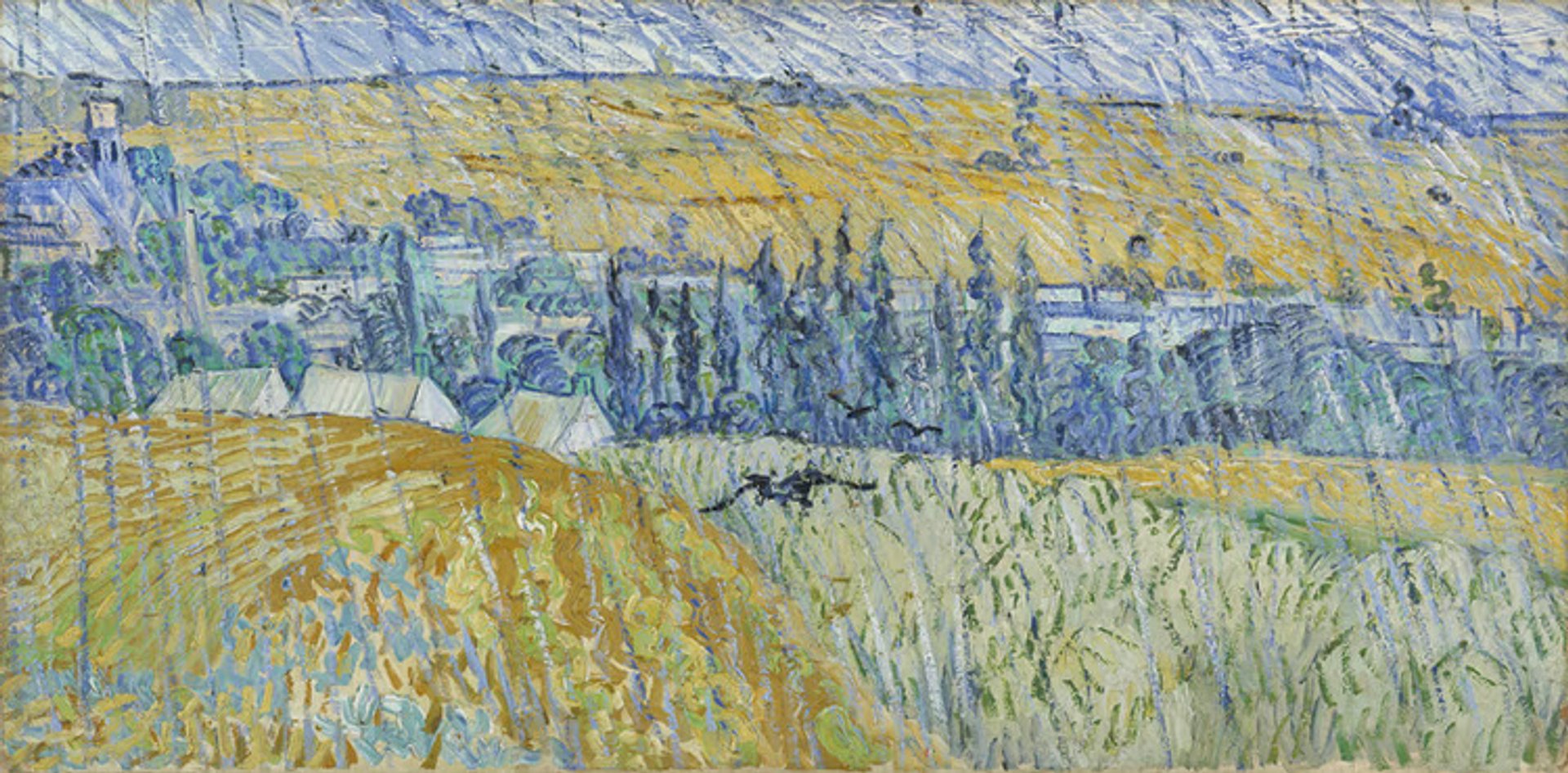
Van Gogh’s Rain – Auvers (July 1890)
National Museum Wales, Cardiff
Hiroshige prints also feature in Van Gogh’s portraits of Père Julien Tanguy, a friend in Paris who sold paint supplies. All the works in the background of the painting are Japanese images. The blossom scene in the upper-right corner is Hiroshige’s Ishiyakushi: The Yoshitsune Cherry Tree near the Noriyori Shrine (1855). The upper-centre image of Mount Fuji is an amalgam of two Hiroshige prints: Yoshiwara: The Field of Floating Islands in the Fuji Marsh (1855), with its flock of birds, and The Sagami River (1858). Van Gogh owned copies of all three prints. In a drawing of Tanguy (October-December 1887), the Mount Fuji scene appears in the background.
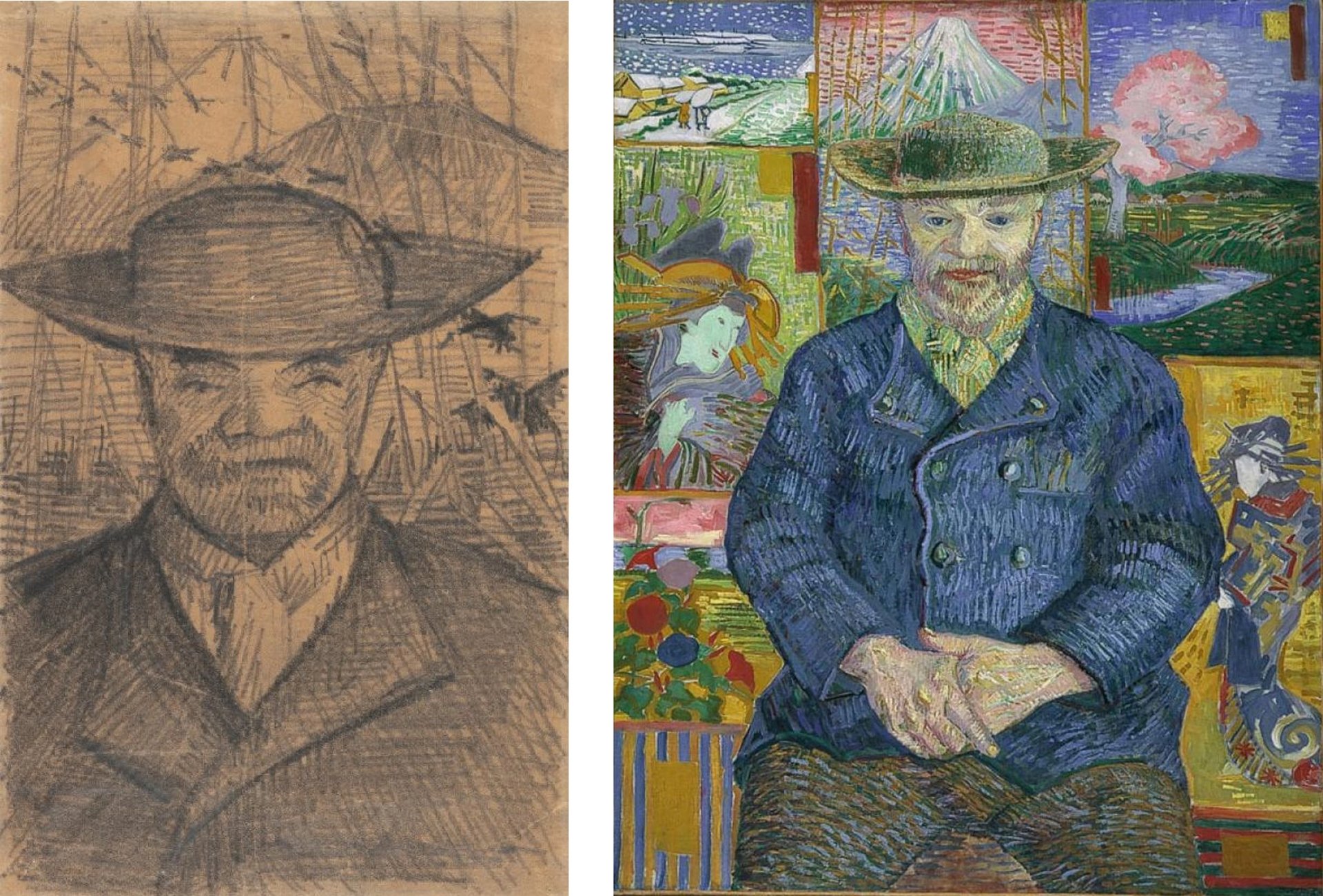
Van Gogh’s drawing Portrait of Père Tanguy (October-December 1887), with a Hiroshige print of Mount Fuji in the background), and the painting Portrait of Père Tanguy (October-December 1887), with Japanese prints. Neither are in the British Museum exhibition
Van Gogh Museum, Amsterdam (Vincent van Gogh Foundation) and Musée Rodin, Paris (Alamy stock photo)
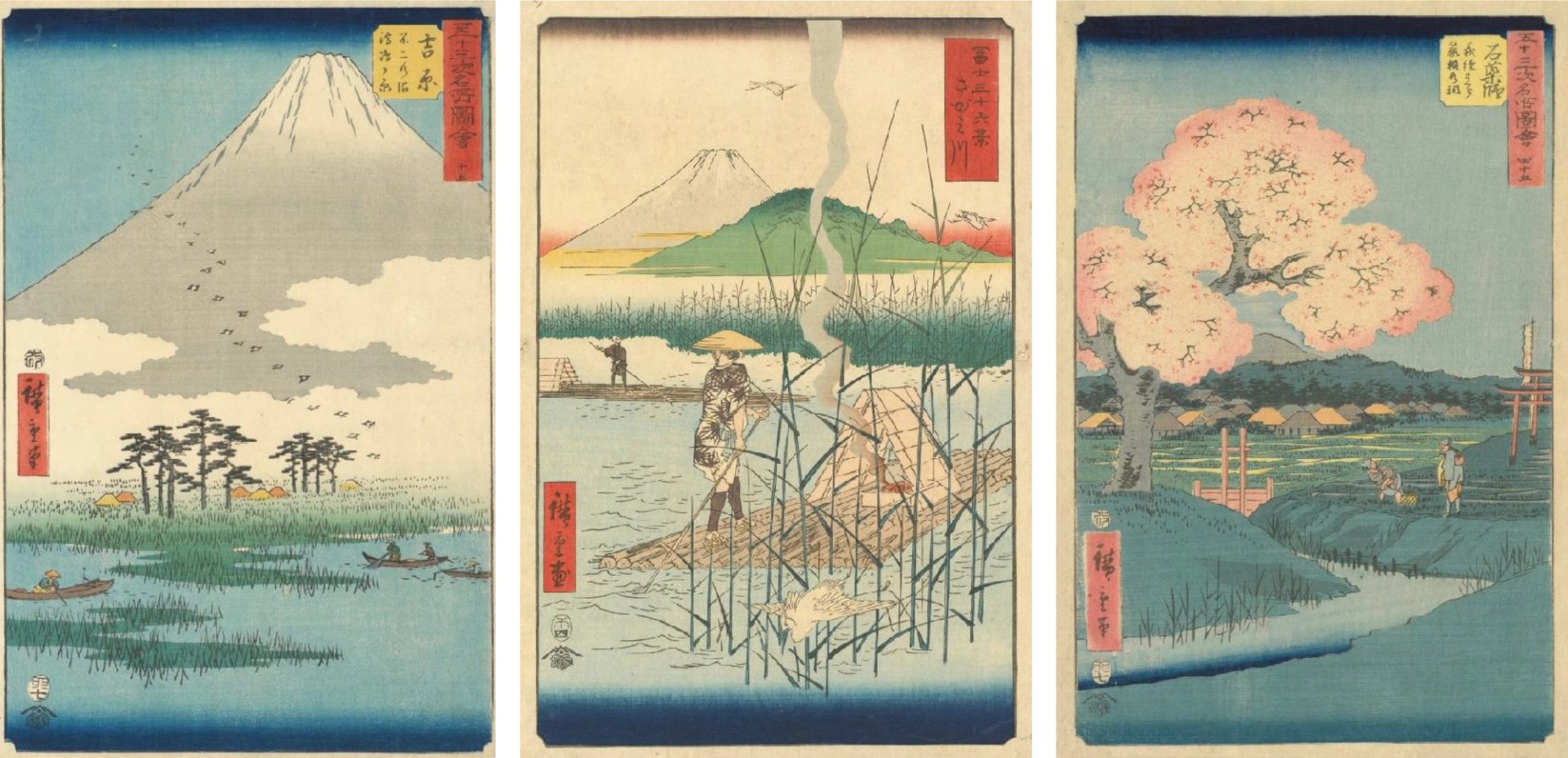
Hiroshige’s Yoshiwara: The Field of Floating Islands in the Fuji Marsh (1855), The Sagami River (1858) and Ishiyakushi: The Yoshitsune Cherry Tree near the Noriyori Shrine (1855)
Van Gogh Museum, Amsterdam (Vincent van Gogh Foundation)
The British Museum exhibition includes one of Van Gogh’s drawings from its own collection which was influenced by Japanese art, The Countryside seen from Montmajour (July 1888). Van Gogh wrote of this drawing: “It does NOT look Japanese, and it’s actually the most Japanese thing that I’ve done.”

Van Gogh’s The Countryside seen from Montmajour (July 1888)
British Museum, London
As the British Museum curator Alfred Haft explains, the drawing pulls the viewer through a “range of viewpoints”, suggesting that “European perspective is not the only way to endow a landscape picture with a sense of sweeping depth”.
Van Gogh was among many avant-garde artists to be inspired by Hiroshige in the late-19th century. Others included James Whistler, Auguste Rodin, Henri de Toulouse-Lautrec, Edgar Degas, Henri Rivière, Théo van Rysselberghe and Arthur Dow. Claude Monet owned no fewer than 48 Hiroshige prints, including Sudden Shower over Ohashi and Atake.
Gauguin’s early masterpiece Vision of the Sermon (1888) was probably influenced by the cropped tree in The Plum Garden at Kameido. He may well have seen Van Gogh’s copy of the Hiroshige—and the Dutchman’s painting in homage.
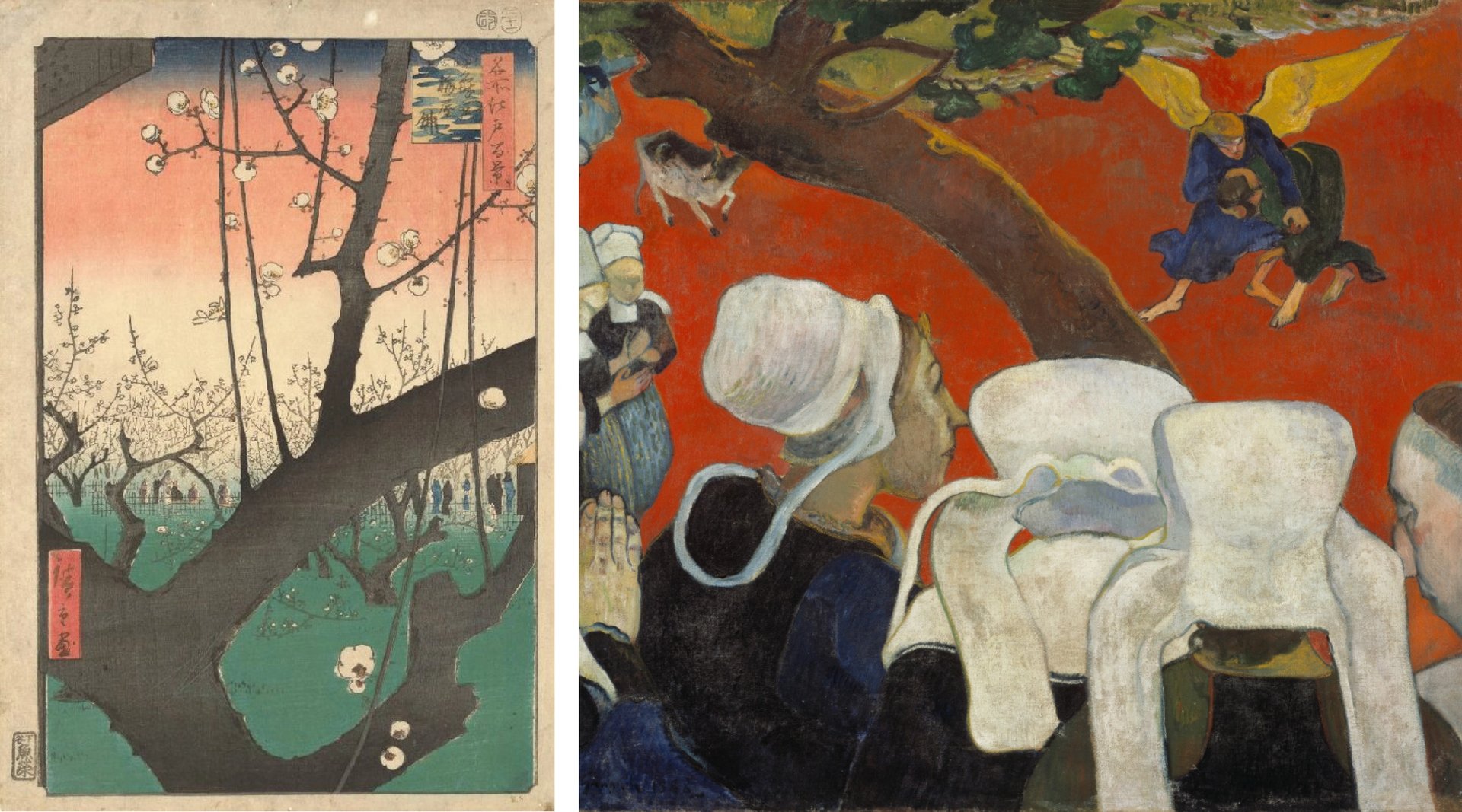
Hiroshige’s The Plum Garden at Kameido and Paul Gauguin’s Vision of the Sermon (1887)
Van Gogh Museum, Amsterdam (Vincent van Gogh Foundation) and National Galleries of Scotland, Edinburgh
REVISED: Originally published in April 2025, this blog post was updated with new information on 1 August 2025.
Martin Bailey is a leading Van Gogh specialist and special correspondent for The Art Newspaper. He has curated exhibitions at the Barbican Art Gallery, Compton Verney/National Gallery of Scotland and Tate Britain.
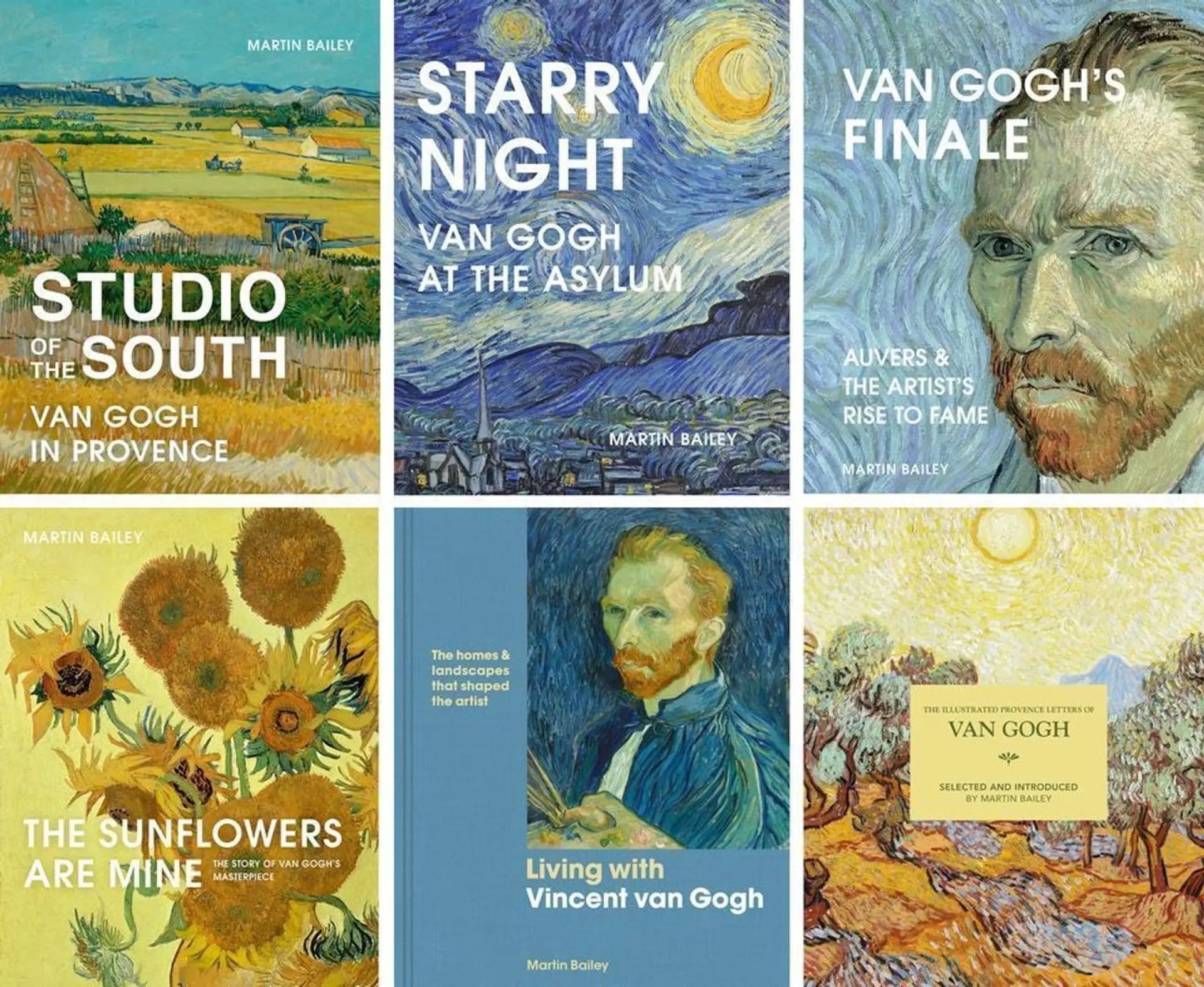
Martin Bailey’s recent Van Gogh books
Martin has written a number of bestselling books on Van Gogh’s years in France: The Sunflowers Are Mine: The Story of Van Gogh’s Masterpiece (Frances Lincoln 2013, UK and US), Studio of the South: Van Gogh in Provence (Frances Lincoln 2016, UK and US), Starry Night: Van Gogh at the Asylum (White Lion Publishing 2018, UK and US) and Van Gogh’s Finale: Auvers and the Artist’s Rise to Fame (Frances Lincoln 2021, UK and US). The Sunflowers are Mine (2024, UK and US) and Van Gogh’s Finale (2024, UK and US) are also now available in a more compact paperback format.
His other recent books include Living with Vincent van Gogh: The Homes & Landscapes that shaped the Artist (White Lion Publishing 2019, UK and US), which provides an overview of the artist’s life. The Illustrated Provence Letters of Van Gogh has been reissued (Batsford 2021, UK and US). My Friend Van Gogh/Emile Bernard provides the first English translation of Bernard’s writings on Van Gogh (David Zwirner Books 2023, UKand US).
To contact Martin Bailey, please email vangogh@theartnewspaper.com
Please note that he does not undertake authentications.
Explore all of Martin’s adventures with Van Gogh here