

As we enter the next era of digitization 2.0, identity verification and fraud prevention have moved from supporting roles to critical infrastructure. At the same time, advances in AI are making it easier for bad actors to circumvent legacy controls, increasing both the complexity and the stakes of managing digital risk.
From onboarding new customers to authenticating transactions and preventing losses in real time, banks and fintechs are under pressure to strike the right balance between security and user experience. Fortunately, fintechs are tackling this challenge head-on, building identity and fraud controls that reduce friction, strengthen trust, and make digital finance scalable. The four companies below are building some of the most cutting-edge tools in this segment and will showcase their solutions on the demo stage at FinovateEurope, which takes place February 10 and 11 in London.
Candour Identity

Candour Identity aims to improve digital onboarding by combining identity verification, biometrics, and fraud prevention into a single workflow. The platform is designed to help financial institutions increase conversion rates while maintaining regulatory compliance, enabling ongoing biometric authentication beyond initial onboarding. By supporting daily identity checks for login and payment use cases, Candour reduces fraud losses without introducing additional friction for legitimate users.
Darwinium
Darwinium helps organizations detect and prevent fraud while minimizing friction for trusted customers. Its platform distinguishes between high-risk and low-risk users in real time, allowing banks and fintechs to provide a “VIP” experience to good customers while applying stronger controls where needed. The approach is designed to reduce fraud losses without sacrificing the overall customer experience.
Elephant

Elephant targets false declines and chargebacks, two persistent challenges in digital payments. By improving transaction decisioning, the company helps businesses approve more legitimate transactions while reducing downstream fraud and disputes. The result is higher authorization rates, fewer customer complaints, and lower operational costs tied to chargeback management.
Keyless
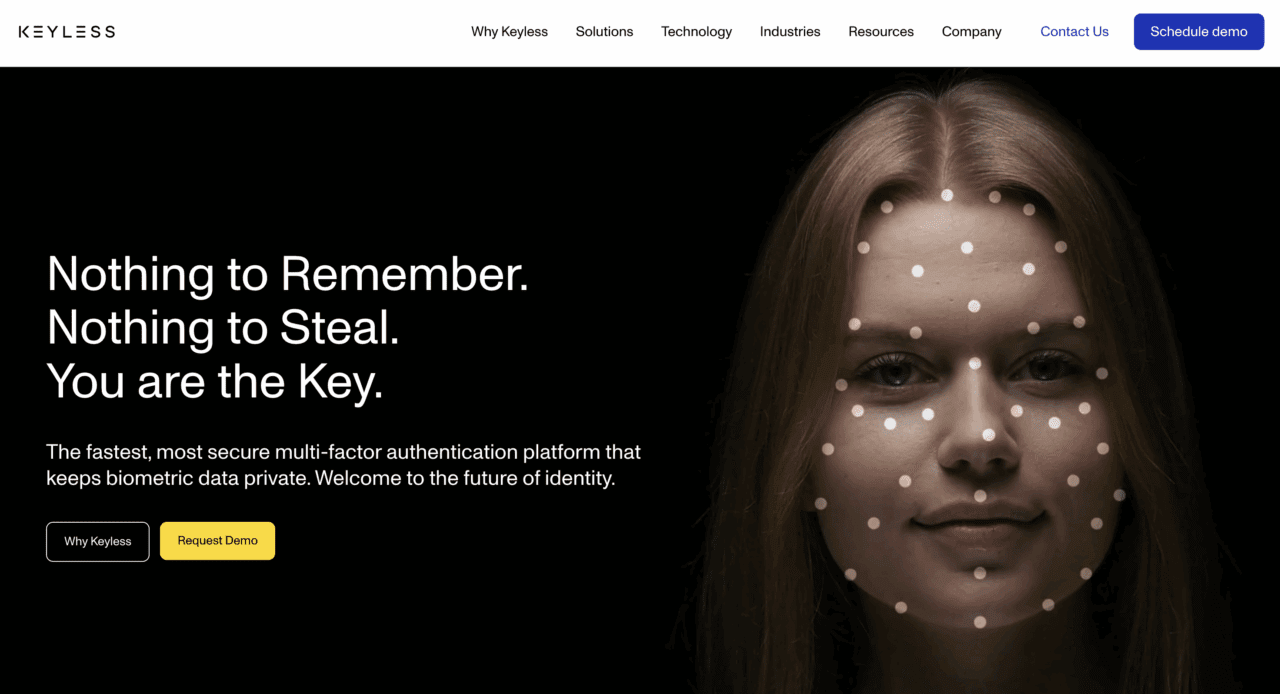
With Keyless, users are the key. The company’s technology replaces traditional multi-factor authentication methods, such as one-time passwords, with biometric authentication. Keyless’s technology enables passwordless and tokenless login experiences while maintaining strong security controls. By removing reliance on call centers and manual recovery flows, Keyless aims to improve user experience and significantly reduce authentication-related costs for banks. Keyless was acquired by Pindrop Security in November 2025.
Why banks should care
Digital channels are increasingly becoming the primary point of interaction with customers, shifting the importance of verification technologies. The companies highlighted above show how banks, payments firms, and marketplaces can reduce fraud and operational costs while improving customer experience by applying smarter, more adaptive controls. Rather than relying on rigid rules or legacy authentication methods that can easily be spoofed using AI, modern identity and fraud platforms allow banks to approve more good customers, intervene only when risk is real, and scale digital growth without sacrificing trust.
To watch these companies demo their newest tools in person, register for FinovateEurope, see what’s new, and shake hands with the innovators.
Photo by Tima Miroshnichenko
Views: 59