


This week’s edition of Finovate Global focuses on fintech developments in countries located in and around East Africa.
Digital banking secures investment in Zambia
Zambian digital banking platform Lupiya has raised $11.25 million in Series A funding. The round—nearly two years in the making—was led by IDF Capital’s Alitheia IDF Fund, and featured participation from INOKS Capital and KfW DEG, a German development finance institution. Lupiya will use the capital to bolster the digital bank’s technology infrastructure, grow its product range, and enter southern and east African markets beyond Zambia’s borders.
Founded by Evelyn Chilomo Kaingu (CEO) and Muchu Kaingu (CTO) in 2016, Lupiya serves unbanked and underbanked communities in Zambia with credit products and digital payment services via its Lupiya Pay offering. The company has partnered with Mastercard to access payment rails to enable digital transactions and is part of the card network’s financial inclusion strategy. Previous investors in the firm include Enygma Ventures, which contributed $1 million to the company’s coffers. Lupiya has opened an additional funding round this year—alongside its Series A—dedicated to scaling its lending business, enhancing its embedded finance offerings, and bringing Lupiya Pay to new markets.
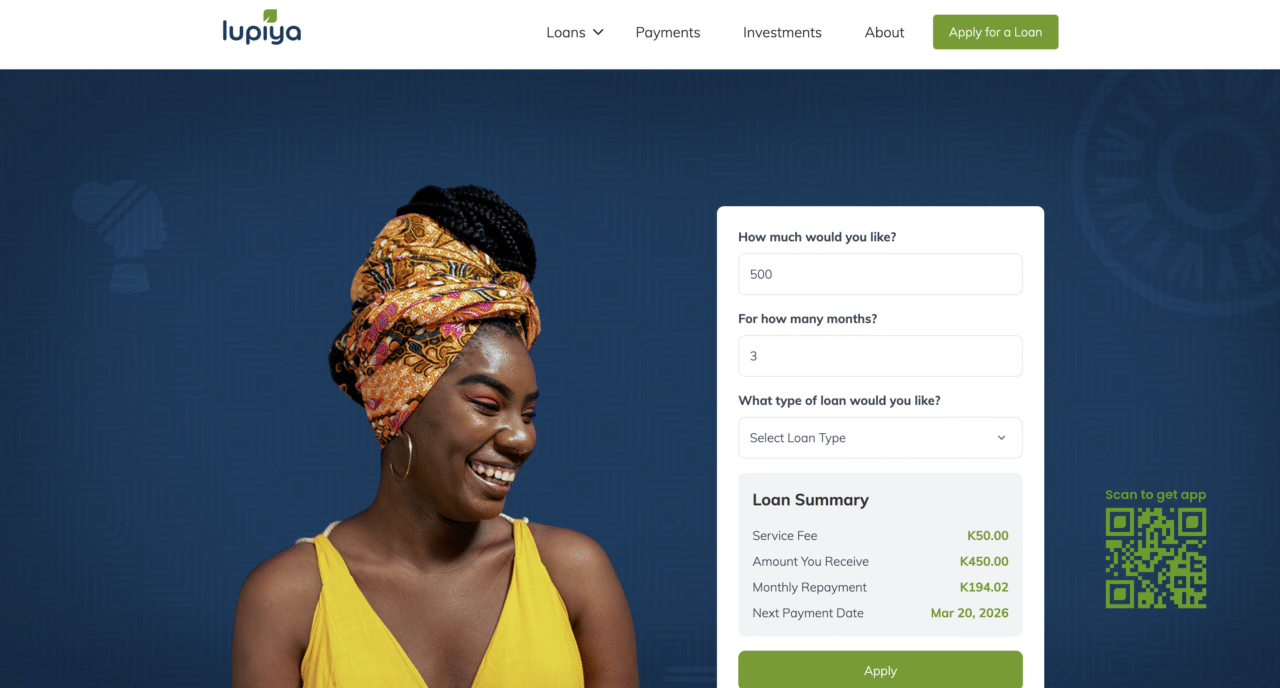
Lupiya was one of the first companies to earn approval from the Security Exchange Commission in Zambia to offer investments through peer-to-peer lending. Launching this service in-country in 2022, Lupiya expanded operations to Tanzania the following year. Lupiya offers personal loans including collateral-backed loans and salary advances, as well as business financing, invoice discounting, and agriloans. Customers can use Lupiya to send and receive funds via mobile money, P2P, or bank accounts.
According to the World Bank, Zambia’s financial inclusion rate has improved significantly in recent years, climbing from 59.3% in 2015 to 69.4% in 2020. Regional disparities are significant, however, with Lusaka Province, home to the capital city, Lusaka, having a financial inclusion rate of more than 87%, with more rural areas having inclusion rates of approximately 40%. The landlocked country shares borders with the Democratic Republic of Congo, Angola, Zimbabwe, Mozambique, Malawi, and Tanzania.
Ethiopia goes live with instant payments
Instant payments are sweeping the globe—and now businesses, communities, and banks throughout Ethiopia will be able to leverage the technology to provide centralized automated reconciliation, new card and e-wallet services, and more.
In partnership with the National Bank of Ethiopia, the country’s national switch EthSwitch has launched Ethiopia’s National Instant Payment System. Powered by BPC’s SmartVista platform, the system was officially introduced in December 2025, and now connects 32 banks, 12 MFIs, three PSOs, and three PIIs. The unveiling of EthioPay-IPS will enable EthSwitch to offer banks and other financial institutions modern payment rails capable of delivering faster and more economical payment transactions. These include account-to-account and wallet-to-wallet transfers, payments with interoperable QR codes, as well as requests-to-pay and alias-based payments that allow users to transfer funds using a simple identifier.
BPC’s SmartVista suite is a modular payment processing solution for banks, financial institutions, payment service providers, and fintechs. The technology combines banking, commerce, and mobility platforms to facilitate digital banking, payment processing, ATM and switching, fraud management, financial inclusion, and more. Founded in 1996 and headquartered in Switzerland, BPC has more than 500 customers across 140 countries.
Established in 2011, EthSwitch is a share company owned by Ethiopia’s private and public banks, as well as the National Bank of Ethiopia, MFIs, PIIs, and PSOs. The organization has a mandate to support the modernization of Ethiopia’s payment system and to enhance financial inclusion throughout the country. This includes EthSwitch’s 2016 initiative to enable the interoperability of ATMs and POS terminals operated by the nation’s banks.
“Our goal is to provide simple, affordable, secure, and efficient digital payment infrastructure to every retail payment provider and through them, to every Ethiopian,” EthSwitch Chief Portfolio Officer Abeneazer Wondwossen said. “With SmartVista, we have built an interoperable nationwide ecosystem for instant payments that is locally governed, future-ready, and open to innovation. This launch is a point of pride for Ethiopia and a milestone for our financial sector.”
Kayko Raises $1.2 million to help SMEs in Rwanda
Kayko, which offers a small business financial management platform for companies in Rwanda, has secured $1.2 million in seed funding. Participating in the investment were Burrow Capital, the Luxembourg Development Agency, and Hanga Ignite by BRD and develoPPP Ventures. The company, founded in 2021 by brothers Crepin and Kevin Kayisire, will use the capital to fortify its infrastructure, expand its data capabilities, and build credit scoring and lending tools based on real transaction data.
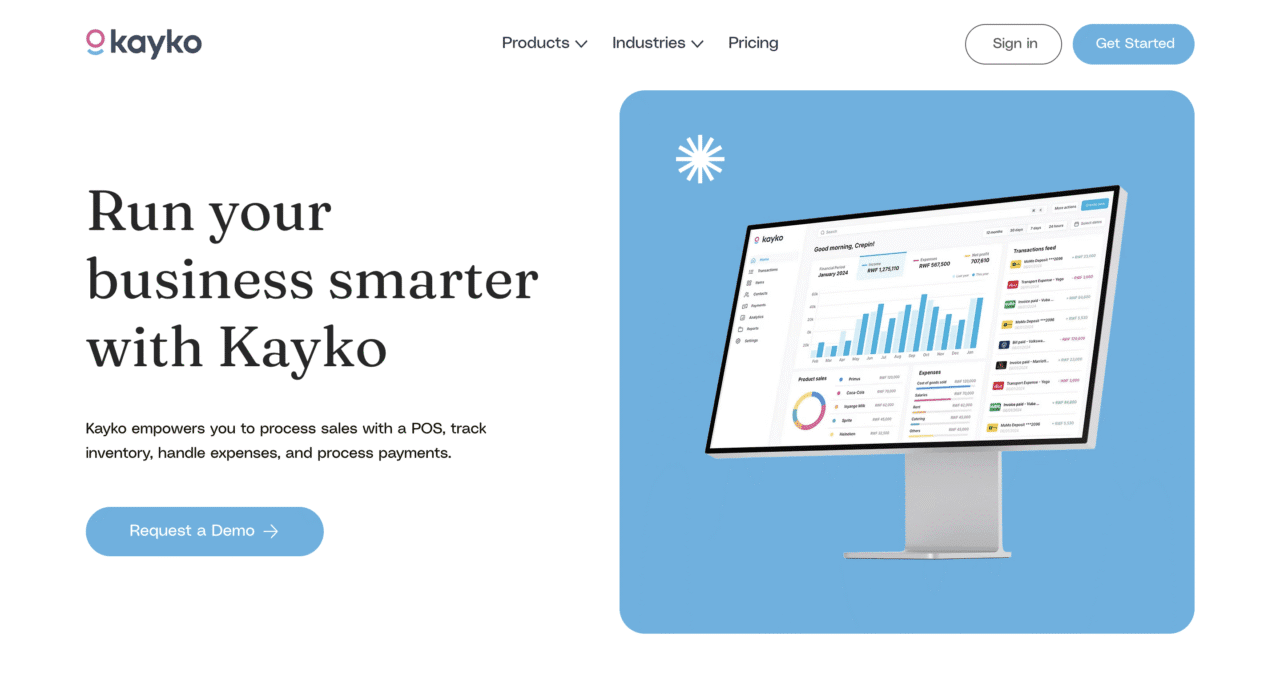
Kayko serves more than 8,500 Rwandan SMEs with bookkeeping, inventory, and tax support. The fintech helps boost SME access to credit in a country in which many businesses have incomplete or informal financial records that make it difficult to secure financing or to scale operations. For these and other small businesses, Kayko provides a point-of-sale and business management system that helps them process sales, track expenses, and accept payments, while turning everyday business activity into structured financial data for analysis and insights.
Kayko’s funding news coincides with the Kigali-based fintech securing an Electronic Money Issuer (EMI) license from the National Bank of Rwanda (NBR). “With this license, we move from planning to execution,” Crepin Kayisire said in a statement on the company’s LinkedIn page. “We can now operate regulated payments, merchant wallets, and data-driven financial services that improve access to financing for small businesses.”
Here is our look at fintech innovation around the world.
Sub-Saharan Africa
- South African crypto platform Luno introduced crypto and tokenized stock bundle.
- Blockchain infrastructure provider Binance and African mobile network operator Africell announced a collaboration to boost blockchain education and digital asset literacy across Africa.
- Ethiopia’s national switch, EthSwitch, launched the country’s National Instant Payment System, in partnership with the National Bank of Ethiopia and powered by BPC’s SmartVista platform.
Central and Eastern Europe
- The Bank of Lithuania supplemented the electronic money institution (EMI) license for TransferGo Lithuania, enabling the fintech to expand beyond money transfers and payment account services.
- Open banking solutions provider Salt Edge and financial management platform NoCFO teamed up to bring Pay by Bank to SMEs in Germany and Finland.
- UK-based fintech Unlimit opened a new global research and development center in Belgrade, Serbia.
Middle East and Northern Africa
Central and Southern Asia
Latin America and the Caribbean
- Uruguayan fintech dLocal partnered with online English-language platform Open English to introduce a new payment method, Bre-B, for students in Colombia
- Visa inked a deal to acquire Argentinian payment companies Prisma Medios de Pago and Newpay from private equity firm Advent International.
- Peru’s Banco de la Microempresa selected Temenos SaaS to modernize its core banking infrastructure.
Asia-Pacific
Photo by Aron Marinelli on Unsplash
Views: 193