


Peruvian archaeologists have found a nearly intact, 600-year-old funerary platform at Chan Chan, the capital of the Chimú Kingdom, which ruled Peru’s northern coast before the Inca. On 8 September, Peru’s Ministry of Culture announced the discovery, which includes the remains of 38 individuals, jewellery, metal weapons, beads, textiles and carved wooden boxes with metal appliqués. The discovery is Chan Chan’s only known elite funerary platform to have been untouched by looting.
The Chimú were one of Peru’s major pre-Hispanic cultures. Their capital, Chan Chan, has been a Unesco World Heritage site since 1986 and is the largest adobe city in the Americas. Its architecture, spanning the 9th to the 15th centuries, reflects the Chimú’s complex political and social organisation. Funerary rituals were central to their culture. “This is reflected in the grandiose funerary platforms found within Chan Chan’s palaces, usually associated with Chimú rulers,” Nadia Gamarra Carranza, a Peruvian archaeologist, tells The Art Newspaper.
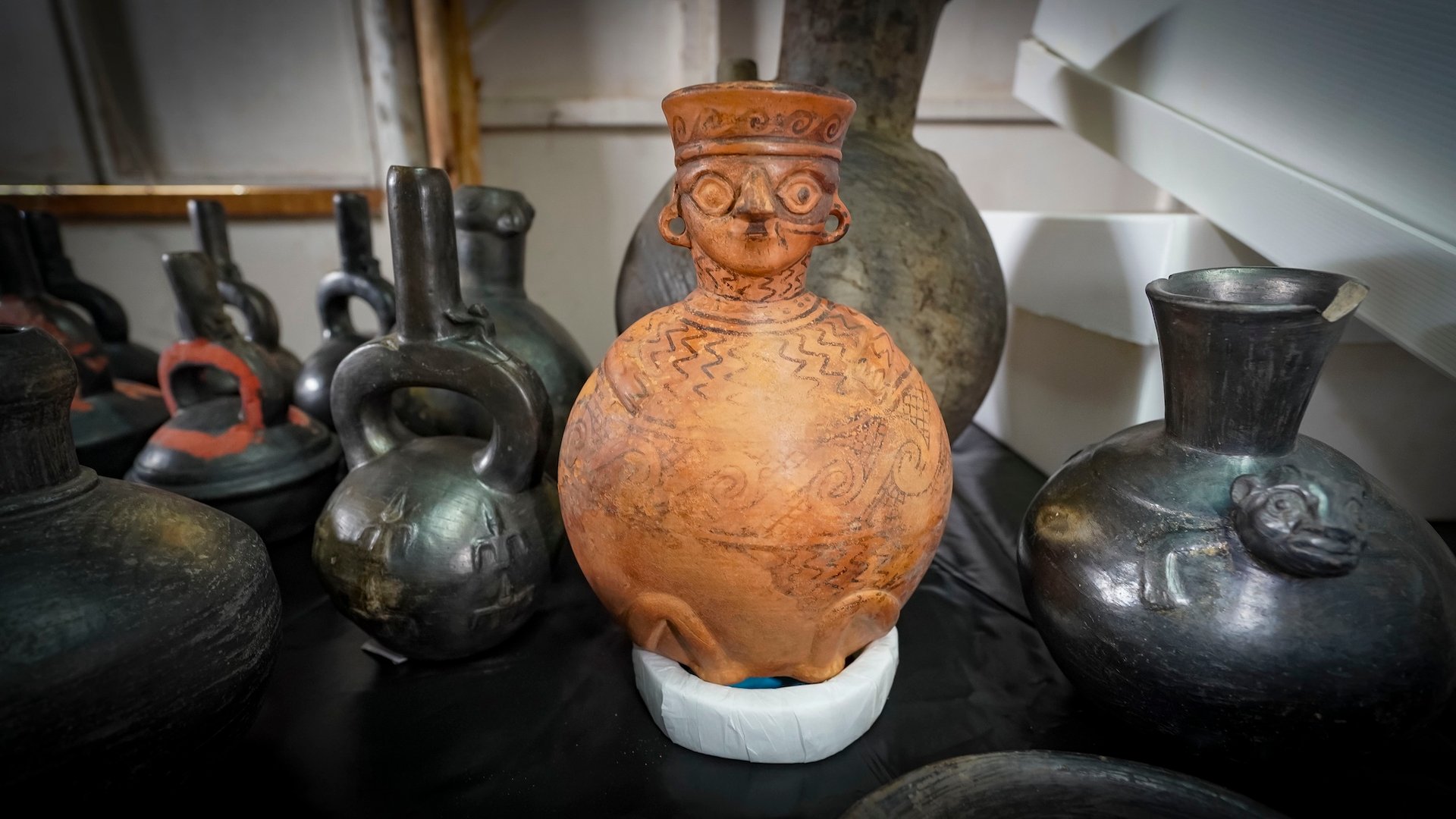
Pottery uncovered at the burial site Courtesy of the Ministry of Culture, Peru
Looting has affected Chimú tombs since colonial times. “Because Chan Chan is close to Trujillo, founded in 1534, looting was immediate, as tombs contained metals,” Gamarra says. She adds that researchers have found around nine elite funerary platforms at Chan Chan, all of which had been looted. Only secondary burial sites had been found intact, until now.
The recently discovered burial site is located in the Utzh An complex near Trujillo. It includes a 1.2m-wide and 5m-deep central chamber and two lateral chambers, each 1.5m wide and 8m long. The central chamber is accessed via a 2.5m staircase and contained the remains of one individual alongside shell and metal objects. One lateral chamber contained weapons and metal emblems, while the second held 20 individuals, in addition to the 18 found on the platform.

Human remains found at the burial site Courtesy of the Ministry of Culture, Peru
“The discovery’s importance lies not only in the intact central chamber, but also in the exceptional information provided by the funerary platform,” says Jorge Meneses, the archaeologist responsible for the project.
Experts believe those buried were part of the Chimú elite. Objects found, including jewellery, ear ornaments and necklaces made of shells and quartz, reflect their status. One individual was placed fully extended, which is unusual because Chimú burials are typically flexed or seated. This may indicate a hierarchical difference or ritual sacrifice.
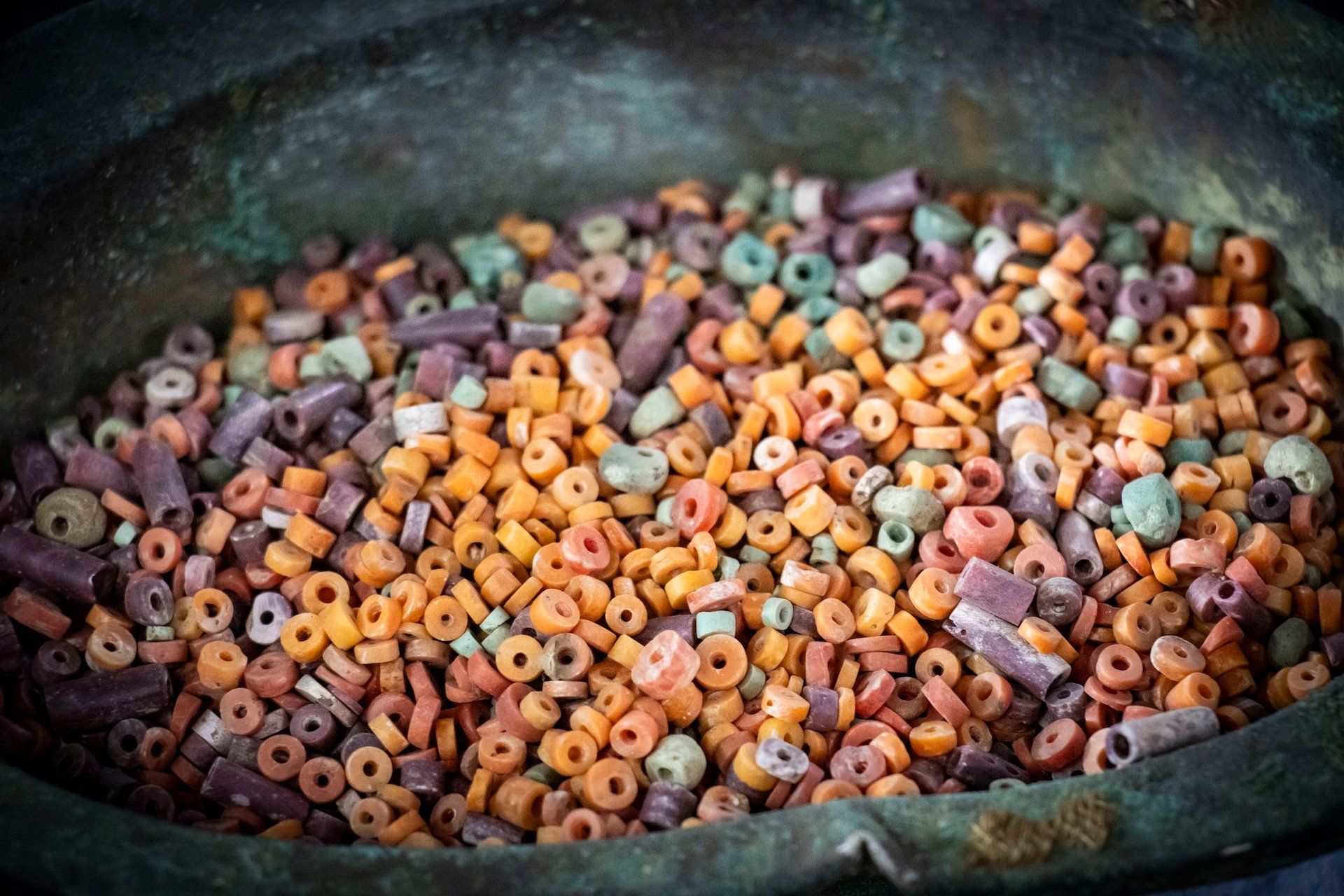
Beads uncovered at the burial site Courtesy of the Ministry of Culture, Peru
The red pigment found on some skulls and pottery is key. “This pigment, likely mercury sulfide, known as cinnabar, is present across the Central Andes,” says Henry Gayoso Rullier, Chan Chan’s head of research. “It was used in pottery, murals, on warriors’ bodies, in sacrifices and on funerary masks covering the bodies and faces of the deceased.” Gayoso notes that it is strongly associated with Chimú elite funerary contexts.
The finding could reveal more about Chimú burial practices. “The central chamber can also be understood as a final photograph of a much longer process: the veneration of an ancestor belonging to a group politically linked to the Chimú Kingdom,” Meneses says. “In the Andean conception, death did not necessarily mean the end of the relationship with the deceased.”

A view of the entrance to the burial site Courtesy of the Ministry of Culture, Peru
The Chimú often exhumed their ancestors, whose remains were part of rituals held in plazas. “This discovery provides a nearly complete picture of a context of intense meaning centred on an elite individual—the node of power around which choreographies of the living and dead would have been directed,” says Ari Caramanica, an anthropologist at Vanderbilt University. Gayoso notes that the finding could also yield clues about how and when the Inca later occupied Chan Chan.
Sinthya Cueva, Chan Chan’s research programme director, says that excavations will continue through 2027. The objects and human remains are under analysis. “Bioanthropological studies can reveal the age, sex and diet of the remains, along with biological connections between them,” Cueva says, adding that the finding is the result of research that began in 2015.
Conservation is paramount. “Before considering storage or exhibition, it is necessary to evaluate each material and establish the conditions to preserve it,” says the site’s conservator Roxana Loayza.