
The Van Gogh Museum in Amsterdam is about to open the primary complete exhibition dedicated to the final stage of the artist’s profession, his quick keep within the village of Auvers-sur-Oise, 30 kilometres north-west of Paris. It was there that he shot himself on 27 July 1890, dying two days later.
There’s at all times nice curiosity within the final part of a significant artist’s life. But though Van Gogh’s two years in Provence have been a lot studied, till not too long ago his Auvers interval has been comparatively uncared for.
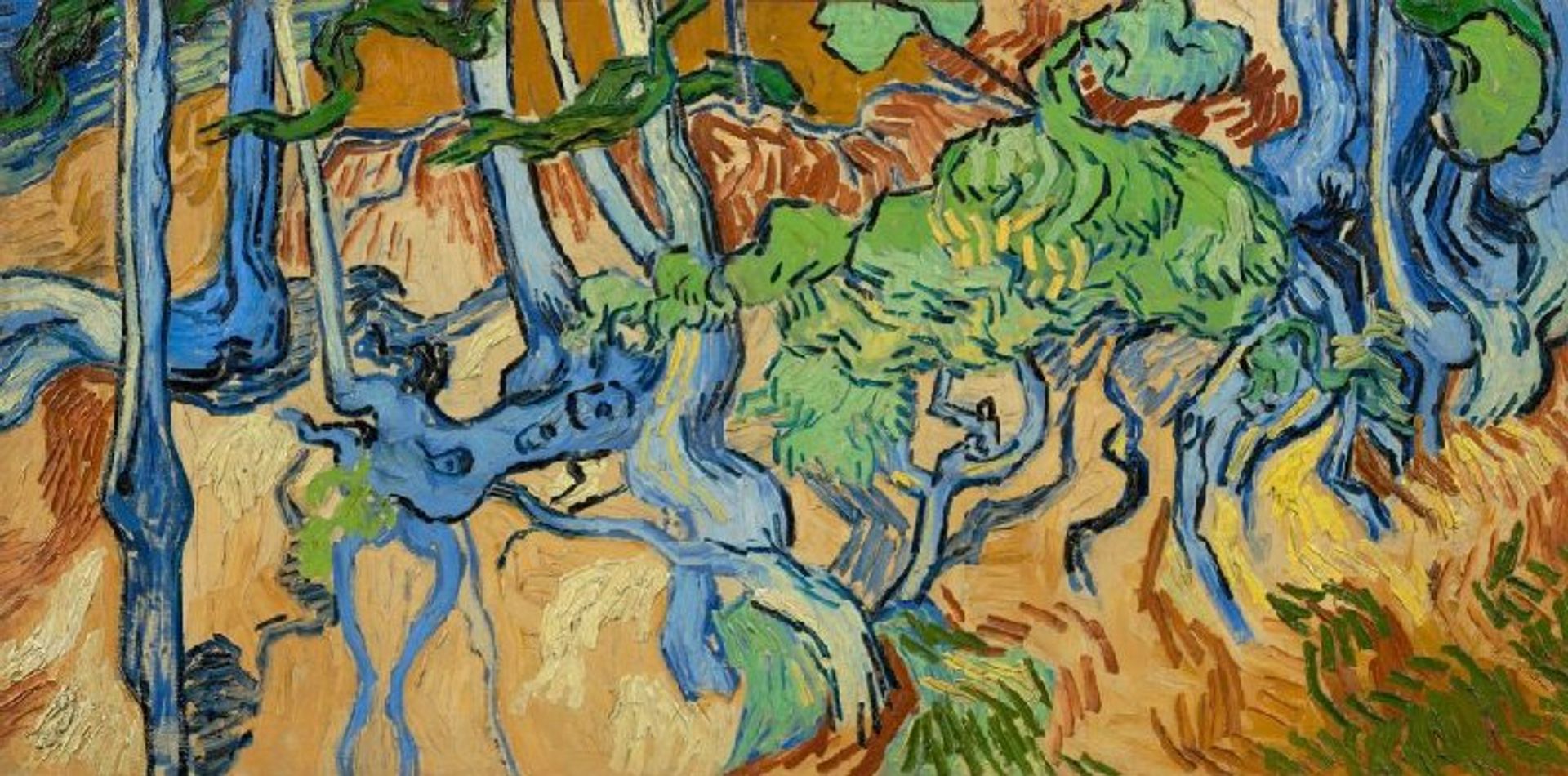
Van Gogh’s Tree Roots (July 1890), painted on the day that he shot himself

Credit score: Van Gogh Museum, Amsterdam (Vincent van Gogh Basis)
Van Gogh in Auvers-sur-Oise: His Closing Months will probably be offered in Amsterdam (12 Could-3 September) and later in Paris, on the Musée d’Orsay (3 October-4 February 2024).
The exhibition curators have meticulously dated all his surviving 74 Auvers work, figuring out that “by the top of six weeks, the full stood at roughly sixty work”. Excluding weekends, this works out at two a day, an incredible manufacturing. Maybe rising despair (and the bigger measurement of a number of the later photos) accounts for a fall-off within the following 4 weeks.
The Amsterdam and Paris museums have been astonishingly profitable in corralling the loans. Of the 74 Auvers work, 48 will probably be included. The Van Gogh Museum has 9 in its everlasting assortment and there are seven on the Musée d’Orsay, the latter from the early Nineteen Fifties donation by Dr Paul Gachet, who cared for the artist in his final weeks. These Gachet works have solely been lent very not often, so the Amsterdam present will probably be a particularly uncommon alternative to see them in a wider context.
The remaining 32 Auvers work are from collections all over the world. Seven are from personal lenders, which implies that they’re not often proven. These embrace Backyard in Auvers-sur-Oise (June 1890), which is rather more stylised than most of his landscapes, and Vase with Crimson Poppies, Cornflowers and Daisies (June 1890).
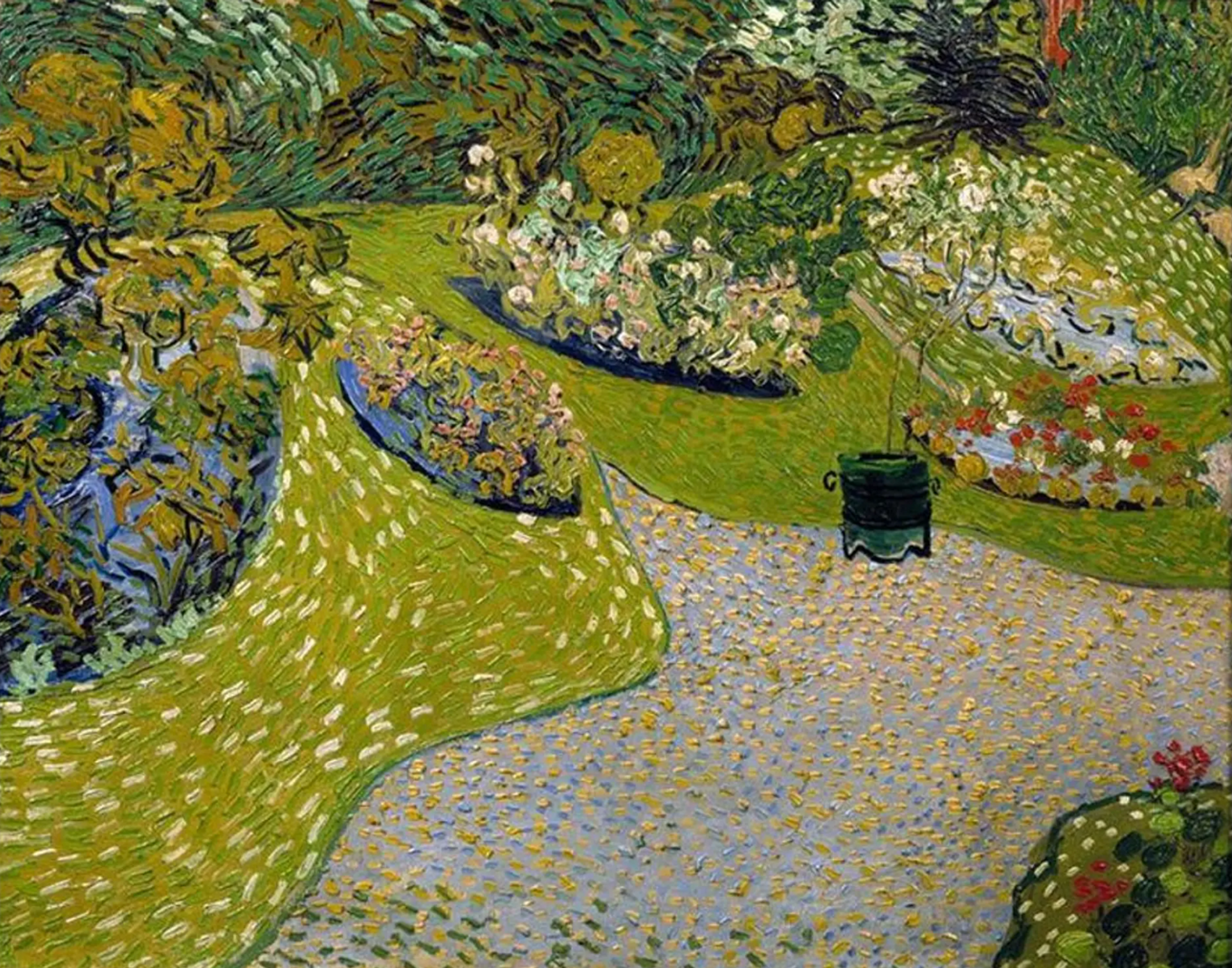
Van Gogh’s Backyard at Auvers (June 1890)
Credit score: personal assortment
Strenuous efforts had been made to attempt to unite all 13 of Van Gogh’s “double-square” canvases (0.5m x 1m). These large-scale works embrace a lot of his best late work. Solely two proved unimaginable to borrow: Marguerite Gachet on the Piano (June 1890, Kunstmuseum Basel) and Daubigny’s Backyard (July 1890, Hiroshima Museum of Artwork).
One other loss was work from Russia, which had been blocked after Putin’s invasion of Ukraine. The three Auvers works in Russian museums are Thatched Cottages(Could 1890), White Home at Evening with Star (June 1890, each State Hermitage Museum, Saint Petersburg) and Panorama with Carriage and Prepare (June 1890, Pushkin State Museum of Effective Arts, Moscow).
The best Auvers portray in personal arms is the primary model of the portrait of Dr Paul Gachet (June 1890). After promoting for $82.5m in 1990, it was purchased by a Japanese proprietor and later acquired by a mysterious European collector who has accomplished their utmost to stay nameless. Even with the perfect contacts, this image eluded the curators.
One other of the exhibition’s contributions to scholarship has been to trace down the areas depicted within the panorama work.
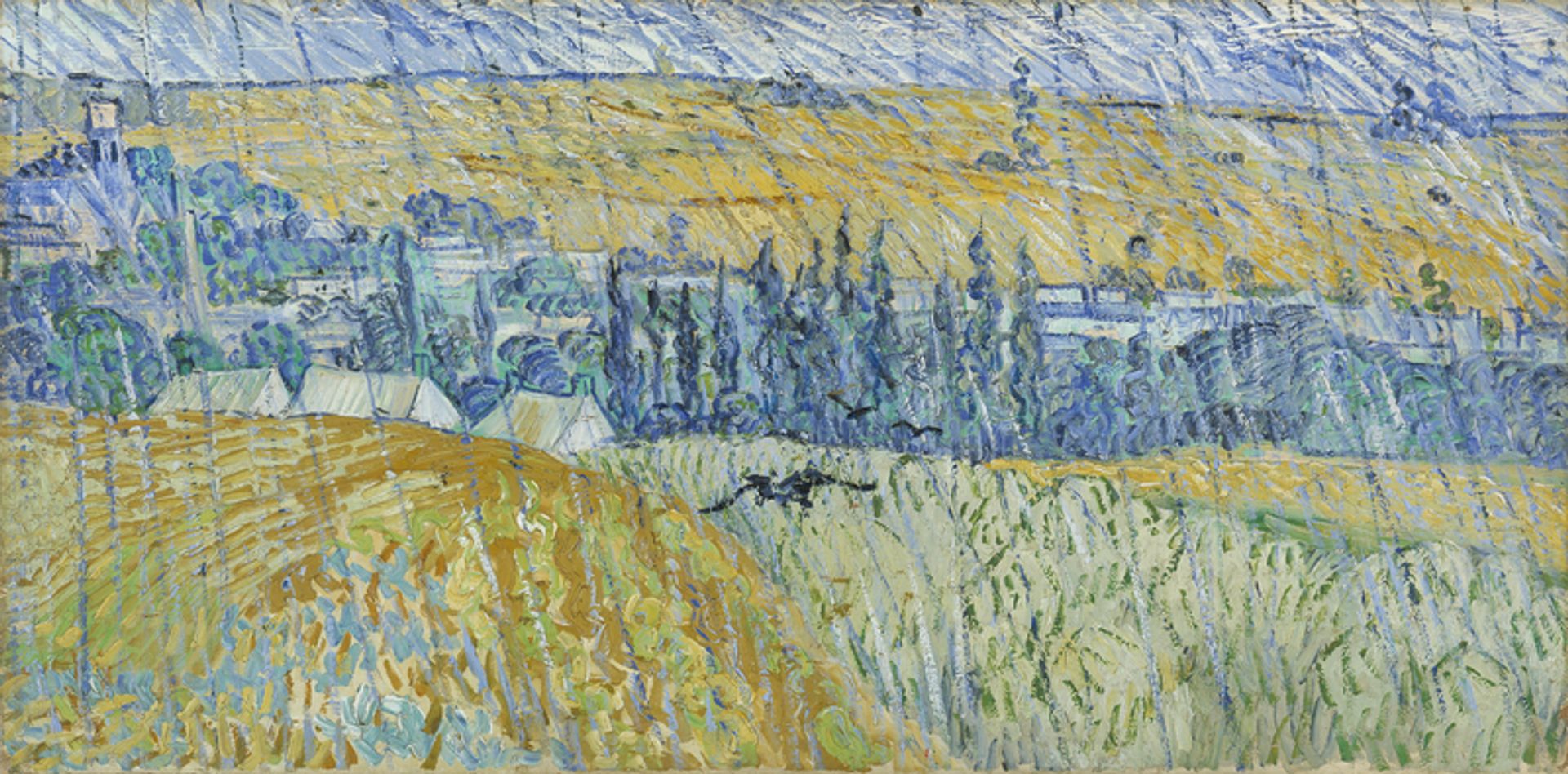
Van Gogh’s Rain – Auvers-sur-Oise (July 1890)
Credit score: Nationwide Museum Wales, Cardiff
Two of the locations depicted within the “double-square” work have now been correctly recognized, because of new analysis by Wouter van der Veen. Rain – Auvers-sur-Oise (July 1890), at Nationwide Museum Wales, was painted from the opposite aspect of the River Oise close to Méry, not from the wheatfields, as has typically been assumed. Tate’s Farms close to Auvers-sur-Oise (July 1890) is a scene within the hamlet of Cordeville. An 1887 {photograph} of the Cordeville location means that Van Gogh used creative licence so as to add one other constructing within the centre of his composition.
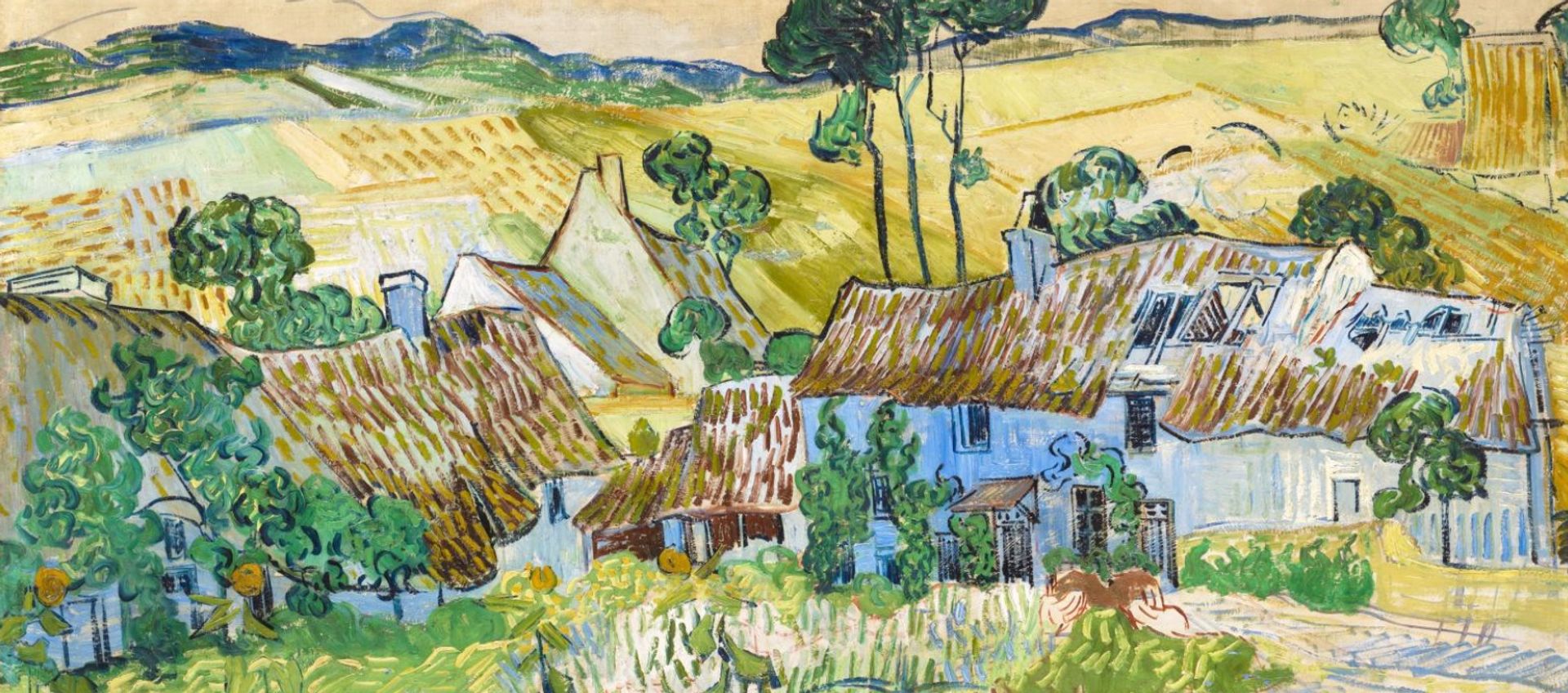
Van Gogh’s Farms close to Auvers-sur-Oise (July 1890)
Credit score: Tate, London
Together with the work, Van Gogh additionally produced 9 massive drawings and 48 smaller research in Auvers, in addition to filling a sketchbook. These can solely be displayed often, for conservation causes, and most are hardly recognized by the general public and have by no means been comprehensively studied as a bunch.
Probably the most private sketch is Child in a Pram (June 1890). It in all probability depicts the artist’s four-month-old nephew, who had been named Vincent in his honour. The toddler was delivered to Auvers on a day go to to Auvers by his dad and mom, Theo and Jo.
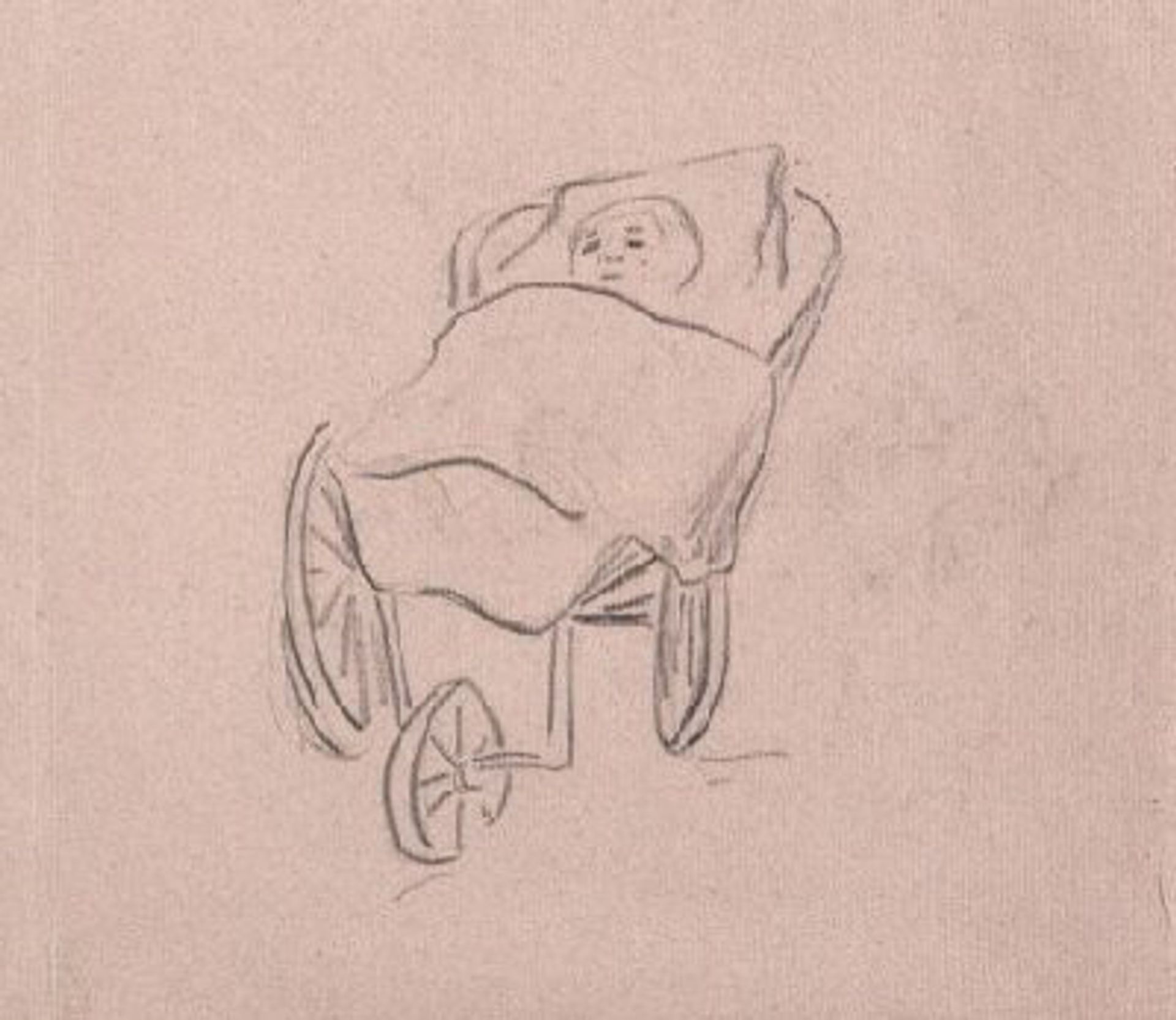
Van Gogh’s Child in a Pram (June 1890), in all probability depicting his four-month-old nephew Vincent
Credit score: Van Gogh Museum, Amsterdam (Vincent van Gogh Basis)
The great Amsterdam and Paris exhibitions are curated by Nienke Bakker, Louis van Tilborgh, Teio Meedendorp (all Van Gogh Museum) and Emmanuel Coquery (Musée d’Orsay). Their catalogue additionally tackles the query of Vincent’s fragile psychological well being and eventual suicide.
It was startling in 2011 when a biography of Van Gogh argued that he was shot by a 16-year-old boy in Auvers, René Secretan. The exhibition curators dismiss this as a wholly unfounded suggestion, a conspiracy idea: “When an individual feels compelled to finish their very own life, the least they deserve is to be heard with empathy. Recognising alerts and acknowledging ache at all times issues, additionally within the case of a historic determine.”
Had Van Gogh’s life not ended so tragically, how would his artwork have developed after Auvers?
For extra on the story of the artist’s final months, see my ebook Van Gogh’s Finale: Auvers and the Artist’s Rise to Fame.
Different Van Gogh information:
Each Christie’s and Sotheby’s are auctioning Van Gogh drawings of two males, each accomplished at virtually the identical time and with the identical dimensions. The drawings have every been of their respective households for the reason that Nineteen Sixties and have very not often been exhibited.
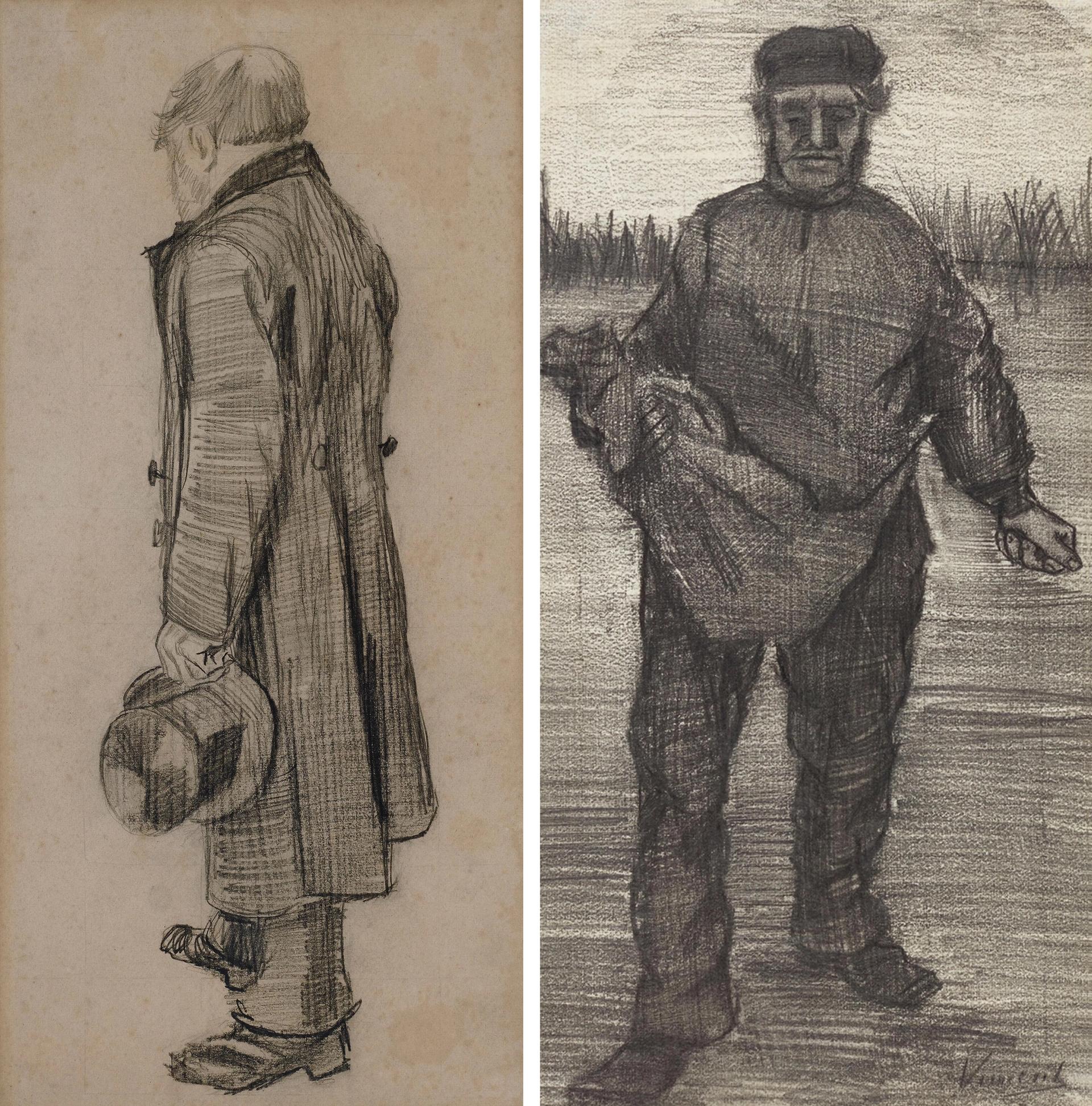
Van Gogh’s Orphan man with a High Hat in his left Hand (Weesman met een hoge hoed in zijn linkerhand) (September-December 1882), arising at Christie’s / Sower (Entrance View) (December 1882), arising at Sotheby’s
Credit: © Christie’s / © Sotheby’s
Christie’s is providing Orphan man with a High Hat in his left Hand in New York on 13 Could, estimated at $400,000-$600,000. It has been within the household of the New York-based publicist Benjamin Sonnenberg since 1961.
Sotheby’s has Sower (Entrance View)(December 1882), which is estimated at $550,000-$650,000. It can come up on the market on 17 Could, 4 days after the Christie’s sale.
Which can fetch extra? Van Gogh’s orphan man (almshouse man) or his sower?