Jews were barred from owning land in most of Europe (the Netherlands being a rare exception) until the late 18th century. But from the French Revolution onwards, a piecemeal emancipation allowed wealthy Jewish merchants, industrialists and bankers to buy estates, often displacing the dispossessed or impoverished old nobility, and to build or remodel country houses fitting their newly uplifted status.
Over 130 years or so, until the Shoah and the Second World War swept their world away, around a thousand of these houses sprang up across Great Britain and Continental Europe, often near fashionable seaside and lakeside resorts or clustered near capital cities so that political and business interests could be combined with sophisticated rural living.
Not just second homes, these country houses gave their owners a significant place in their local communities as landlords, employers and pillars of society. At the same time, their eclectic mix of architectural styles, their interiors furnished from Europe’s auction salerooms and their art collections from the best galleries were visible evidence of their disconnect from local cultural traditions.
Houses like Waddesdon Manor in Buckinghamshire, Château de Champs-sur-Marne outside Paris, Schloss Freienwalde in Brandenburg or Villa La Montesca in Umbria expressed the dichotomy of being Jewish and English, Jewish and French, Jewish and German or Jewish and Italian. In this, they mirrored their creators—Rothschild, Cahen d’Anvers, Rathenau and Franchetti—dynasties infused with the ambiguities and complexities of assimilation and exclusion.
Multifaceted influences
Jewish Country Houses, a collection of studies by an international team of cultural historians, architects and curators, is a monumental tribute to these statements of social arrival, the families that conceived them and the complex, multifaceted cultures that informed them.
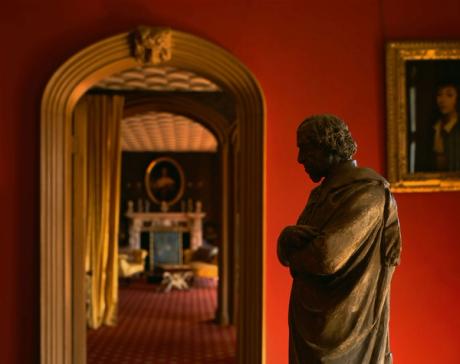
Newly published by Profile and Brandeis University Press, in association with the National Trust, the book is monumental both in content and form: 352 pages of dense text lavishly illustrated with historical images and sumptuous photographs by the Franco-Swiss architectural photographer Hélène Binet. It is a weighty tome, literally and figuratively, combining coffee table looks with serious scholarship.
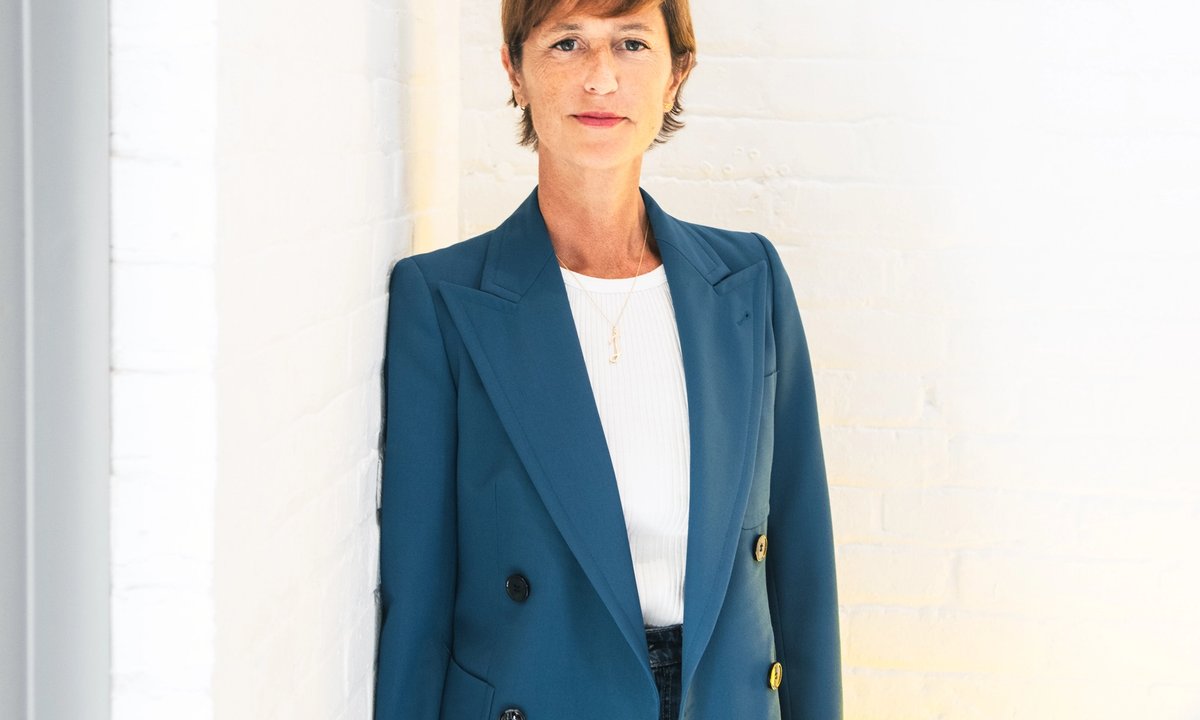
The joint editors are Juliet Carey, the senior curator at Waddesdon Manor—the seat of the Rothschild Foundation and now owned by the National Trust—and Abigail Green, a professor of modern European history at the University of Oxford.
Carey and Green have also written and co-authored important sections of the book. Carey guides the reader through Waddesdon’s performative medley of architectural and decorative styles, and the equally performative character of Ferdinand de Rothschild (1839-98), its creator. Green, in partnership with Tom Stammers, a professor at Durham University, writes on Broomhill, the Kent estate of the Salomons family, including the 19th-century patriarch Sir David Salomons (1797-1873), who was barred from standing for parliament but became the first Jewish Lord Mayor of London.
Together with other contributors, Green and Carey share authorship of a socio-historical prologue exploring the story of the Jewish country house as a synthesis of Jewish and European cultures; a coda on American iterations created by Jewish migrants escaping European antisemitism; and a postscript tracing the mixed responses of post-Holocaust Europe to its surviving Jewish heritage—responses that range from celebration through eradication to denial.
The book’s case studies explore in detail the genesis and histories of a dozen of these houses that are now open to the public. Like the houses themselves, these are complex and multilayered. Studies of architecture and design are interwoven with personal, family and social histories. Each chapter is a stand-alone contribution by a specialist author—such as a guided tour of Benjamin Disraeli’s Hughenden Manor by its custodian Robert Bandy; the Berlin Secession artist Max Liebermann’s Wannsee villa described by the University of Bonn art historian Lucy Wasensteiner; and Villa Kérylos, the Riviera hideaway of French polymath and politician Théodore Reinach, by the historian and archaeologist Henri Lavagne.
A gripping page-turner it is not. But overall, Jewish Country Houses adds up to more than the sum of its parts. Chapter by chapter, insights accumulate. Diverse and fluid identities—Sephardic and Ashkenazi, religious and secular, radical and conservative, patriotic and transnational—emerge from the catch-all identifier “Jewish”. Intergenerational, marital and financial intersections come into view, linking houses and dynasties.
Cumulatively, the diversity and individuality of architectural styles, interior decors and contents—art and science collections, sporting trophies—challenge the one-size-fits-all paradigms of “country house” and “Jewish taste”. These houses were a product of their time—an age of European global imperialism, revolutionary industrialisation, social revolution, nationalist uprisings and wars. It was a fertile environment for disruptors with sharp wits, vision, determination, perhaps a ruthless streak, to build great fortunes—and houses in which to store them.
Not all the newly rich were Jewish. But in traditional, conservative country societies their exoticism stood out from the crowd. Their houses were visible manifestations of a social and cultural disruption so radical that it surely played a part in catalysing the vitriolic antisemitic backlash culminating in the Holocaust. This book offers food, not always easily digestible, for thought.
• Juliet Carey and Abigail Green (eds), Jewish Country Houses, Profile Books, 352pp, illustrated throughout, £45 (hb), published 7 November 2024
• Claudia Barbieri Childs is a regular contributor to The Art Newspaper and Brian Childs is a former editor for the New York Times