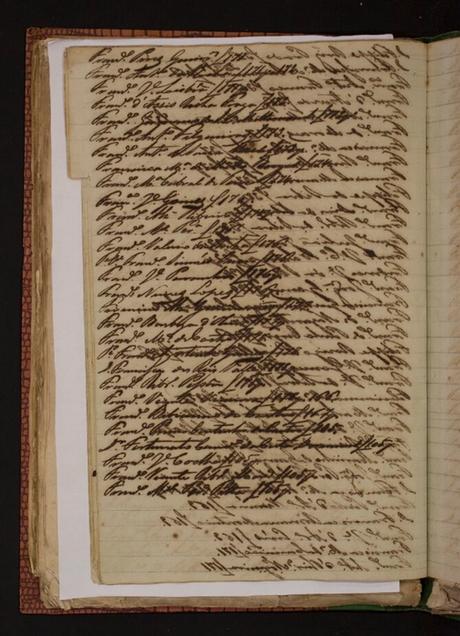
A study on the manumission of enslaved people in the state of Bahia is revealing the complex realities of slavery and emancipation in Brazil during the 19th century. The research draws from several volumes of notaries housed in the state archives that were mostly understudied until recent years, with a substantial part of the archives having been deemed too fragile to handle.
The ongoing research was launched by the US historian and professor Kristin Mann and the Brazilian researcher Urano de Cerqueira Andrade, a professor of the Universidade Federal da Bahia (UFBA) and researcher at the Arquivo Público do Estado da Bahia (APEB) in Salvador, where the archives are held.
The duo began their collaboration more than a decade ago, when Mann was researching the archives in preparation for a book exploring cases of people who were enslaved in Brazil but returned to West Africa after freeing themselves. Manumission papers, which typically identified the enslaved person’s race, place of origin, familial relationships and owner’s name, became vital to her research, and the project gradually expanded to encompass a more comprehensive database of the records.
The database has been widely studied since part of the findings were published in 2023 in the Manumission Papers, Bahia, 1831–1840. According to Mann, the database can be useful to researchers across various fields, but is first and foremost a tool for “descendants of enslaved Africans and Brazilian-born people to reconstruct their lives”.
A two-year digitisation project supported by the British Library’s Endangered Archives Programme was overseen by Andrade and fellow UFBA professor João José Reis beginning in 2015. The project saw the digitisation of more than 300,000 papers from the archives, including records previously restricted to researchers due to conservation concerns, helping preserve the collection by reducing the need for physical handling of the books.
The cataloguing of the database is still in progress. It currently includes around 22,860 manumission records, covering the period from 1800 to 1860. The goal is to cover more than two centuries of manumission in Bahia, continuing until 1888 and going back to records dated from 1664, which are the earliest known records held in the APEB.
The information recorded varies in each manumission paper, highlighting some historical nuances. For example, most enslaved people were required to work as street vendors, housekeepers or in other roles, and paid their owner a quota of their earnings, although occupations are found in less than 2% of the records. Manumission prices paid to owners are also absent in more than 60% of the papers, suggesting that some manumissions could have been gifts.
The researchers found a prevalence of “conditional manumissions”, or freedom granted on the condition of the freed person fulfilling obligations or continuing to work until their former owner was deceased. There were also convoluted conditions, such as: “Cooking for her mistress whenever she returns from Rio de Janeiro to Bahia”, or “Freed with the condition of continuing to be punished and serving others”.
“There was an enormous fragility between being free and being enslaved,” Andrade says. “Even in a state of freedom, conditional manumission letters reveal the continued power masters exercised over their former slaves, maintaining bonds of servitude, subjection and physical punishment, with the right to revoke the manumission at any time if the person disobeyed their orders.”
Some letters reveal familial ties between masters and their enslaved people, such as a records stating: “Sister of her master, daughter of her father, who frees her from being his sister,” and, “Freed by her mistress upon discovering that she was her sister, daughter of her father.” There are also contradictory cases of enslaved people who were freed but returned to their owners.
The research also highlights how families who were separated upon arrival in Bahia were sometimes reunited in Brazil. “Testimonies left by Africans victimised by the transatlantic slave trade make it clear that family members were often captured together but rarely sold together,” Andrade says. “Despite that, enslaved Africans rebuilt emotional bonds and enduring relationships.”
Some of the owners listed on the manumission papers were themselves formerly enslaved, emphasising how the boundaries between enslavement and freedom were often blurred. Although the sex of the enslaved person was not always stated in manumission papers, women appear frequently as manumitters, with researchers recording more than 300 cases of enslaved women who were also slaveowners.
“These women lived according to the dynamics of their time,” Andrade says. “Even the humblest person, and at times an enslaved person, could own others, sometimes giving them up in exchange for their own freedom.”
The most common racial designation was “Criolo” or “Criolinha”, referring to someone born in Brazil of African descent, while “Africano” or “Preto” was generally used for people born in Africa. The distinction between Africans as opposed to mixed-race people became especially pertinent after the establishment of the Brazilian constitution in 1824.
“Under the terms of the constitution, enslaved people born in Brazil who freed themselves did not have full political or civil rights, but had some rights,” Mann says. “Freed people who had been born in Africa, who were identified as Africano or Preto, had no rights and were treated as stateless people. Those distinctions of place of birth and of colour also tell you something about the person’s experience after manumission.”
The research has been and continues to be conducted page by page, with the information digitally entered in the database, which requires careful paleographic reading. In the future, Mann and Andrade hope to revise the database to standardise variables like spelling and references to origin and colour that were used synonymously.
The APEB also holds a significant collection of related documents dating from the colonial period to the present day, such as lawsuits dating from the 1870s onward, when enslaved people were granted legal recognition and could challenge illegal enslavement or the violation of manumission agreements. With the advancement of the abolitionist movement, manumission gradually became a matter for the courts, rather than notaries.
“Studying these letters also offers many possibilities,” Andrade says. “It exposes how a slaveholding society used physical and psychological violence as a tool of control, perpetuating its power for centuries.”