

Crypto exchanges have always been about speed: launch fast, grab market share, scale hard.
And for a long time, that was enough.
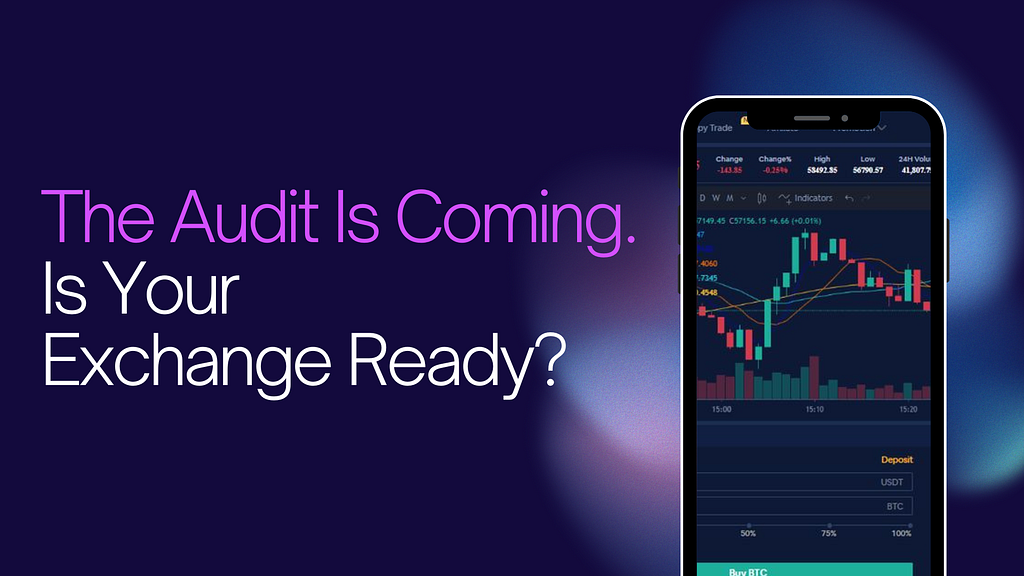
But here’s the part nobody warned you about. The regulators showed up. And they didn’t come to celebrate how fast you moved. They came with a checklist.
That checklist is what’s going to take down 90% of exchanges in 2026.
Not a hack. Not a market crash. A compliance audit.
You Have a Compliance Policy. That’s Not the Same as a Compliance System.
Most exchange teams reading this have something in place: A KYC vendor. An AML policy document. A third-party tool that sends alerts nobody fully acts on.
That feels like compliance. It isn’t.
A policy tells people what should happen. A system proves what actually did happen. Regulators in 2026 don’t want the first one. They want the second.
And most exchanges, if they’re being honest, can’t prove their compliance
One Question That Exposed Everything
Last year, an auditor asked us something simple.
Show us every flagged transaction from the last 90 days. Who reviewed each one. What was decided?
It should have taken ten minutes.
But it took us three days.
The data existed somewhere. Spread across a vendor dashboard, a spreadsheet, a Slack thread from March nobody had reopened. Nothing connected, no clear trail, and no system.
That moment wasn’t just embarrassing. It was expensive information. Because if we couldn’t answer that question for ourselves, we had zero chance of answering it for a regulator.
Why So Many Exchanges Are Walking Into This Unprepared
Here’s the truth about how most crypto exchange software gets built.
The focus goes where it should go first: matching engine performance, wallet security, and withdrawal reliability. Compliance is handled by buying a vendor and writing a document. Check the box. Move on.
Nobody is lying, and nobody is cutting corners maliciously. They’re just building a product in a competitive market and making the same reasonable trade-off almost everyone makes.
The problem is that the trade-off has an expiration date. And for most exchanges, that date is 2026.
What Regulators Are Actually Looking For
This surprises people. Compliance audits are not primarily about catching fraud.
They’re about process. They want to see that your cryptocurrency exchange software has a working, repeatable system for identifying risk, reviewing it, making a call, and recording all of it permanently.
That’s the whole test.
You need to show the flagged transaction, the review process, the final decision, and where it’s securely stored without any changes.
Simple to describe. Surprisingly hard to actually demonstrate when your compliance data is scattered across five tools that don’t talk to each other.
What Fixing It Actually Looks Like
We stopped patching and rebuilt from the ground up.
First, we mapped every place where compliance-relevant data lived in our system. Nine disconnected tools. No single owner. It looked exactly as bad as it sounds.
Then we built an audit trail that actually holds up. Every flag, every review, every decision is locked into an append-only, cryptographically signed log. Tamper-evident. Exportable in any format. Permanent.
Four weeks of work. The most valuable four weeks we’ve spent in years.
Then we closed the gaps between tools. The place where compliance always dies isn’t inside a system. It’s in the handoff between systems.
Then came the Travel Rule — real integration, not a workaround. Fully automated counterparty information exchange on every transfer above the threshold. No manual steps and no missing records.
Why Every Serious Exchange Needs to Move on This Now
The teams building with a serious cryptocurrency exchange software development company today aren’t chasing a trend. They’re solving a problem that’s been sitting in their stack for years, quietly creating risk while they focused on everything else.
The window to fix it before regulators arrive is still open. Not for long.
Final Thoughts
Running a crypto exchange is still one of the biggest opportunities in fintech. Nothing about that has changed.
What’s changed is that the exchanges that survive the next two years won’t just be the fastest or the cheapest. They’ll be the ones who can sit across from an auditor, answer every question cleanly, and walk out of that room still operating.
The ones that can’t won’t get a second chance.
If your compliance infrastructure isn’t something you could defend in a room right now, it’s time to make it one.
Ready to Build an Exchange That Passes Any Audit?
If you’re serious about building compliant, audit-ready infrastructure — don’t wait for the notice to land in your inbox.
Maticz is a leading cryptocurrency exchange software development company that builds compliance into the architecture from day one — not bolted on after the fact.
The team at Maticz has already helped exchanges solve exactly this problem. Clean audit trails, Travel Rule integration, AML infrastructure that actually holds up in a real review room.
Not just an exchange. An exchange that survives.
90% of Crypto Exchanges Will Fail 2026 Compliance Audits — Here’s How We’re Building to Survive was originally published in The Capital on Medium, where people are continuing the conversation by highlighting and responding to this story.