When Jose Garcia began designing the FotoFocus Center museum in Cincinnati, one of the few institutions in the US devoted to photography, he returned to the medium’s origins. The local architect conceived of a three-tone building with blacks, whites and sepias, the historical palette for photography.
On the exterior, black iron bricks reference the prevalence of brick buildings in the surrounding historic neighbourhoods of Mount Auburn and Over-the-Rhine. They were founded by German immigrants in the 1830s, around the same time photography was invented. The “sepia” comes from three types of wood: European pine, maple and red oak indigenous to the area. A white stone called caliza, as well as black granite, hail from Argentina, where Garcia is from. Gridded windows through the building evoke photographic viewfinders.
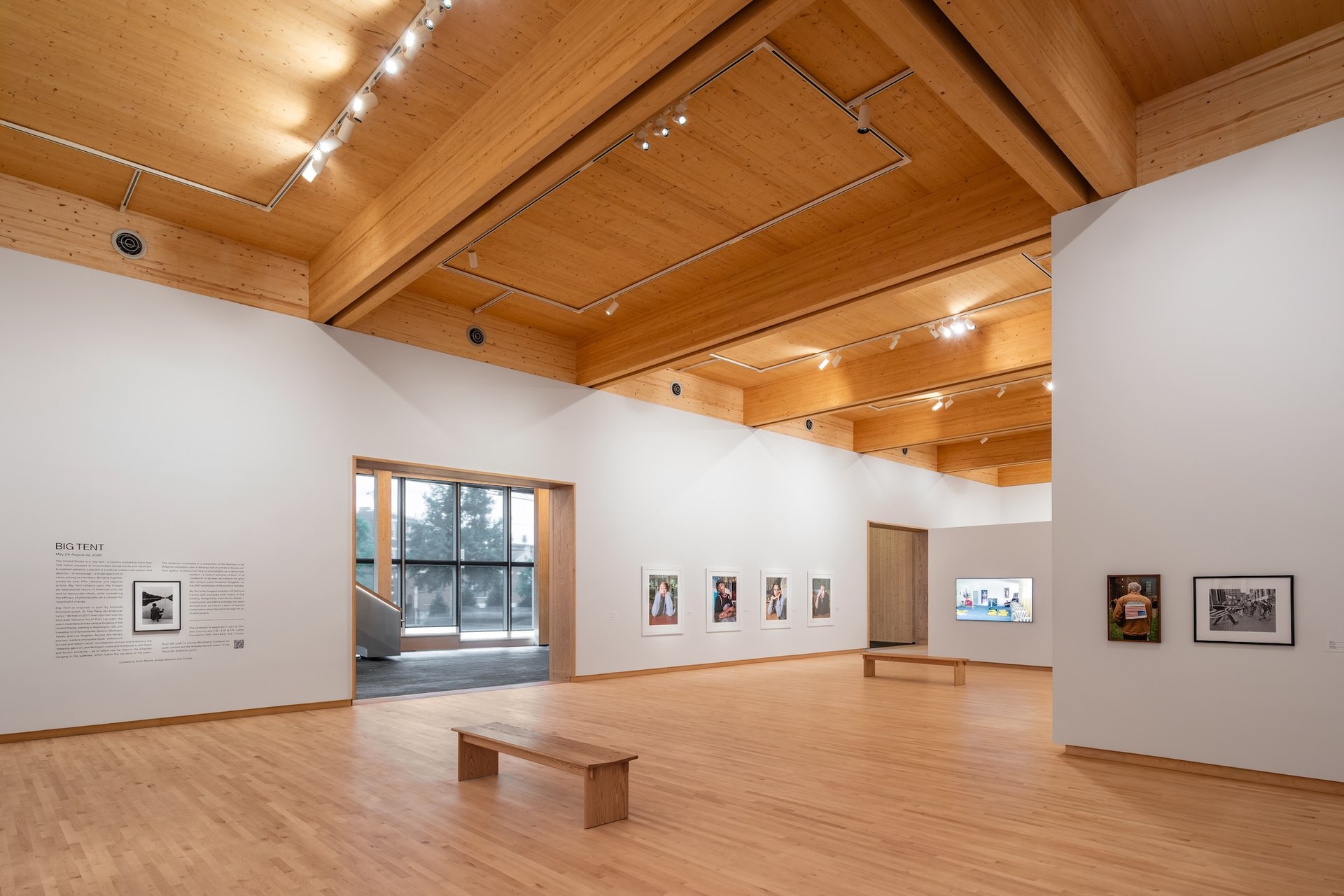
Installation view of Big Tent, the inaugural exhibition at the FotoFocus Center in Cincinnati Photo: Wes Battoclett
With this mix of regional and foreign materials, Garcia nods to histories of art, architecture and the region alike. “Once you walk inside, it’s very warm and welcoming, which is the idea of the institution,” Garcia says. “It belongs to anyone and everybody. You’re at home when you’re here.”
The project, which opened in late May after over three years of construction, marks a major milestone for FotoFocus. The non-profit organisation has mounted photography biennials across the region since 2010 and funded local art institutions in times of need (especially in the early days of the Covid pandemic).
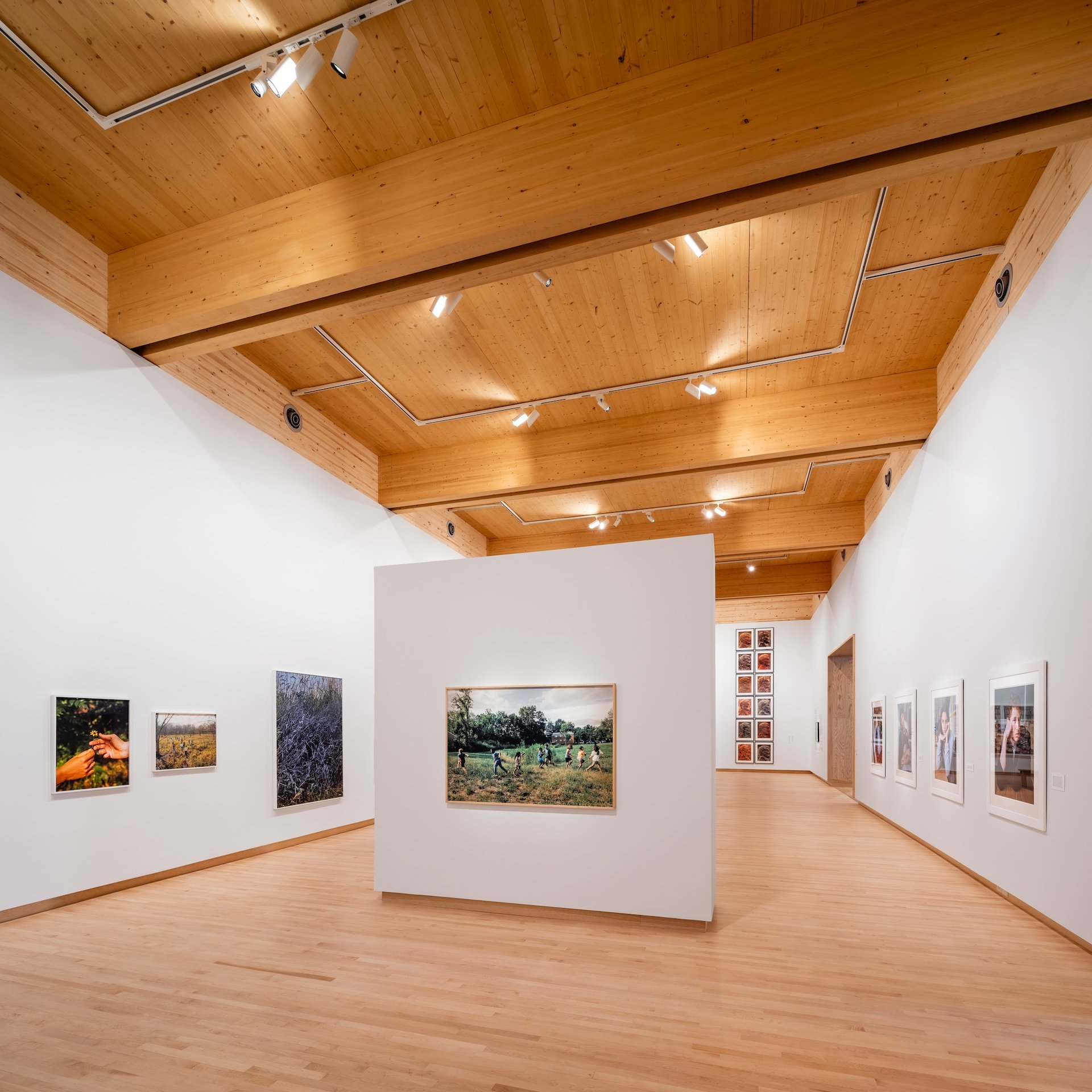
Installation view of Big Tent, the inaugural exhibition at the FotoFocus Center in Cincinnati Photo: Wes Battoclett
The new, 14,700-sq.-ft museum, on a lot that formerly housed an abandoned gas station, gives FotoFocus a permanent space for exhibitions and programming. “Everyone here seems thirsty to have conversations, to use photography as a jumping-off point for a lot of topics and ideas. The reception to FotoFocus, and its growth, have demonstrated that photography year-round is right for Cincinnati,” says executive director Katherine Siegwarth.
FotoFocus’s inaugural show in the building, Big Tent(until 22 August), reflects on American diversity. Artistic director and curator Kevin Moore took inspiration from the 2017 poem “In This Place (An American Lyric)” by the US’s former National Youth Poet Laureate, Amanda Gorman. She wrote of “the Protestant, the Muslim, the Jew / the native, the immigrant / the black, the brown, the blind, the brave / the undocumented and undeterred, /the woman, the man, the nonbinary, / the white, the trans”, referencing places from Boston and Charlottesville to East Texas and California.
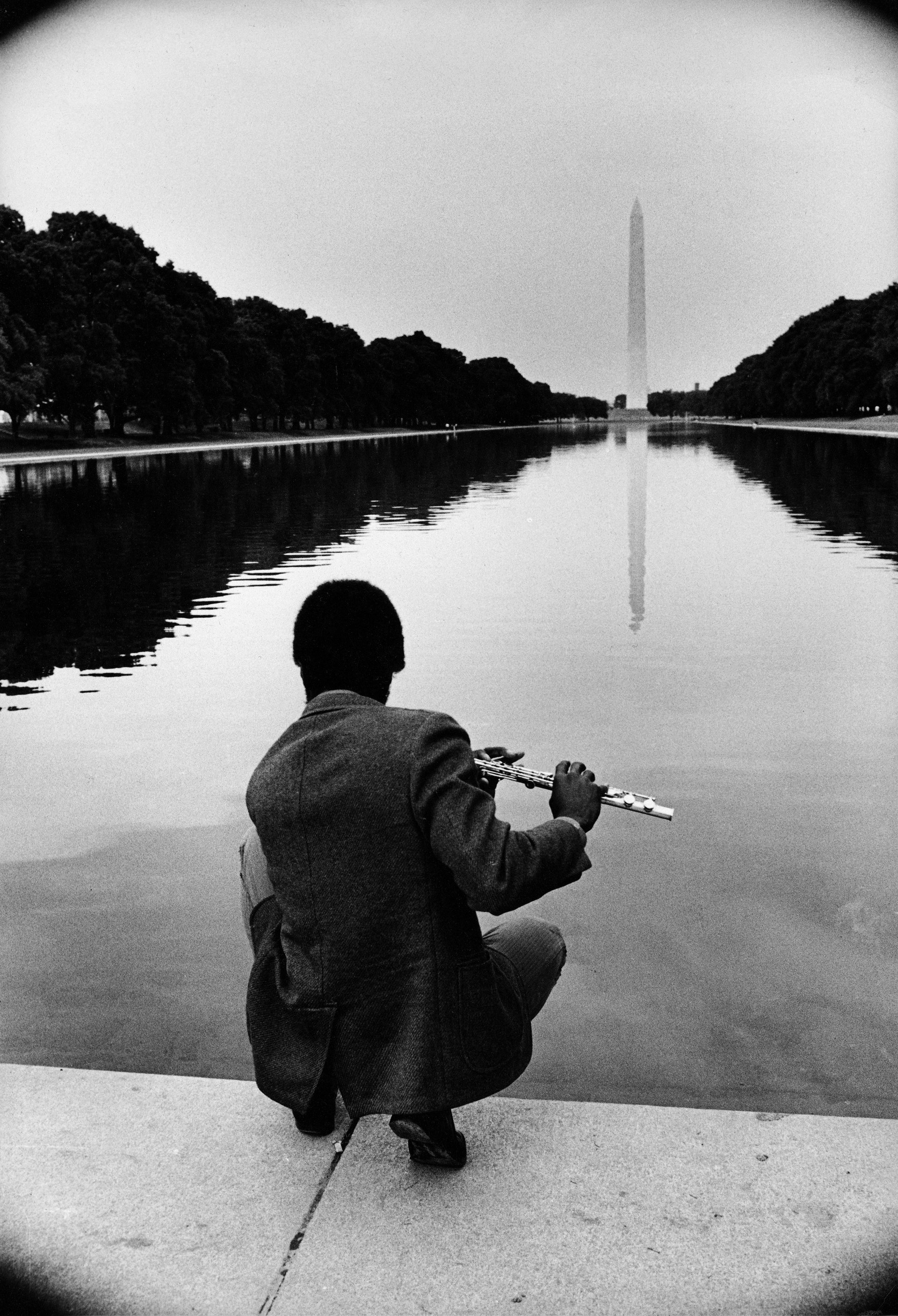
Jill Freedman, Monumental Flute, Resurrection City, Poor People’s Campaign, Washington, DC, 1968 Courtesy of the Estate of Jill Freedman
Moore echoes this expansive vision, bringing together works by dozens of artists—including Marco Anelli’s photographs of new Americans receiving their citizenship in New York City, Catherine Opie’s vast images of Lake Michigan and a Gordon Parks picture of mid-century Alabama—that offer a virtual road trip across time, place and disparate communities. A number of the featured works come from Cincinnati photography collections.
Moore has also included many local photographers, among them Asa Featherstone, Madeleine Hordinski, Michael Wilson, Tina Gutierrez and Melvin Grier. On the building’s second floor, a wall of portraits ranges from David Benjamin Sherry’s vivid 2015 picture of a queer subject in New Mexico’s White Sands Missile Range to a black-and-white Robert Mapplethorpe composition of a seated female figure from 1977.
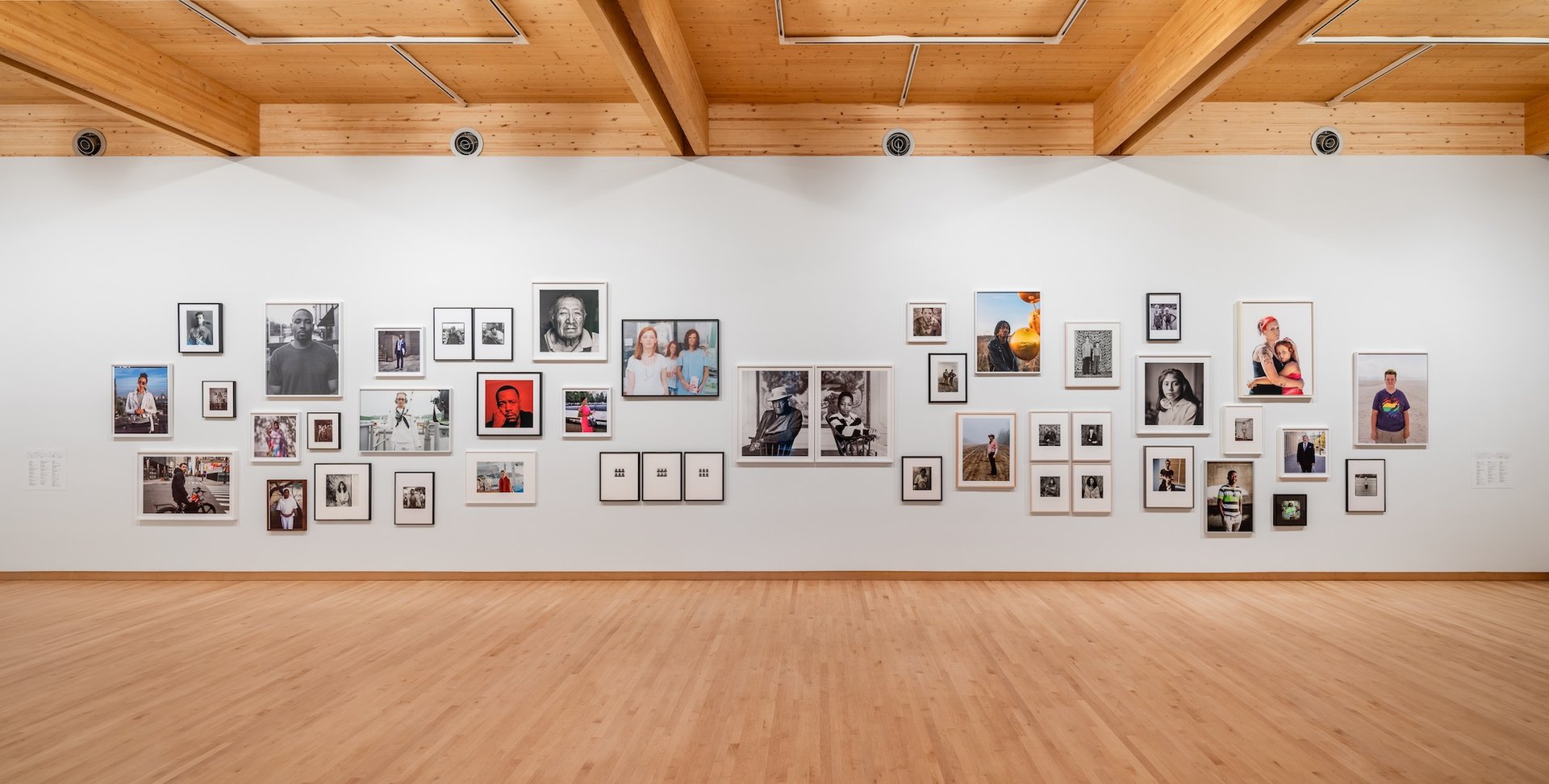
Installation view of Big Tent, the inaugural exhibition at the FotoFocus Center in Cincinnati Photo: Wes Battoclett
Mapplethorpe is key to Cincinnati’s photography lore. In 1990, the artist’s retrospective at the city’s Contemporary Arts Center kicked off obscenity trials that received national attention. Moore celebrates such subversive legacies. At a press preview for the FotoFocus museum, he noted that thanks to the generosity of the patron Tom Schiff, the organisation is at liberty to champion work that challenges today’s dominant political narratives.
“In this institution, in this moment, we have an opportunity to have serious conversations about what’s happening,” Moore said. “A lot of state-funded institutions who rely on federal funding might come under fire. But we’re in our right to say what we want.”
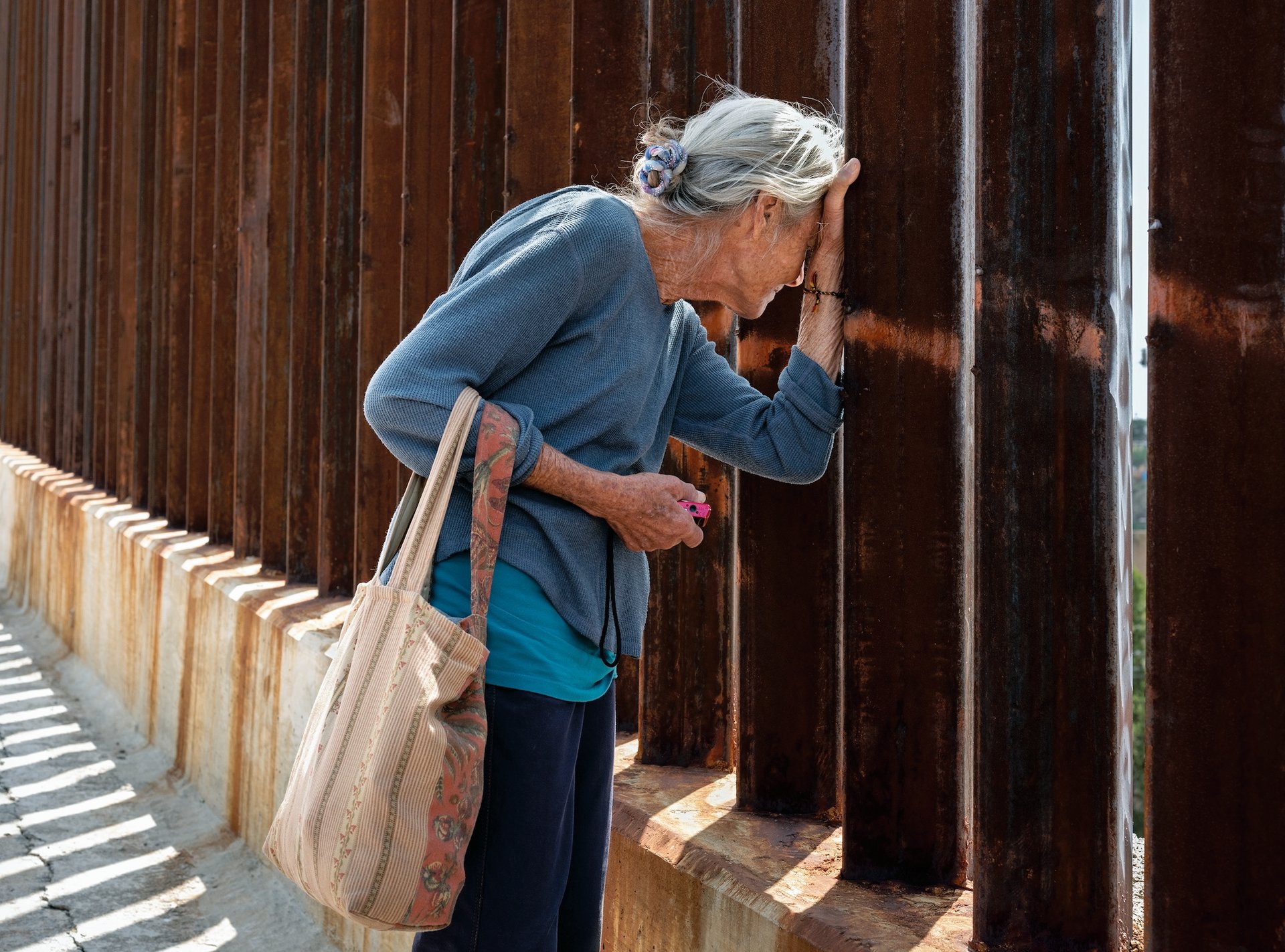
Mitch Epstein, Border Wall, Nogales, Arizona 2017, 2017 © Black River Productions, Ltd. / Mitch Epstein. Courtesy of the artist and Sikkema Malloy Jenkins, New York. Used with permission. All rights reserved
Schiff himself is an architectural photographer whose work as a major photography collector began after he started Images Gallery in Cincinnati in 1980. When his shows failed to sell out, he purchased the work himself. He subsequently founded Lightborne, a local production studio. Schiff now owns more than 800 photographs, mostly black-and-white, by artists who were active in the latter half of the 20th century.
Moore praised Schiff’s vision “of believing in photography as a medium through which you can understand the world and meet interesting people”. “Tom is a remarkably generous person, and that permeates the vision of FotoFocus,” Moore added. “It’s about building communities, spreading joy for the medium.”
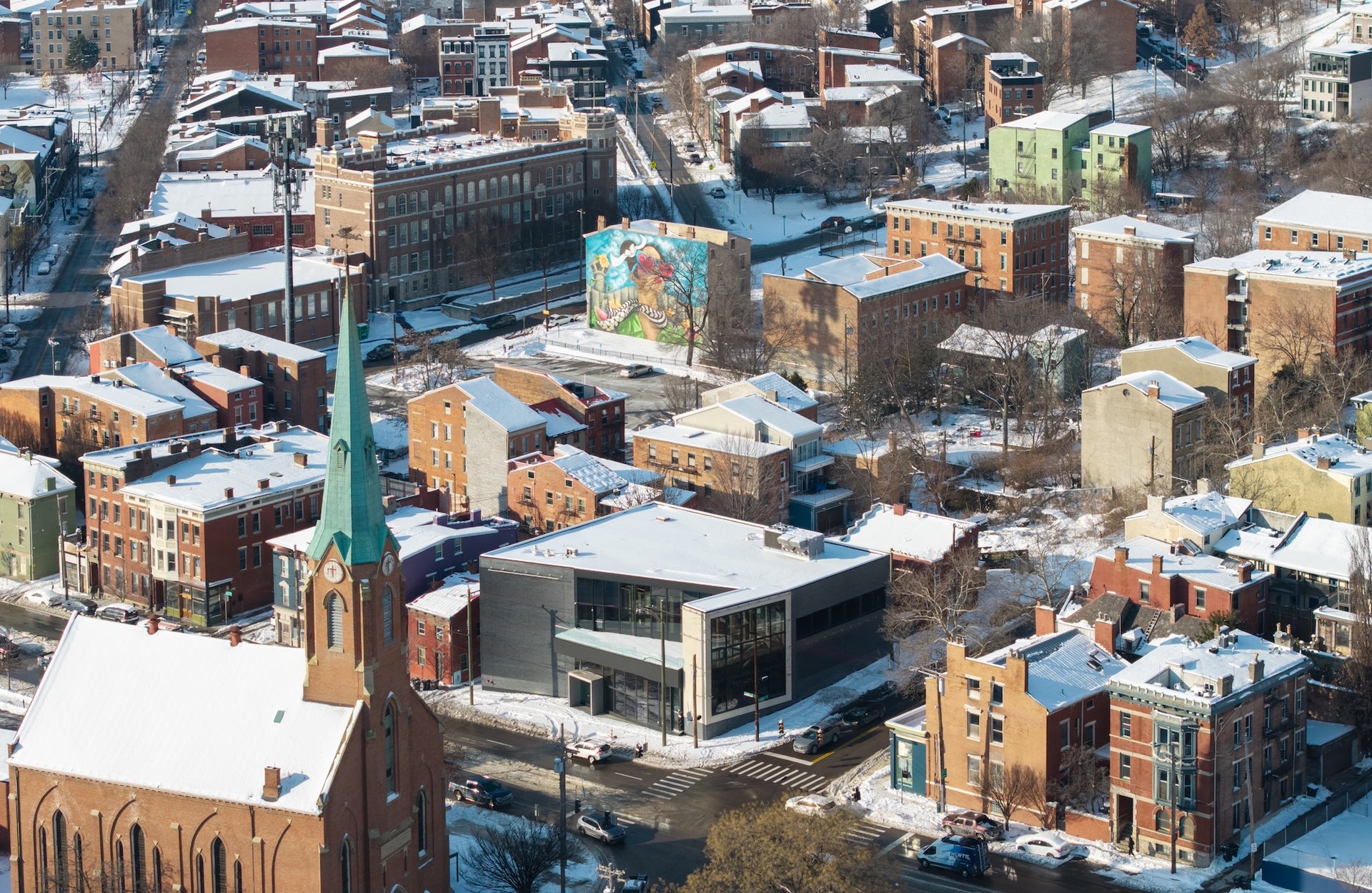
Aerial view of the new FotoFocus Center in Cincinnati Photo: J Miles Wolf
During the run of Big Tent, the institution will publish a catalogue titled Democratic States of Photography. It focuses on “photography as a democratic medium and how people can use it and be represented by it”, Moore says. “It’s a mode for direct representation, which is what democracy is supposed to be.”
This autumn, FotoFocus will present a solo show by Trevor Paglen as part of the 2026 biennial. Paglen’s work often focuses on technology and surveillance, and Moore made room for one of his dye sublimation prints of floral blooms within Big Tent as well. It serves as a teaser for the show to come, a trippy theoretical addition to a humanistic exhibition.
Siegwarth touched on the institution’s progressive, inclusive approach. “That’s the goal of what FotoFocus is about,” she says. “Broadening everyone’s perspective by bringing so many voices together.”