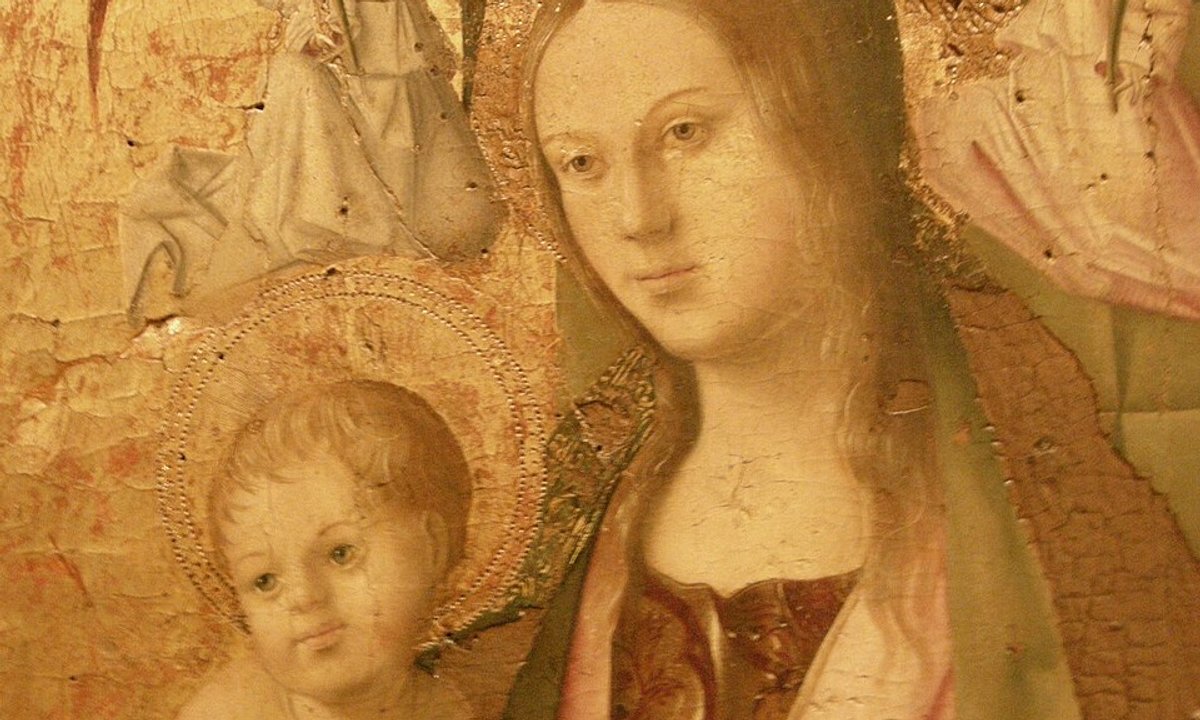


Four works by the Renaissance master Antonello da Messina were stolen from the Museo Regionale di Messina in the artist’s hometown in Sicily on 15 August. Messina’s Mayor, Federico Basile, told Reuters that the thieves entered the Museo Regionale di Messina late on Saturday during Assumption Day celebrations, including the traditional Vara procession.
The thieves stole five wooden panels that made up a famous altarpiece known as Polittico di San Gregorio (1473) but abandoned two panels outside the museum. Finistre sull’Arte reports that the two panels left behind were those depicting St Benedict and St Gregory.
The altarpiece, originally made up of six panels, was made for a local monastery, the Monastero di San Gregorio, which was destroyed in an earthquake in 1908. The remaining panels were subsequently housed at the museum.
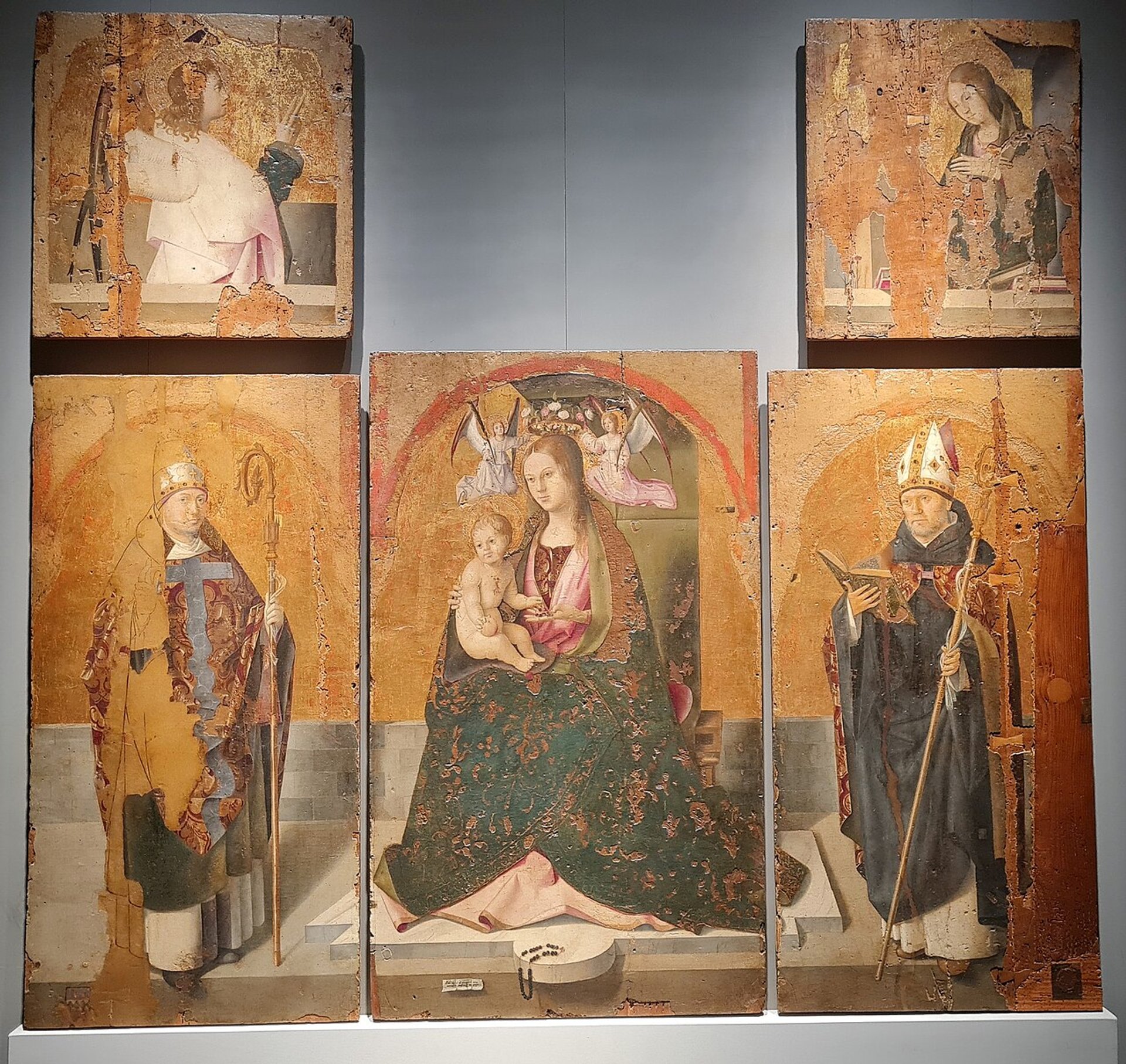
The panels of the two saints were reportedly left behind outside the museum
Photo: Derbrauni; Courtesy Wikimedia Commons
The robbers also stole a small, double-sided painting—depicting the Virgin with Child and a Franciscan monk on one side, and Christ on the other—from a secure display case. The work was part of the Wilhelm Soldan collection which was sold by Christie’s to the Sicilian Region in 2003.
According to the Sicilian newspaper Gazzetta del Sud, when the thieves smashed the display cases to steal the paintings, the alarm system was immediately activated. Footage from the museum’s video surveillance system shows that the gang of thieves operated within “a period of between two and three minutes”, adds the report.
The purchase of a Messina work by the Italian state for $15m earlier this year boosted the artist’s profile. In February, the Italian government bought Ecce Homo and Saint Jerome in the Desert (around 1430–79) from Sotheby’s before it went under the hammer in New York.
Christopher Marinello, the founder of Art Recovery International, tells The Art Newspaper that “the sale at Sotheby’s certainly set off some alarm bells in the small minds of the thieves. However, I do not believe that these criminals are local. No one, not even the most hardened mafioso, would desecrate their own town in this way.”
“This theft has an eerie similarity to the 1990 Isabella Stewart Gardner heist,” he adds, referencing the unsolved Boston burglary on the night of St. Patrick’s Day. “The criminals knew that everyone would be focused on the Festa della Vara.”
Marisa Mercurio, the museum director, told Sky TG24: “These are not merely works by Antonello da Messina. They are works that hold considerable significance in terms of our identity, as well as, of course, their artistic and cultural value, because they are works by our very own Antonello da Messina.” The Italian culture minister, Alessandro Giuli, also expressed “dismay and regret [regarding] the theft” in a government statement on Sunday.
The National Gallery in London has five Messina works in its collection including Portrait of a Man (around 1475-76). Its website states that he “was the main early Renaissance painter of southern Italy”, was likely trained in Naples and painted an influential altarpiece for the church of San Cassiano in Venice.