

Saturday, September 5, 2026
  • Login
SB Crypto Guru News- latest crypto news, NFTs, DEFI, Web3, Metaverse
No Result
View All Result
  • HOME
  • BITCOIN
  • CRYPTO UPDATES
    • GENERAL
    • ALTCOINS
    • ETHEREUM
    • CRYPTO EXCHANGES
    • CRYPTO MINING
  • BLOCKCHAIN
  • NFT
  • DEFI
  • WEB3
  • METAVERSE
  • REGULATIONS
  • SCAM ALERT
  • ANALYSIS
CRYPTO MARKETCAP
  • HOME
  • BITCOIN
  • CRYPTO UPDATES
    • GENERAL
    • ALTCOINS
    • ETHEREUM
    • CRYPTO EXCHANGES
    • CRYPTO MINING
  • BLOCKCHAIN
  • NFT
  • DEFI
  • WEB3
  • METAVERSE
  • REGULATIONS
  • SCAM ALERT
  • ANALYSIS
No Result
View All Result
SB Crypto Guru News- latest crypto news, NFTs, DEFI, Web3, Metaverse
No Result
View All Result

‘Attribution decay’ complicates the picture of AI-generated images, scientists find – The Art Newspaper

by SB Crypto Guru News
September 4, 2026
in NFT
Reading Time: 5 mins read
0 0
A A
0


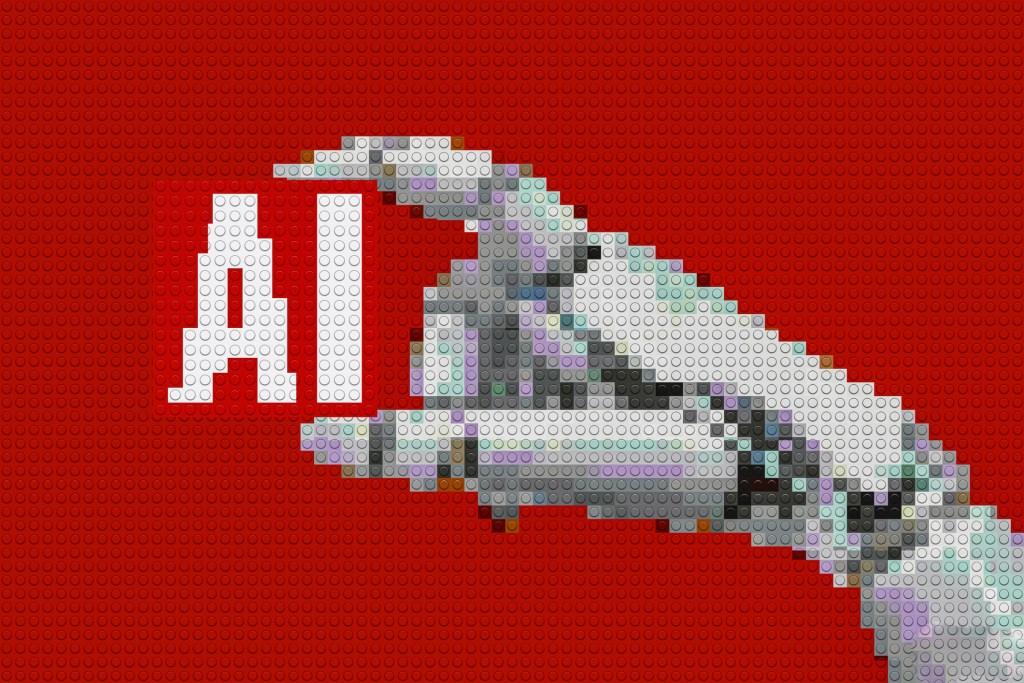
Art generated with artificial intelligence (AI) relies on models trained on billions of images. That training has been the subject of much debate and several ongoing or impending lawsuits. Many consider the training to be a form of involuntary extraction and that the images derived from it are a violation of countless artists’ copyrights, but recent scientific findings about how AI processes the information it is trained on complicate this view.

Scientists at the Massachusetts Institute of Technology’s Computer Science and Artificial Intelligence Laboratory published new research in Nature Communications on 18 August that explores a phenomenon they have termed “attribution decay”. The researchers, Zheng Dai and David K. Gifford, found that in large datasets, removing certain data did not change the output. The argument that could be made in light of this goes something like: if a copyrighted image was part of the training data, and removing it did not change the generated image, then the generated image could not be accused of copyright infringement.

The researchers “developed a method for taking away one piece of the training sets and then regenerating the image as though that piece of training data didn’t exist”, Dai says. “And if you find that [the output] doesn’t change much, then you can’t attribute it to that piece of data, because it didn’t have any influence on the final output.” He adds that in the context of image generation, “when you train on large data sets, there is no piece of data that you can take out that significantly alters the image, and that [leads] to this idea of unattributability”.

So for example, if A Bigger Splash (1967) and even David Hockney’s entire oeuvre were removed from a dataset, could the AI tool still churn out a Bigger Splash-like image with the right set of prompts? Dai says that such scenarios would be speculative, but if the training data contained traces of A Bigger Splash, the AI tool could still generate something resembling the famous painting at Tate Britain. In other words, even if all direct references to A Bigger Splash are removed, the dataset might still include enough indirect references, derivative images like parodies, glimpses of it or echoes of it to generate a Bigger Splash-like image. In this hypothetical scenario, Hockney’s original painting would not be part of the dataset the generation relied on, so one could argue in court that there was no copyright infringement.

“If you view [the] training off of people’s data as [infringement],” Dai says, “it is sort of ironic, the more infringement you do, the less infringing the output is.”

Framing their findings as scientific evidence that theft is OK, so long as it is done at a massive scale, is unlikely to win anyone over to the pro-AI side of the argument. Although AI tools can allow for direct infringement when prompted to replicate specific source material, the public sentiment against such models does not account for the sheer magnitude of the datasets involved. When these algorithms generate images based on broader prompts, they are referencing datasets comprising millions if not billions of images. To use a crude metaphor, if every online image of an artwork created by an artist were a grain of sand, to accuse an AI artist of violating your copyright each time they generate an image is a bit like walking up to a stranger on a beach and accusing them of building a sandcastle with your sand.

A loophole in this clumsy metaphor is that the systems at work are capable of choosing precisely which grains of sand to use if prompted to do so. More importantly, there is a big difference between holding an AI user accountable for the outputs their prompts generate, and holding the AI company accountable for how they trained their model.

Asked if his and Gifford’s findings effectively serve as a get-out-of-jail-for-free card for tech companies being accused of copyright infringement over their AI models, Dai has a caveat. “It certainly looks like it from one angle, but I think it is trickier than that,” he says. “For example, if every single artist joined a class action lawsuit and said, ‘Oh no, you can’t use [our works]’… If you take out every single piece of artwork [from a dataset], then obviously the model wouldn’t exist.” But, he added that in a legal battle, companies could remove a copyrighted image to show its absence does not change the output, demonstrating unattributability as an argument against copyright infringement.

It seems unlikely that a global artists’ movement will lobby to collectively opt out of all AI training, but even if we did, AI models would still be able to draw from works that are in the public domain or derivative works, and a plethora of additional types of material we may not have even considered. Dai and Gifford’s findings do not exonerate the training process itself; even if an AI company were to argue for unattributability in a particular output, it could still be held liable for how its algorithms were trained.

Attribution decay complicates an already contentious legal landscape in which the public perception is often that all generated output violates copyright, and none of it is copyrightable. To be sure, AI-generated works of art can still be copyrighted under certain conditions. The United States Copyright Office insists on a case-by-case approach that looks for the existence of human creative expression.


Source link

Tags: AIGeneratedArtAttributionBitcoin NewscomplicatesCrypto NewsCrypto UpdatesdecayfindImagesLatest News on CryptoNewspaperPictureSB Crypto Guru NewsScientists
Previous Post

CoinRabbit Wins “Best Crypto Lending Platform 2026” Award from International Business Magazine

Next Post

House that featured second-oldest astronomical observatory in the Americas reopens after $1m conservation project – The Art Newspaper

Related Posts

Labor Day Was Built So You Could Rest. So Why Don’t You?

by SB Crypto Guru News
September 5, 2026
0

Opinions expressed by Entrepreneur contributors are their own. Key Takeaways Do not wait until Friday to slow down. Going cold...

Geles Cabrera, the pioneering Mexican sculptor, has died, aged 100 – The Art Newspaper

by SB Crypto Guru News
September 4, 2026
0

Over seven decades, the pioneering Mexican artist Geles Cabrera turned human forms into intimate, sensuous volumes in stone, terracotta and...

Colleges Are Closing. The Enrollment Crisis Is Just Beginning

by SB Crypto Guru News
September 4, 2026
0

Opinions expressed by Entrepreneur contributors are their own. Key Takeaways College closures are no longer isolated events — they reflect...

Toledo Museum of Art partners with Ethiopian Heritage Authority to find solutions for ‘objects in limbo’ – The Art Newspaper

by SB Crypto Guru News
September 4, 2026
0

The Toledo Museum of Art (TMA) has formed a new institutional partnership with the Ethiopian Heritage Authority (EHA), which will...

The Hard Truth About Going From Employee to Entrepreneur

by SB Crypto Guru News
September 4, 2026
0

Opinions expressed by Entrepreneur contributors are their own. Key Takeaways After I left my secure job to pursue entrepreneurship, I...

Load More
Next Post

House that featured second-oldest astronomical observatory in the Americas reopens after $1m conservation project - The Art Newspaper

Bitcoin Dips Below $80,000 On Strong US Jobs Report

  • Trending
  • Comments
  • Latest
Why the Founders Winning With AI Agents Aren’t the Ones Automating the Most

Why the Founders Winning With AI Agents Aren’t the Ones Automating the Most

August 14, 2026

TON Validators Prepare Node Update Ahead Of Collator Vote

August 22, 2026
AVAX Price Prediction: Bears Own This Chart — .98 Is the Next Stop

AVAX Price Prediction: Bears Own This Chart — $5.98 Is the Next Stop

August 16, 2026
How AI Agents Are Deleting the Steep Web3 Tooling Curve

How AI Agents Are Deleting the Steep Web3 Tooling Curve

August 15, 2026

EU Carbon Taxes Push Bitcoin Mining to Russia, Study Claims

August 23, 2026

ZachXBT Exposes Canada as Worst Global Hotspot for Crypto Fraud

August 22, 2026

‘Attribution decay’ complicates the picture of AI-generated images, scientists find – The Art Newspaper

0

Steps Get $200 Sign-up Bonuses

0

Lebron James Teases Polymarket Deal as Prediction Market Hype Explodes

0

Optimism Superchain Interoperability Goes Live On Sepolia Testnet

0

Labor Day Was Built So You Could Rest. So Why Don’t You?

0

How the “buy, borrow, die” tax trade is quietly loading DeFi pools with hidden credit risk

0

Lebron James Teases Polymarket Deal as Prediction Market Hype Explodes

September 5, 2026

How the “buy, borrow, die” tax trade is quietly loading DeFi pools with hidden credit risk

September 5, 2026

Wait for the CFTC to Rewrite the Rules

September 5, 2026

Labor Day Was Built So You Could Rest. So Why Don’t You?

September 5, 2026

TC2VZUTQ (10,800 USDT Sign-Up Bonus)

September 5, 2026

XRP Branding Hits Florida Field in Reported $5M Annual Ripple Deal – Bitcoin News

September 5, 2026
Facebook Twitter LinkedIn Tumblr RSS
SB Crypto Guru News- latest crypto news, NFTs, DEFI, Web3, Metaverse

Find the latest Bitcoin, Ethereum, blockchain, crypto, Business, Fintech News, interviews, and price analysis at SB Crypto Guru News.

CATEGORIES

  • Altcoin
  • Analysis
  • Bitcoin
  • Blockchain
  • Crypto Exchanges
  • Crypto Updates
  • DeFi
  • Ethereum
  • Metaverse
  • Mining
  • NFT
  • Regulations
  • Scam Alert
  • Uncategorized
  • Web3

SITE MAP

  • Disclaimer
  • Privacy Policy
  • DMCA
  • Cookie Privacy Policy
  • Terms and Conditions
  • Contact us

Copyright © 2022 - SB Crypto Guru News.
SB Crypto Guru News is not responsible for the content of external sites.

Welcome Back!

Login to your account below

Forgotten Password?

Retrieve your password

Please enter your username or email address to reset your password.

Log In
No Result
View All Result
  • HOME
  • BITCOIN
  • CRYPTO UPDATES
    • GENERAL
    • ALTCOINS
    • ETHEREUM
    • CRYPTO EXCHANGES
    • CRYPTO MINING
  • BLOCKCHAIN
  • NFT
  • DEFI
  • WEB3
  • METAVERSE
  • REGULATIONS
  • SCAM ALERT
  • ANALYSIS

Copyright © 2022 - SB Crypto Guru News.
SB Crypto Guru News is not responsible for the content of external sites.