


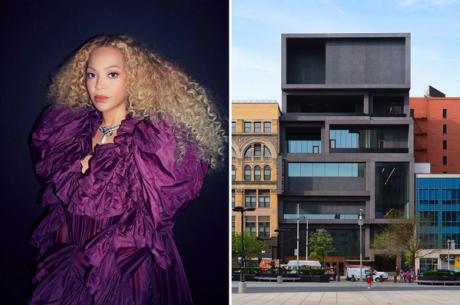
The superstar musician, entrepreneur and art collector Beyoncé turned 45 on 4 September, and she marked the occasion not only by releasing a deluxe anniversary edition of her legendary 2006 album B’Day, but also by donating $2m to the Studio Museum in Harlem.
“Art tells all our stories; the past and the present, but is not always accessible to everyone,” Beyoncé said in a statement. “I have always been impressed with the Studio Museum in Harlem because of its intention to make the museum an integral part of the community. I have been introduced to several of my favourite young and upcoming Black artists through exhibits at the museum. It is a place of inspiration where all audiences can discover new stories through the canvases of diverse storytellers that reflect our humanity.”
The generous gift from Queen Bey comes just under a year after the Studio Museum reopened to the public in its new $300m purpose-built home on 125th Street. The new 82,000-sq.-ft building—designed by Adjaye Associates with Cooper Robertson as the executive architect—includes more dedicated spaces for the museum to display its unparalleled collection of works by artists of the African diaspora, more prominent spaces for its renowned artist-in-residence programme, a rooftop terrace and expanded community spaces.
“I am deeply grateful to Beyoncé, both for the generosity of this gift, especially on her birthday, and for recognising the vital role that the Studio Museum plays in people’s lives,” Thelma Golden, the museum’s director and chief curator, said in a statement. “Our institution was founded to shift the arts landscape and reimagine who that landscape serves. This gift will allow us to continue strengthening our work for Harlemites, New Yorkers, and audiences across the globe.”
Beyoncé and her husband, the rapper and entrepreneur Jay-Z, are known to have a significant art collection (including works by Andy Warhol, Richard Prince, George Condo, Laurie Simmons and others), and they famously filmed a music video for one of their collaborative songs inside the empty galleries of the Musée du Louvre. Among their holdings are two Jean-Michel Basquiat paintings from the artist’s most sought-after year, 1982: the black-and-orange cityscape Mecca and the artist’s homage to Charlie Parker, CPRKR.
The Studio Museum is one of relatively few institutions with a major Basquiat painting in its permanent collection, as most museums were priced out of his market very early on. That large canvas, Bayou (1984), was on prominent display when the museum reopened last year.