

The artist Molly Gochman, who is known for her work with community, memorabilia and storytelling, has brought her long-running Memory Collage project to the Ukrainian Museum in New York this autumn on the occasion of the institution’s 50th anniversary.
She has been working with the museum’s head of collections, Maria Rewakowicz, and exploring the permanent collection of more than 46,000 objects (from photographs and documents to textiles and ceramics) reflecting the diverse stories of Ukrainian emigration and culture. The collage in the museum’s glass-walled entryway, windows and lobby was unveiled on 26 September, when the artist invited members of the community to bring anything from a fragment of fabric, a letter, photograph, handwritten recipe or shard of porcelain to be scanned and projected on-site. Gochman also accepts contributions to the project by email.
The museum is located in the part of Manhattan’s Lower East Side historically known as Ukrainian Village. Waves of Ukrainian emigrés fleeing tsarist pogroms, Bolshevik, Stalinist, and Nazi persecution, and now Russia’s full-scale invasion of Ukraine, have left their imprint on the institution. It was founded by the Ukrainian National Women’s League, with a collection dating back to the acquisition of 600 Ukrainian folk art pieces at the 1933-34 Chicago World’s Fair.
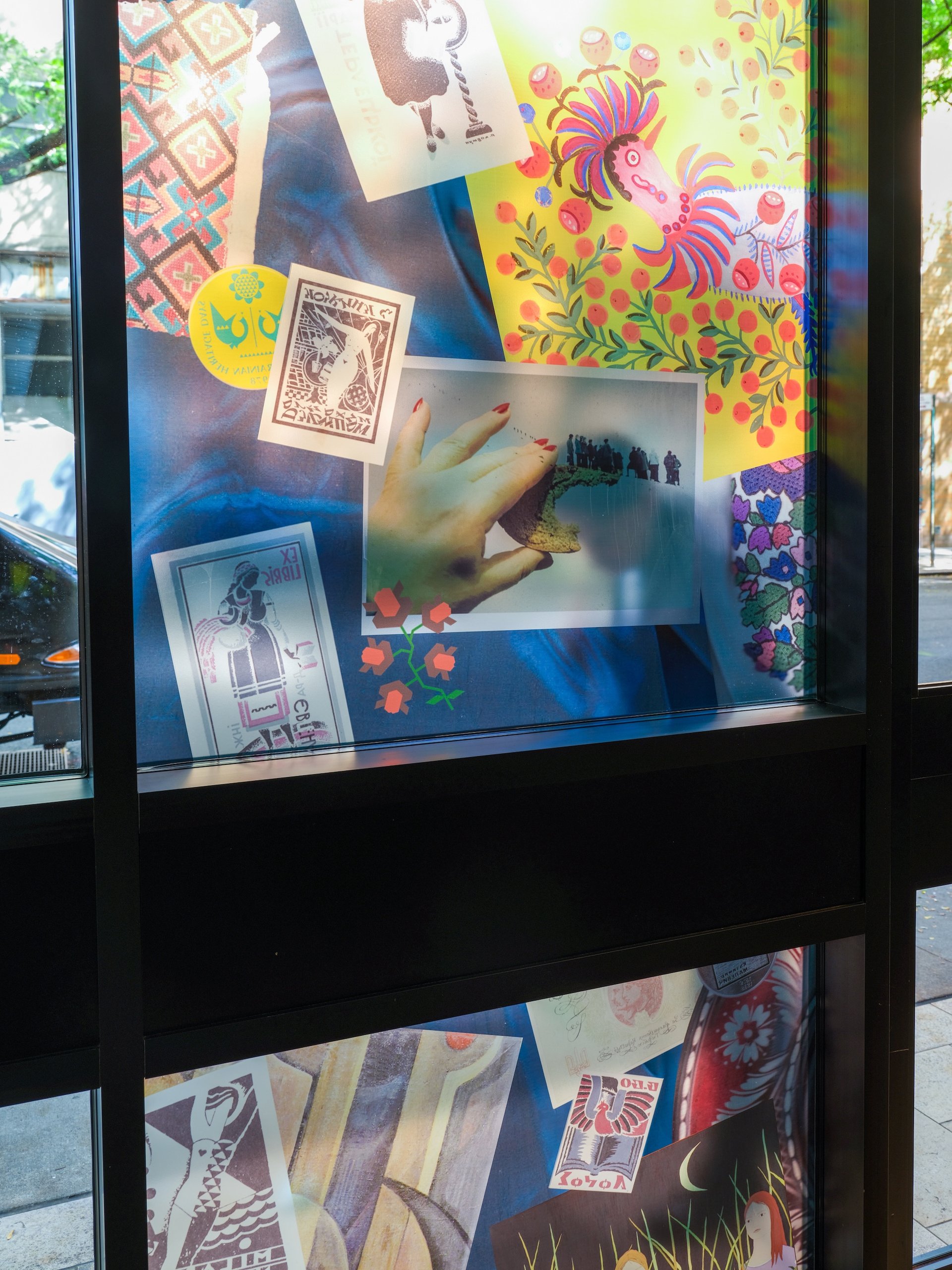
Installation of Memory Collage: Materials from The Ukrainian Museum Collection by Molly Gochman Image courtesy of the artist. Photograph by Alex Mctigue
Gochman’s series was initially inspired by her transformation of time-damaged Kodachrome slides images of her mother into works of art for her 2009 exhibition Spring, which examined themes of memory and rebirth.
“I wanted to create these ways that people could share their memorabilia and we could project that and collage it together,” she told The Art Newspaper in a video interview. A framed letter typed by her father was visible behind her, illustrating the artist’s connection to family artefacts. Gochman’s ancestors fled pogroms in Talne, Ukraine.
“There are people in the neighbourhood who have no idea the Ukrainian Museum exists,” Gochman said, in spite of the urgency created by Russia’s ongoing assault on Ukraine, its heritage and culture.She spoke of the need for awareness about Russian AI drones targeting Ukrainian civilians and the Russian kidnapping of Ukrainian children.
“Everything can be so numbing. Everyone has their own dramas and their own stories,” she added. “When people pass the museum and see Memory Collage, I think that they’ll feel awe because it will look like these windows have suddenly become stained glass overnight, and when the sun hits it the right way, it will project the images inside the museum. They’ll see there’s this unique flavour, unique style to Ukrainian design. Putin will say this is part of Russia. No. We’re a very unique country, with our unique culture. We are separate. We have our own culture and heritage.”
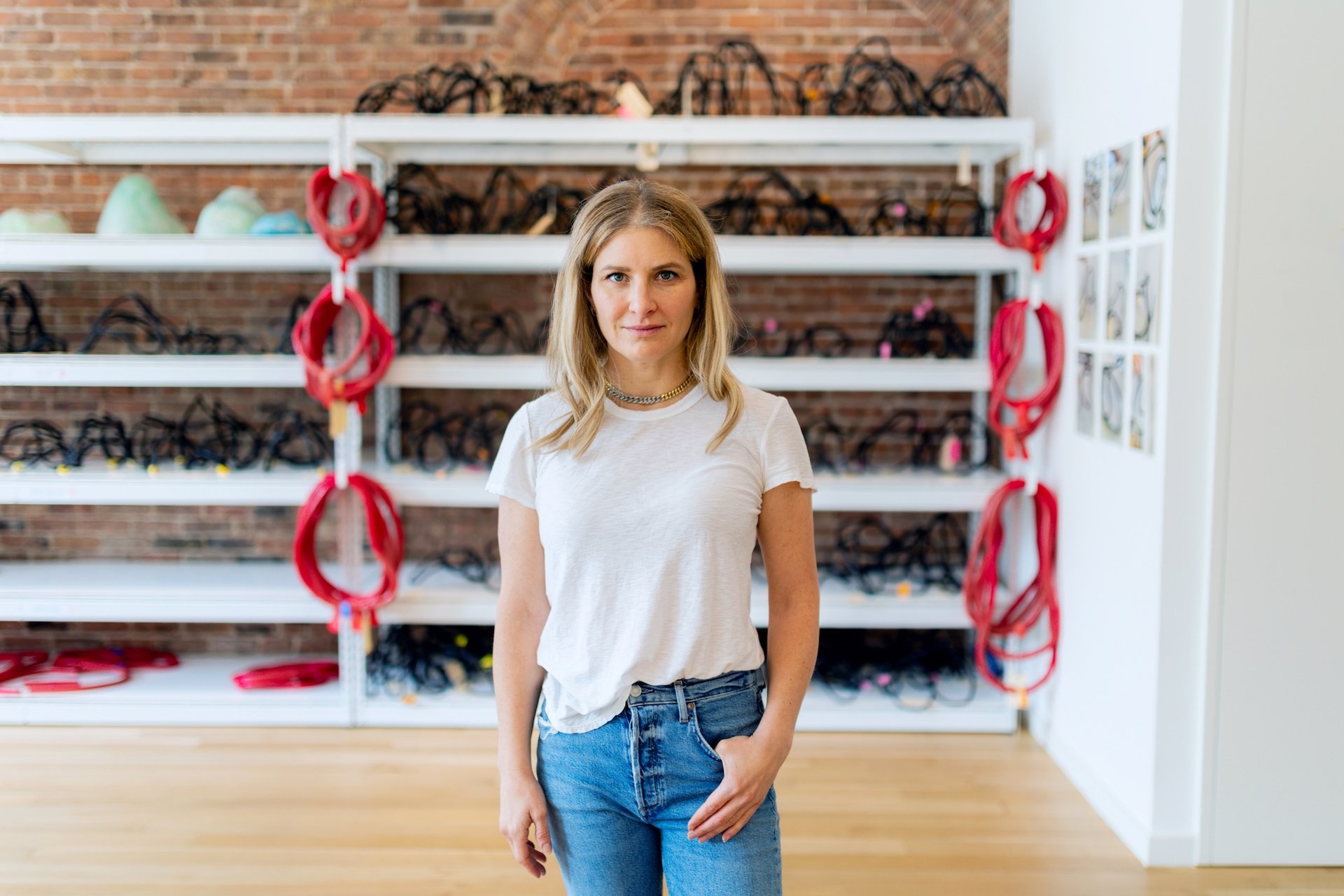
The artist Molly Gochman Photo by Aly Morrissey
Gochman is especially fascinated by the textiles and embroidery in the museum’s collection, “the imagining of the making, how that really brings you into reality” and their communal nature. “Weaving creates so much strength. As we become closer in relationship, we become so much stronger. That’s how Ukraine has managed to hold up to this behemoth [in the war with Russia]. They are so deeply tied with community. They’re like a team that really believes in what they’re doing together because they’re holding on to their culture and their families and their livelihoods. That stitching together, and that connecting, is creating something so much stronger than you would have with just individual strands.”
The Kyiv-born curator and cultural promoter Elena Siyanko, who previously led PS21 in Chatham, New York, is working to bolster the museum’s integration into the community, including through a new partnership with the neighbouring Cooper Union Schools of Art and Architecture.
“Molly Gochman’s project and work with our archive aligns with our current efforts to activate our lower-level gallery as a dedicated venue for collection- and archive-driven exhibitions,” Siyanko said. The museum’s “revitalisation of its lobby and street-level spaces as a community commons”, she continued, will include a 17 October “reading rave” showcasing Ukraine’s art publications and diaspora editions illustrated by artists such as Jacques Hnizdovsky.
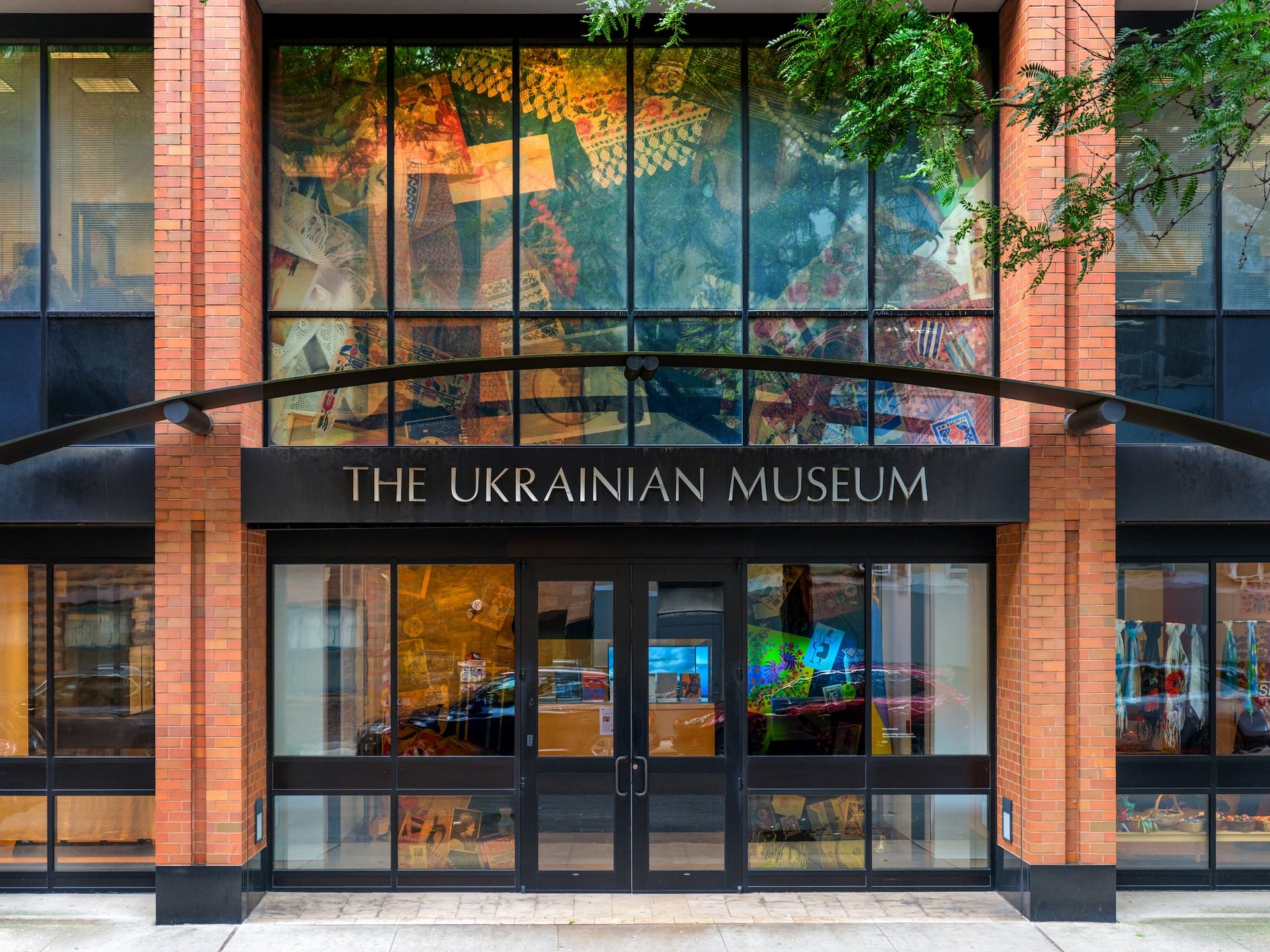
Installation of Memory Collage: Materials from The Ukrainian Museum Collection by Molly Gochman Image courtesy of the artist. Photograph by Alex Mctigue
Gochman also worked with Siyanko’s predecessor, Peter Doroshenko, to create UKR/RUS, a sculptural installation delineating a physical and metaphorical boundary between the countries. That experience introduced her to the depth of art and craft in the museum’s archives and its connection with the avant-garde. Those themes continue in the museum’s current exhibitions, including The Ground Shifts Beneath Our Feet by the Ukrainian contemporary artist Zhanna Kadyrova and A Living Canvas, which traces the connection between fine art and folk art.
“I love that with the Memory Collage we’re going to be able to connect people’s treasures with these higher treasures and with craft, and all of that can be coexisting, and intertwining,” Gochman said. “It would be really interesting to see how that shard, this little piece of something that was, could be exhibited along with a more contemporary photography coming out of Ukraine.”
Siyanko concurs: “Our vision positions the museum at the forefront of preserving and strengthening Ukrainian cultural agency, where Ukraine is seen not as a monolith but as a cosmopolitan culture that takes in other cultures and gives in return.”