

A criminal investigation amid a family crisis casts a dark shadow over the illustrious history of the French studio Ateliers Hugo, which produced jewellery and silverware created by major artists of the 20th century. According to a legal source, the court of Aix-en-Provence in the south of France has opened an investigation following a complaint by the Picasso family.
On 10 March, Paloma Ruiz-Picasso, representing the nine heirs of the Spanish artist, filed a complaint alleging “fraud, counterfeiting, forgery and concealment of these felonies”. The file does not name the alleged perpetrators, and their identity is not presently known. The following month the Picasso family published a formal warning in the Gazette Drouot, titled “Hugo silverware”. It urged “all art market professionals and buyers to exercise the utmost vigilance”, following the appearance of what it described as “a large number” of illegitimate silver plates and gold medallions, valued at millions of euros.
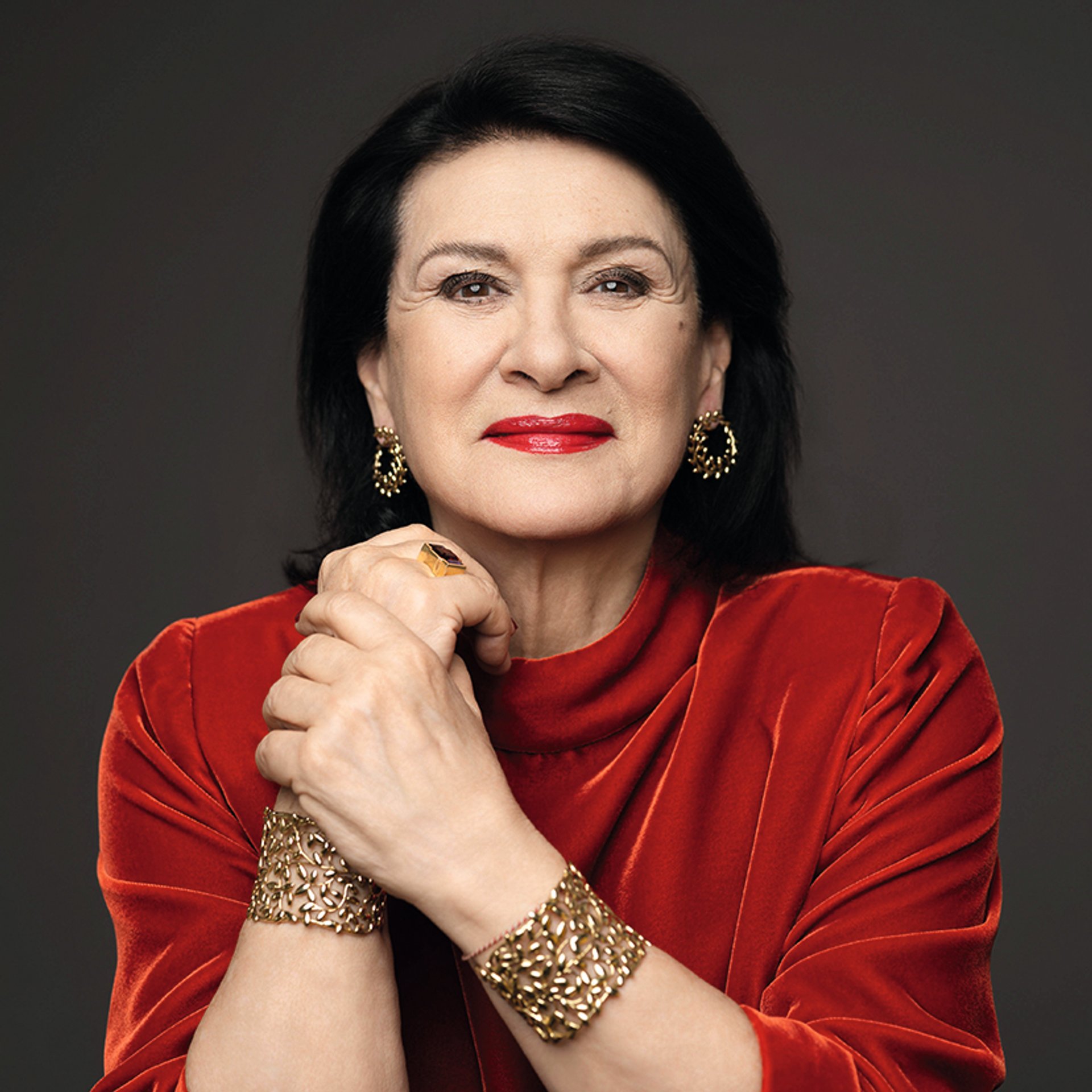
Paloma Ruiz-Picasso, the daughter of Pablo, has filed a legal complaint on behalf of nine family members of the artist about the allegedly unauthorised works © Studio Cabrelli
The title refers to Ateliers Hugo, a goldsmith based in Aix-en-Provence. It was founded in 1933 by François Hugo (1899-1981), the great-grandson of the famous French author Victor Hugo. In 1955 Pablo Picasso, who since 1947 had created a variety of ceramics in Vallauris on the French Riviera, commissioned François Hugo to produce plates and dishes from similar designs in fine metals, using the traditional technique of repoussé. Later, the workshop reduced them into medallions and earrings. With the help of his brother, the painter Jean Hugo, who introduced him to artistic circles, François made jewellery designed by Salvador Dalí, Max Ernst, André Derain, Jean Arp, Jean Dubuffet, Roberto Matta, Jean Lurçat and Dorothea Tanning. In 1975, his son Pierre Hugo (1947-2023) took over the company. Pierre was followed by his son Nicolas (born 1989).
Members of the Picasso family and their lawyer, Jean-Jacques Neuer, who filed the complaint, declined to comment to The Art Newspaper. But their complaint alleges that “it has been discovered that the moulds of Picasso’s works were reused for unauthorised productions of silver and gold pieces, followed by duplicates, some of them bearing three times the same number, and unnumbered specimens”.
According to a source close to the investigation, the Picasso Administration, which represents the family, says it has discovered at least 17 complete or almost complete suspicious collections, amounting to hundreds of pieces. The first red flag was raised by the Museum of Old and New Art (Mona), a private Australian museum in Tasmania. According to this source, in May 2023 the museum informed the Picasso Administration of its doubts over plates it had bought at Sotheby’s in London. An auction catalogue of 13 October 2021 describes a “complete set of 24 silver plates” bearing the signature of the artist, completed with an additional “unnumbered proof of Visage aux mains”. The pieces were “accompanied by a certificate of authenticity issued by Pierre Hugo”. The lot was sold for £1.4m. Sotheby’s declined to comment for this story.
According to the legal files, the seller was the British dealer Mark Maurice, from a now dissolved gallery named Masterpiece. The source close to the investigation says the dealer allegedly produced documents showing that he had commissioned a set of plates and a set of medallions from the Ateliers Hugo between 2017 and 2020. Mark Maurice indicated he was “unable to respond” to The Art Newspaper’s inquiries “due to strict non-disclosure agreements in place”.
In summer 2023 the ceramics museum in Vallauris, Musée Magnelli, exhibited another collection of 24 silver plates as well as gold medallions attributed to Picasso.
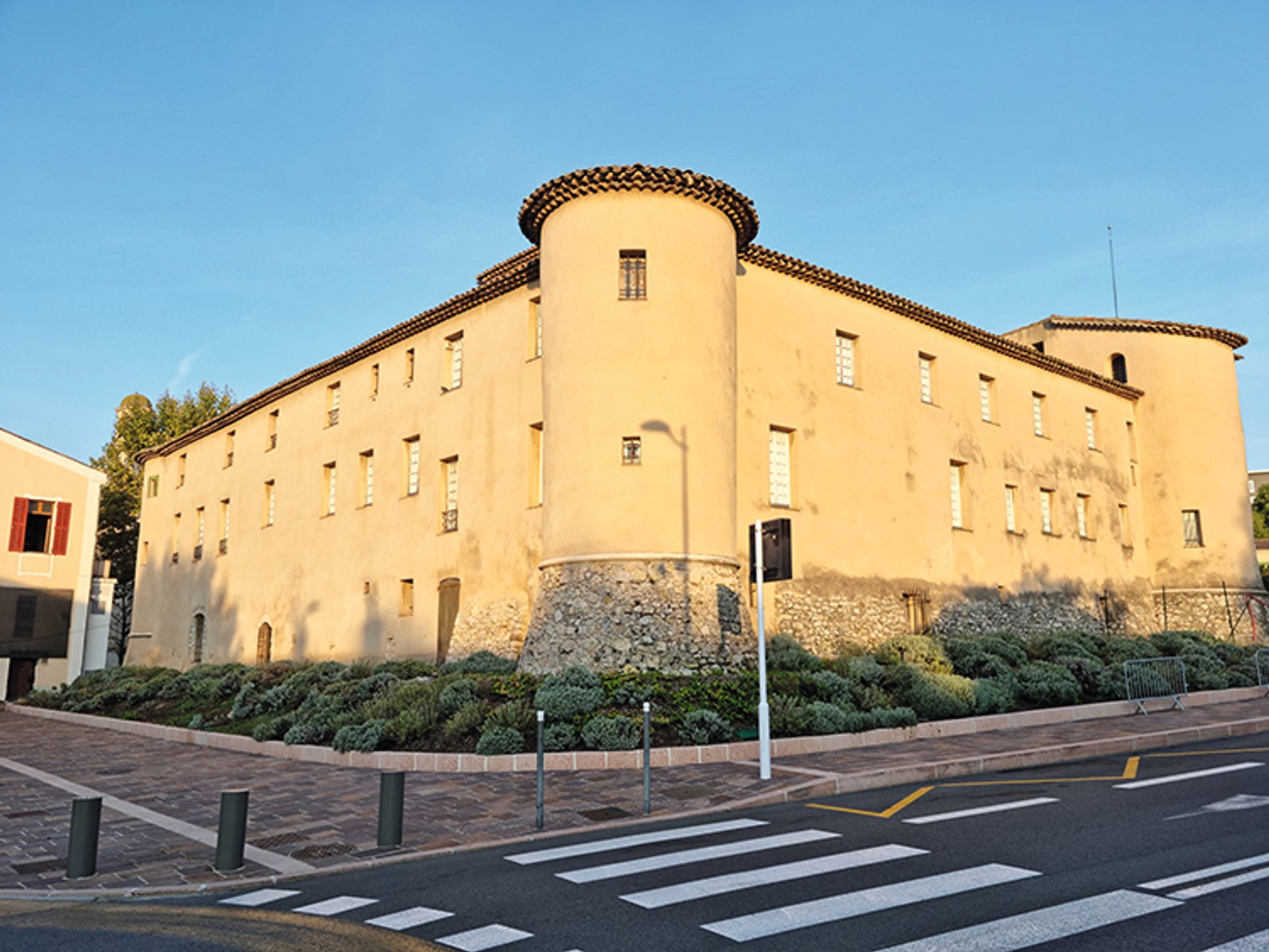
In 2023, the Musée Magnelli in Vallauris exhibited plates and medallions attributed to Picasso Travelworld
According to the legal files, the Picasso Administration protested, having found that they bore no number, mark or punch, as legally required. Nicolas Hugo acknowledges these facts, but tells The Art Newspaper that the works exhibited at Musée Magnelli were so-called “author’s copies, made for the exhibition, duly indicating in the catalogue that they were not for sale”. He adds that he “recovered them and had them melted after the show”. Representatives for the museum did not respond to a request for comment.
In June 2023, as reported in the legal files, the French branch of the auction house Bonhams made a request to the Picasso Administration for the right to reproduce silverware for a catalogue. The auction house was planning a sale of 95 lots from the Ateliers Hugo collection, including works by Ernst, Derain and Cocteau, valued between €400 and €50,000 each. The most valuable were 59 pieces, “made by” or “after” Picasso.
Works withdrawn from Bonhams sale
On 26 September 2023 Bonhams was informed by the Picasso Administration that these pieces were considered to be “unauthorised” editions. The auction house then decided to “delay the whole sale”, just two days before it was due to take place. Nicolas Hugo acknowledges he “did initiate, in the wake of good results obtained at Bonhams UK, this sale of pieces”, produced, he says, by his “father and grandfather”. But, he adds, “When we were informed by dealers of the presence of possible duplicates, I agreed to withdraw the sale and collaborated with the Picasso Administration to identify them.”
Bonhams declined to comment, but according to the source close to the investigation, the lots attributed to Picasso were sequestered when a British financial company, Suros Capital, tried to recover them as collateral for a €256,000 loan. A spokesperson for Suros confirmed the operation to The Art Newspaper, adding that “it was secured against not only the Picasso pieces, but a range of assets which are progressively realised, so the company expects to recover the loan in full”.
In November 2023, according to the source close to the investigation, a representative for Bonhams France informed the Picasso Administration that a Spanish collector contacted the auction house to sell 24 silver plates, estimated at £900,000. Again, the auction house refused on the basis of Picasso Administration’s doubts about the objects’ authenticity. In the legal files, the Picasso Administration claims the same collector had sold another set of 24 silver plates and one of 24 gold medallions in private sales through Bonhams in London in 2022. Neither the British auction house nor the Spanish collector made any comment.
The rights to reproduce the items disappeared with [my father and grandfather], so I have never minted any of Picasso’s creations
Nicolas Hugo, Ateliers Hugo
Nicolas Hugo, who says he has not been interviewed by the investigators, claims he has no knowledge of the proceedings and “is unaware of the content of the complaint” issued by the Picasso Administration. But, he says: “The criminal investigation can only deal with facts related to the time of my father and grandfather, therefore falling under the statute of limitations and concerning persons now deceased.” He adds that “the rights to reproduce the items disappeared with them, so I have never minted any of Picasso’s creations”, and he does not have the legal status of a goldsmith. However, he says: “I have signed some certificates of authenticity, but only to confirm my father’s own signature.”
In interviews with The Art Newspaper, Nicolas Hugo describes himself as a “self-taught art dealer”. When he was around 20 years old, he started to work as an assistant in galleries in Paris, before moving to London. He is now an agent for several artists and a curator. In 2022, the French magazine Les Hardis described him as a “mix of British and Saint-Germain-des-Prés charm”. “My father became very ill in 2018,” he told the magazine. “I had an epiphany. I decided to take over the workshop. I immersed myself completely,” and started to train in manufacturing jewels.
“From 2019,” he tells The Art Newspaper, “I became involved in the history of his workshop and helped my father to showcase this heritage, for memorial and commercial reasons. I set up exhibitions in places like Barcelona or Vallauris and initiated this sale of the fonds d’atelier at Bonhams Paris. I have not taken over my father’s company and was not his partner.”
Ateliers Hugo in limbo
Nicolas Hugo says: “There have been some duplicates on the market, dating from my father’s period, but I have no idea who had made them in the workshop.” He says he has “no idea who put a collection on sale at Sotheby’s in 2021” and knows “nothing of the three sets proposed by this Spanish collector to Bonhams in 2022 and 2023”.
The criminal investigation is still at the preliminary phase. It comes at a time when the company is already in limbo. Pierre Hugo died in October 2023 and his five children have turned down his inheritance. Nicolas Hugo’s brothers and sisters declined to comment to The Art Newspaper due to the ongoing investigation.
However, sources close to the case say that Pierre Hugo’s heirs’ inheritance came with a €2.5m tax debt. According to these sources, three of the Hugo siblings said in police interviews they were “not at all” aware of the conduct of the workshop by their brother Nicolas, who had succeeded their ailing father in 2019. The sources said the three Hugo siblings were on alert after learning that Bonhams Paris declined to sell the collection from the Ateliers Hugo in September 2023. According to the same sources, when Pierre Hugo died a month later, the three siblings went to the workshop and took 21 moulds of plates that they decided to hand over to the Picasso Administration. Three moulds from the set were missing and they did not find those for the medallions.
According to these sources, the three Hugo siblings explained to the investigators that, “knowing that the rights of reproduction were extinct, they wanted to be sure this would be respected”. The siblings also asserted that they “did not want in any way to be implicated in these operations and made it clear to the Picasso Administration”, according to the sources.