As 2026 dawns, we pay tribute to the artists, curators, writers, dealers and other art world personalities who died in 2025. Below is a selection of our obituaries for the year (click on the person’s name to read the original obituary).
January
Artist and activist Jaune Quick-to-see-Smith
Smith’s work often took on, critiqued, ridiculed and subverted the imagery of mainstream Americana as well as the US Modern art orthodoxy across paintings, sculptures, prints and more. She made works reminiscent of Andy Warhol that riffed on advertising iconography, intricate collages and transfers evocative of Robert Rauschenberg, and paintings based on the flag and map of the US that interpollated Jasper Johns.
Artist and film director David Lynch
In addition to painting and moving image work, Lynch pursued printmaking, sculpture and photography; in 2021-22, a survey of his photos travelled to institutions in Switzerland and Denmark. In photography, he told Time Out his biggest influences were William Eggleston, Joel-Peter Witkin and Diane Arbus on the occasion of a 2014 exhibition at London’s Photographers’ Gallery. “The art life is a great life,” Lynch told Artforum in 2019. “It’s coffee and cigarettes, maybe some red wine.”
February
Artist Mel Bochner
Bochner’s work attested to the originality, adaptability and intellectual rigour of art rooted in seriality, rules and information systems. His 1966 work 36 Photographs and 12 Diagrams consists of a grid of the titular 48 objects, depicting grids of numbers and photos of wooden cubes arranged in corresponding configurations. Another early breakthrough was his Measurement Room (1969), which debuted at Heiner Friedrich Gallery in Münich.
April
Collector and patron Guy Ullens
Baron Guy Ullens de Schooten, the art collector and patron who cofounded Beijing’s Ullens Center for Contemporary Art (UCCA) in 2007 with his wife Myriam Ullens, died on 19 April aged 90. Ullens became an enthusiastic supporter of Chinese contemporary art in its heady formative years in the 1980s and 90s. He would go on to accumulate a renowned collection of Chinese art, encompassing around 1,500 works by artists such as Huang Yong Ping, Qiu Zhijie and Cao Fei.
May
Curator Koyo Kouoh
Koyo Kouoh, a giant of the contemporary art world who tirelessly championed African artists and became the first woman from the continent to curate the Venice Biennale, which opens next May, died in May, aged 57. In Dakar, Senegal, she founded Raw Material Company, an independent art centre. In 2016, she joined the Zeitz Museum of Contemporary Art Africa in Cape Town, serving as curator and executive director.
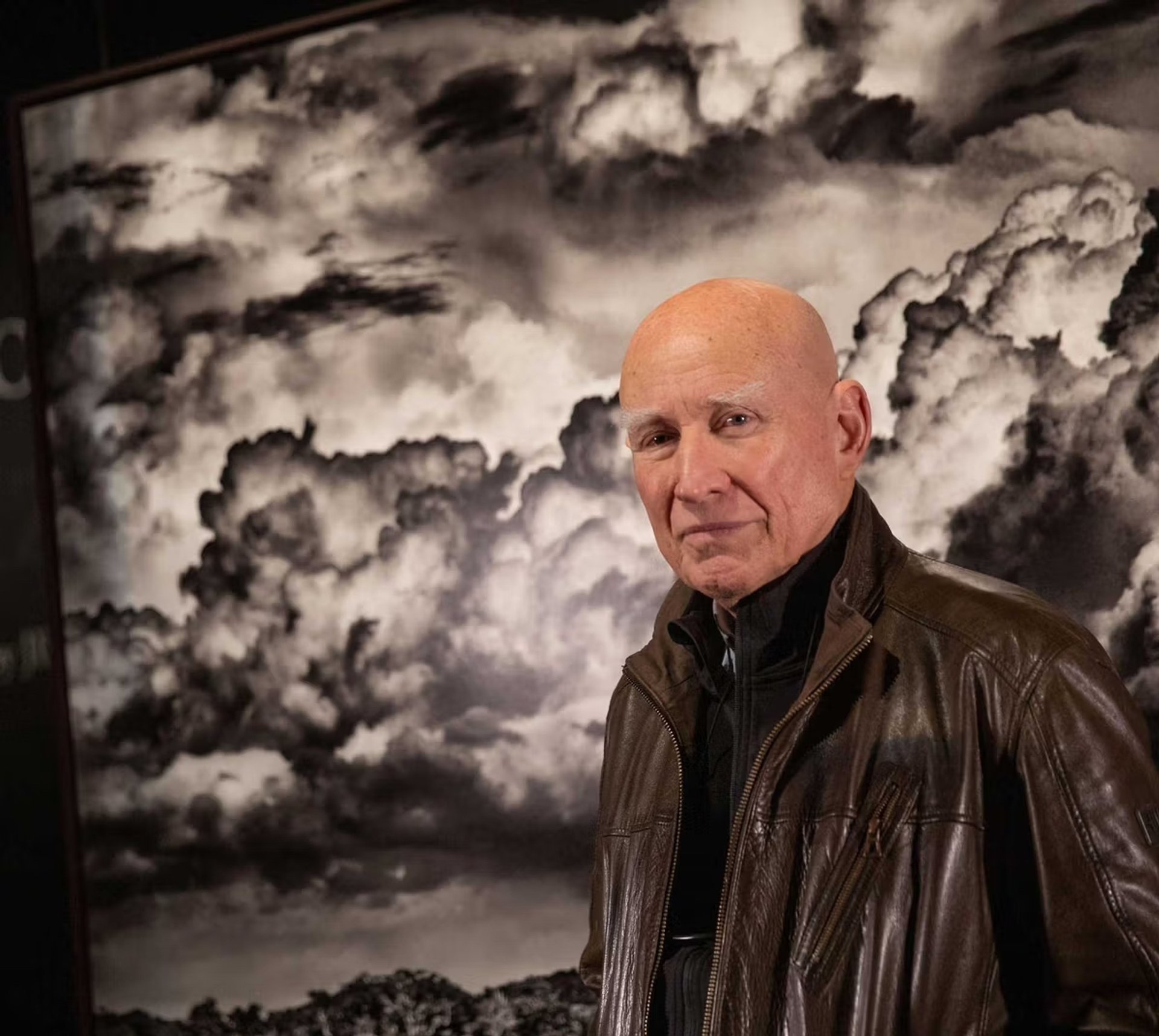
Sebastião Salgado at his exhibition Amazônia at the Science Museum in London in 2021
Photo: SMP News/Alamy Live News
Photographer Sebastião Salgado
Salgado will be remembered primarily for series such as Workers (1993), Exodus (2000) Genesis (2013) and Amazônia (2021). Each body of work captures people in extremis in dramatically panoramic settings. But he is perhaps best known for Gold (2019), in which he photographed more than 50,000 miners teetering on roughly assembled ladders and churning through mud and stone in the vast pit of Serra Pelada in the Brazilian Amazon.
Broadcaster Alan Yentob
Yentob joined the BBC in 1968 as a trainee—the only non-Oxbridge graduate after graduating from Leeds with a law degree—rising up the ranks to become editor of the established arts show Arena in 1978. Yentob was working on an Imagine programme dedicated to the artist Jenny Saville when he died; she told The Art Newspaper: “The contribution Alan made to British culture was immense. A wide range of international creativity became accessible to all through these documentaries.”
June
Sculptor Joel Shapiro
In the 1970s, Shapiro became known for his diminutive cast-iron house sculptures—melancholic, floor-dwelling subversions of sculpture’s stuffy gravitas in the white cube. Best known for his vibrant, isomorphic statues constructed from wooden beams, Shapiro straddled the line between abstraction and figuration in his art practice, creating humanoid monuments that feel as if they might jump, stride or topple at any moment.
Publisher Thomas Neurath
Although he may at first have had conflicted feelings about taking on responsibility for Thames & Hudson while still a very young man—following his father Walter’s early death in 1967—he brought a single-minded energy and intellectual bravura to the task of developing the firm’s lists, editorially, technically and commercially. His chief monument is the quality of the books published by Thames & Hudson, but the fact that it remains a wholly independent family firm is almost as impressive.
July
Artist Robert Wilson
Wilson was a prolific visual artist, creating drawings, sculptures and other objects to inform and accompany his stage productions; these were the subject of an exhibition at SFMOMA (San Francisco Museum of Modern Art) in 1991. In the 2010s he began creating his Video Portraits series, which debuted with an exhibition at the Musée du Louvre in 2013. The work features portraits of Lady Gaga in the style of famous paintings, including Jacques-Louis David’s The Death of Marat (1793) and Jean-Auguste-Dominique Ingres’s Mademoiselle Caroline Rivière (1793-1807).
August
Collector Doris Lockhart
Doris Lockhart, the US-born art collector credited with changing the UK contemporary art scene in the 1970s and 1980s with her then husband Charles Saatchi, died aged 88 in August. Along with her former husband Charles Saatchi, Lockhart brought leading postwar US artists to the fore and was also instrumental in recognising and boosting the notorious Young British Artists of the 1990s.
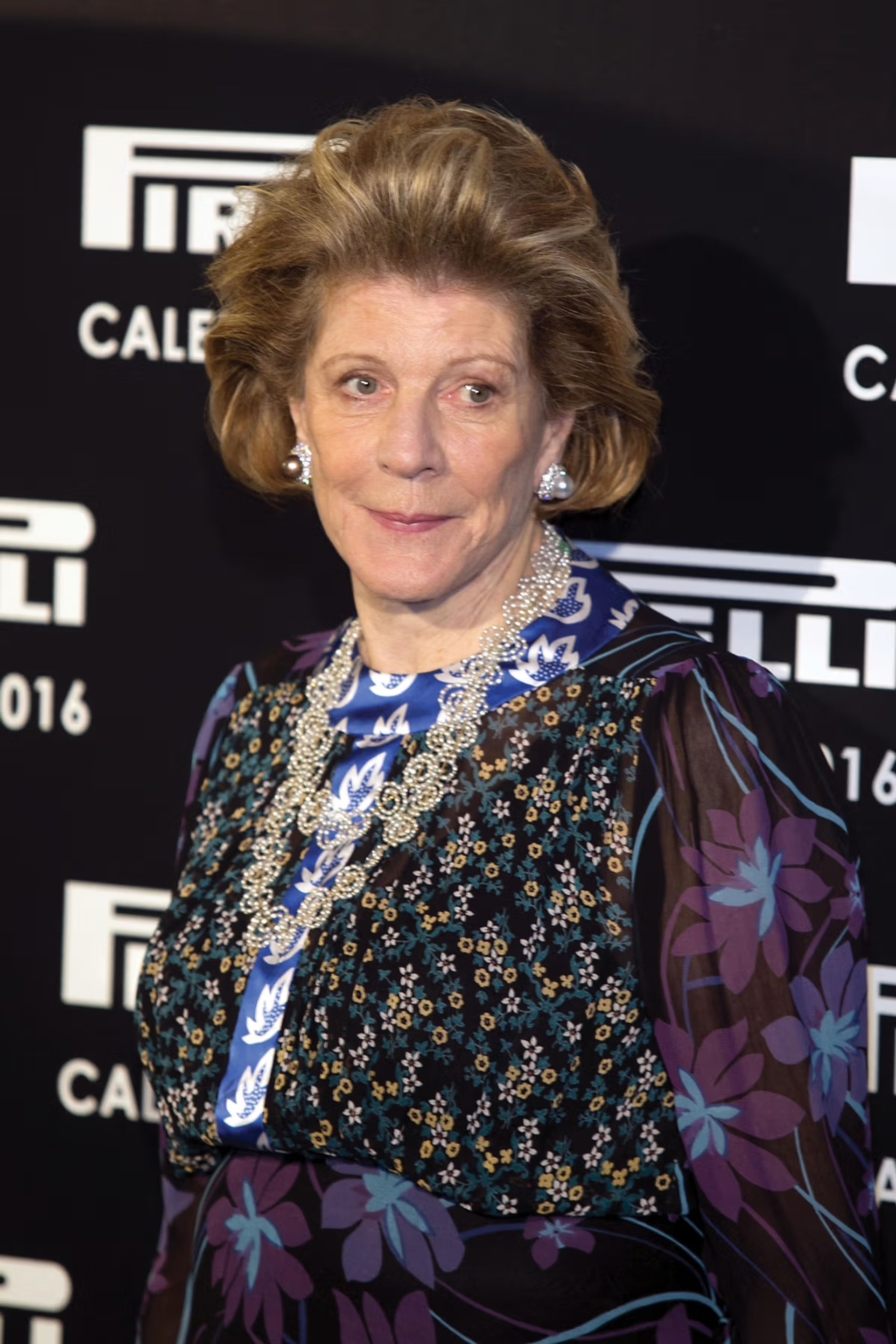
Collector and philanthropist Agnes Gund
Photo: Daniel Leal-Olivas / PA Images / Alamy Stock Photo
September
Philanthropist Agnes Gund
Gund, who died in September aged 87, was a leading figure in the art world who was widely celebrated for her significant contributions to cultural institutions and her efforts to use art as vessel for social change, including in education and criminal justice reform. “Aggie’s impact on our museums is immeasurable,” Christophe Cherix, the director of the Museum of Modern Art in New York, said in a statement forThe Art Newspaper. “She was a tireless champion of artists and a fierce believer in the power of art to change the world.”
October
Gallerist and critic Carla Stellweg
The founder and editor-in-chief of the bilingual art magazine Artes Visuales, Stellweg went on to become an early promoter of Latin American artists including Liliana Porter, Ana Mendieta and Luis Camnitzer through her New York galleries Stellweg–Seguy Gallery and Carla Stellweg Latin American & Contemporary Art. She was also a member of the faculty at School of Visual Arts in New York since 2005.
November
Artist Llyn Foulkes
A Renaissance man who resisted the rote taxonomy of genre, Foulkes was a painter, jazz musician, filmic muse and art world troublemaker, bucking the commercial commodification of his practice throughout his long career. His varied, anarchic practice, which he termed “consistently inconsistent”, did not always endear him to the art establishment, but his trailblazing legacy sets him apart as a paragon of originality.
December
Artist Arnulf Rainer
Born in 1929 in Baden, Austria, Rainer came of age in the aftermath of World War II as a restless enfant terrible who distanced himself from academic traditions. Throughout his career, Rainer resisted easy categorisation. Though associated at various times with Art Brut, Abstract Expressionism, and Viennese Actionism, he remained fiercely independent, sceptical of movements and labels alike.
Artist Ceal Floyer
Ceal Floyer became well known in the 1990s for her minimalist aesthetic that often played with scale, language and meaning. Examples include her early work Light Switch (1992–99), part of the Tate collection, made up of a projector beaming the image of a light switch onto the wall, and Nail Biting Performance (2001), in which she bit her nails into a microphone.
Photographer Martin Parr
Parr was one of the UK’s best-known photographers and one of the few practitioners of the medium who developed a profile far beyond the industry. He also led the pack of documentary photographers who, for the past 50 years, have sought to explore and reflect the identity of the British Isles through what sometimes can appear—intentionally so—as happenstance snap.
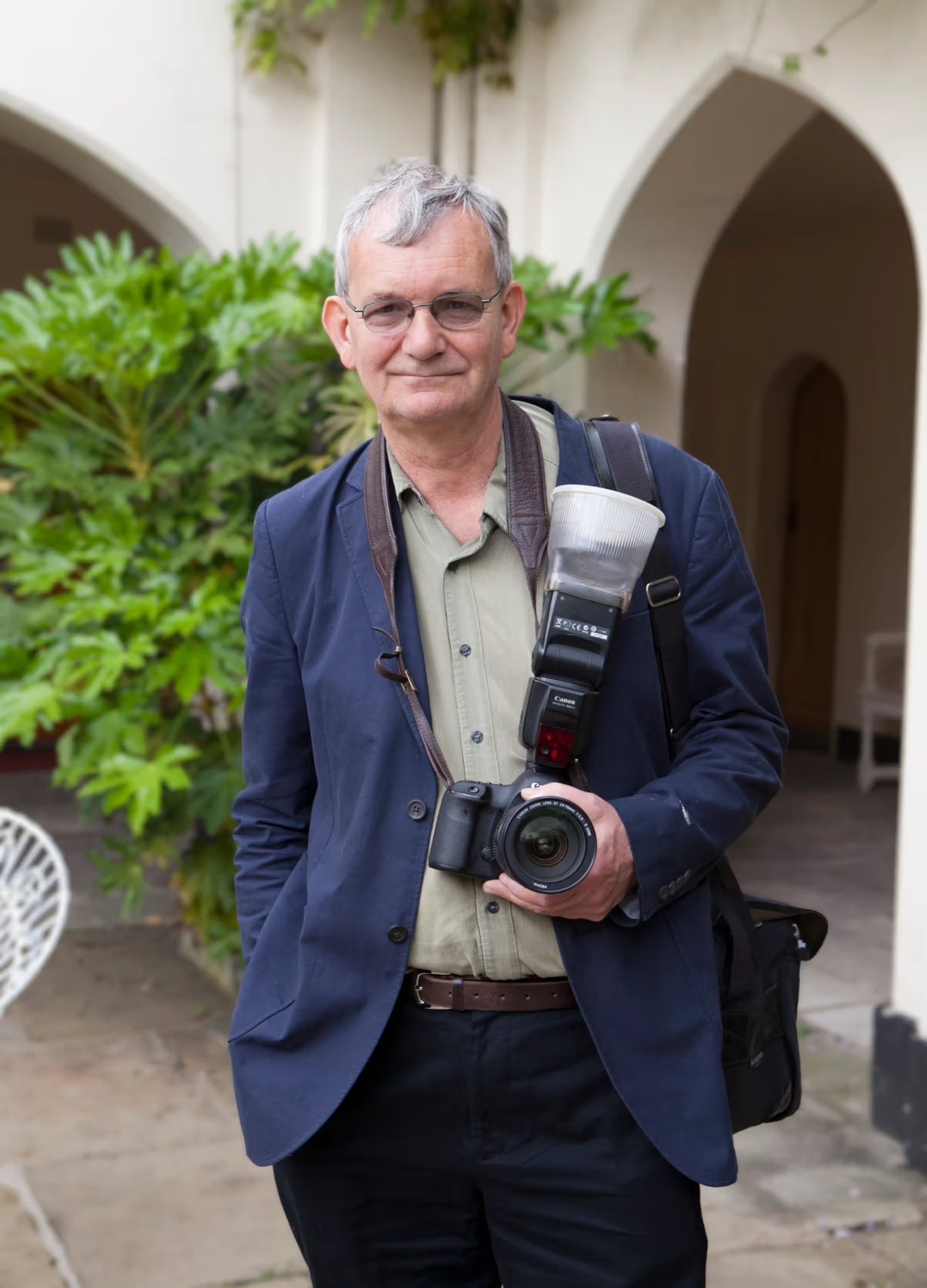
Martin Parr in 2015
Photo: David Owens