
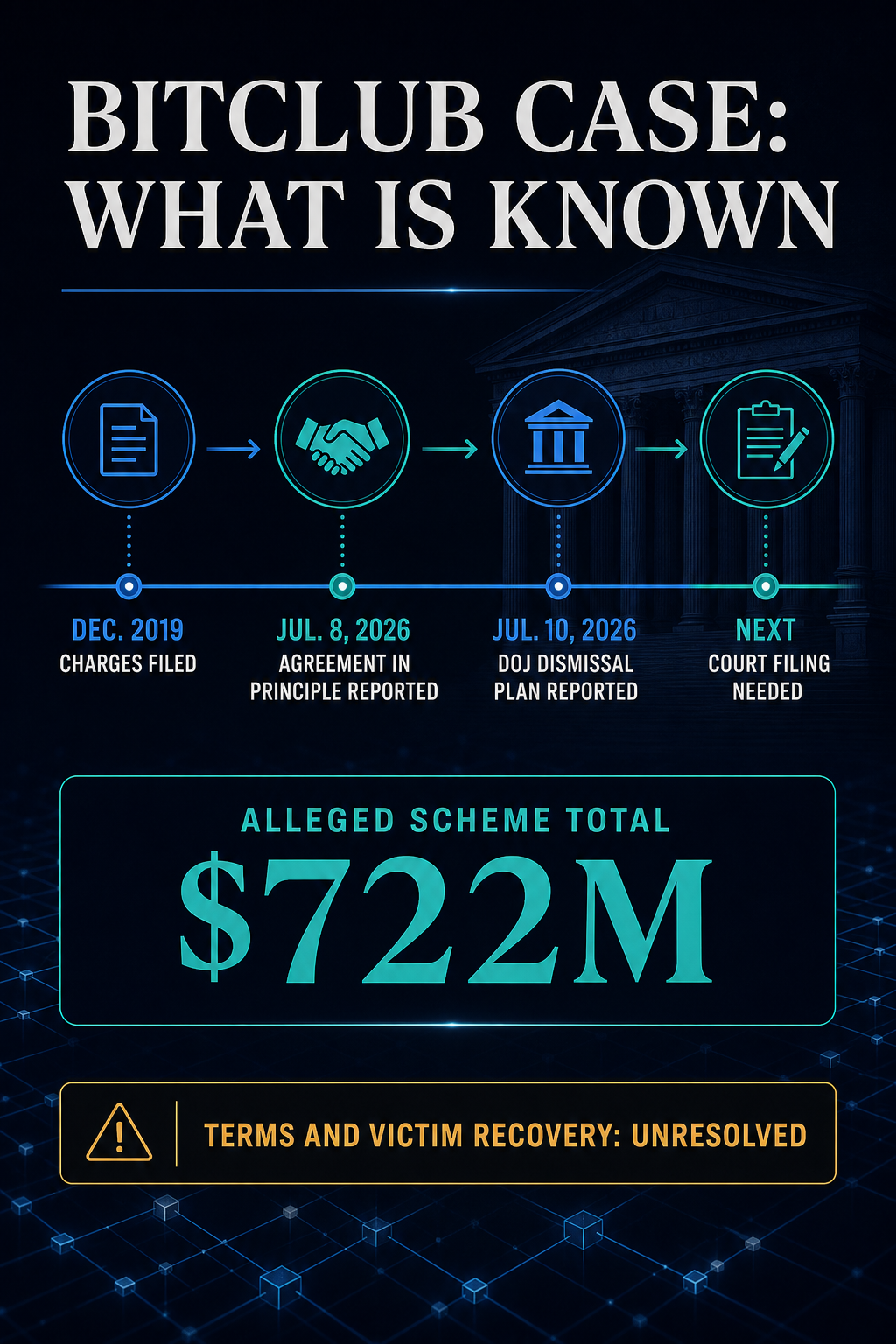
The Justice Department plans to end its criminal case against Matthew Goettsche, who prosecutors accuse of helping run the BitClub Network fraud scheme, before an October trial.
Bloomberg Law, citing two people familiar with the matter, said the deputy attorney general’s office instructed prosecutors in New Jersey to seek a dismissal with prejudice.
It also reported that Goettsche’s lawyers told the court on July 8 that the parties had reached an agreement in principle to resolve the pending charges and needed time to finalize terms. The DOJ’s dismissal plan has yet to be formally presented to the court.
That leaves alleged victims awaiting the terms that would determine what happens to the case and any funds. Final deal requirements, the status of any dismissal motion, and the disposition of any money remain undisclosed.

The $722 million figure and the recovery question
The DOJ’s BitClub case page says Goettsche and other defendants were charged in a scheme that allegedly obtained at least $722 million from investors between 2014 and 2019. The government alleged that BitClub sold shares in purported crypto-mining pools, used false or misleading mining-earnings figures, and rewarded recruitment of new investors.
Publicly available terms leave the victim’s loss, forfeiture, restitution, and Goettsche-specific recovery amounts undisclosed.
The DOJ directs people who believe they were victims to an FBI questionnaire, while leaving any award or distribution process undisclosed. A DOJ spokesperson told Bloomberg Law that the government was recovering a substantial amount owed to investors. A final agreement could clarify whether forfeiture, restitution or separate civil claims remain in play.

The possible reversal also follows a 2025 DOJ memo that said the department would stop using criminal cases to impose regulatory frameworks on digital assets and would review ongoing matters for consistency with that policy. The memo said inconsistent investigations should be closed.
The same memo told prosecutors to prioritize cases involving people who victimize digital-asset investors. Without public dismissal terms or a stated rationale, however, it remains unclear how the reported decision fits that priority.
The next filing may show whether prosecutors move to dismiss the case before the October trial. If they do, any agreement or court order could also shed light on what happens next for restitution, forfeiture, or other efforts to recover victims’ funds.