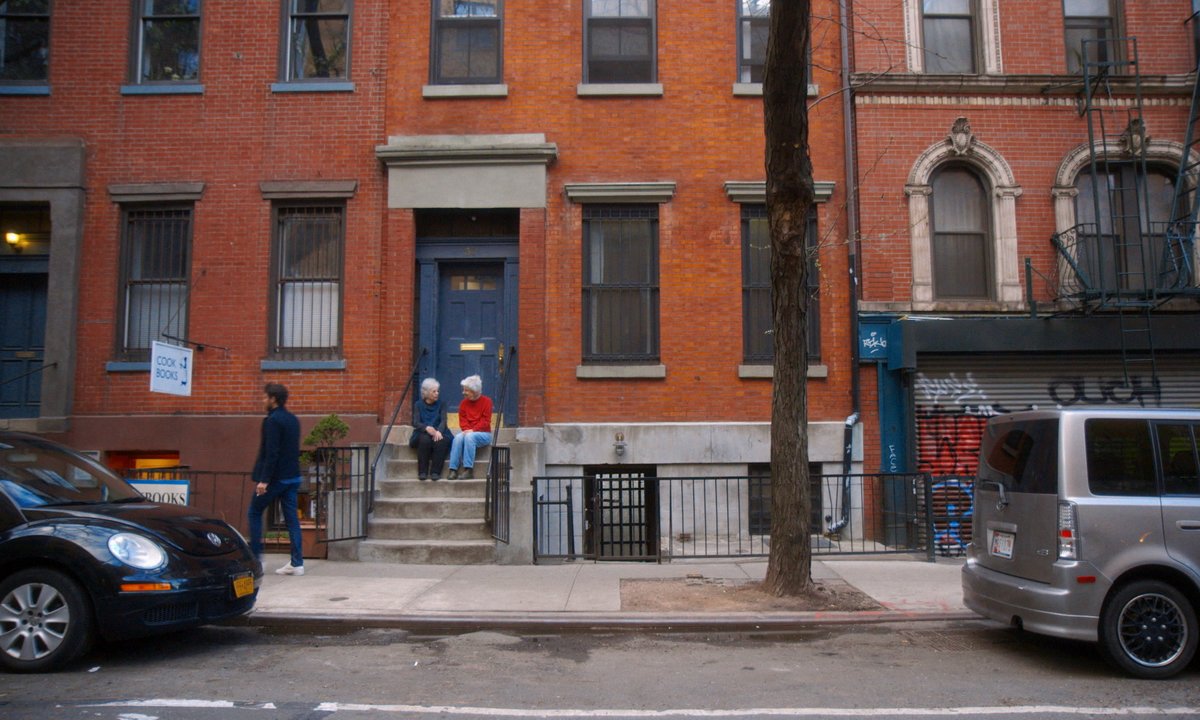


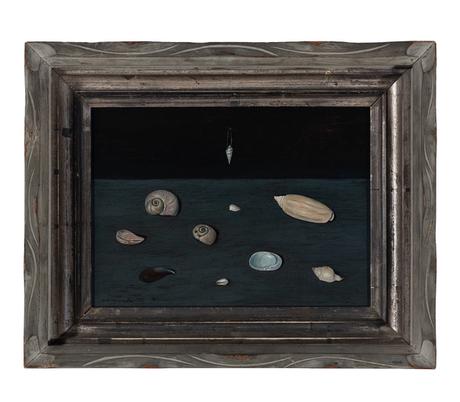
It is the stuff of dreams for a treasure-hunting flea market buyer. Or, in the words of the auction house that sold it on Thursday, “the little painting that could”.
On Thursday (1 October) at Freeman’s auction house in New York, a painting by the once-obscure figurative painter Gertrude Abercrombie (1909-77), which was bought at an estate sale in Michigan last summer for a mere $30, blew past its high estimate of $200,000 and ultimately sold for $1.3m.
The premium inclusive-price, paid for the 8in-by-11in painting titled Alderman Merriam’s Shells (1951), marked a new world auction record price for the artist. It represents a 33% jump from her previous auction record of $1m, achieved at Sotheby’s by Message for Mercy (1950), also sold in New York, last November, according to data website Arthur Analytics. The auction high for the artist has shot up in recent years. As of early 2025 the secondary-market record for her work was still under $1m, at $864,000.
“Keep going to those estate sales,” said auctioneer David Weiss, a Freeman’s senior vice president, at the start of the bidding. Even the low end of the presale estimate, at $150,000, represented a price 5,000 times what the lucky eagle-eyed buyer got it for from the estate sale.
Swapped for surgical services
Following a peripatetic childhood trailing her two singer parents, Abercrombie eventually settled in Chicago’s Hyde Park neighbourhood, where she was a key figure in a vibrant group of artists and musicians. The artist counted famous jazz musicians Dizzie Gillespie and Charlie Parker as personal friends.
She had traded Alderman Merriam’s Shells to a doctor named John Reynolds in Kalamazoo, Michigan, in exchange for unspecified surgical services rendered to her. Reynolds was the only owner, as confirmed by expert Susan Weininger, as far back as the early 1980s. He loaned it to several important museum shows but the work eventually vanished into his estate.
Freeman’s head of post-war and contemporary art Zack Wirsum described his reaction upon first seeing an image of the work as “gobsmacked”. It was the weekend of 4 July, and he was preparing to go on a hike in the woods of Hot Springs Mountain in Arkansas with his family.
“I got an email saying, ‘found Gertrude Abercrombie painting’. I get a lot of those, so I didn’t have high hopes,” Wirsum tells The Art Newspaper. “As soon as I clicked on the image I think I exclaimed an expletive, and I knew that it was just an incredible example by her. And one I had never seen.”
Abercrombie never really had real gallery representation—some of her works were displayed and sold at department stores such as Marshall Fields—but the paintings, often depicting lone figures and objects against eerie backdrops and floating, oddball elements, mesmerised many viewers and drew a devoted, if quite regional following.
A 2018 exhibition organised by the curator Dan Nadel at the New York gallery Karma, helped jumpstart interest and was followed by an acclaimed show at the Elmhurst Art Museum, outside Chicago, organised by Jenny Gibbs. In a previous deep dive into Abercrombie’s art, Nadel said her work had “sparked something” and marked a “kind pop magic moment in the Midwest” in the years following the Second World War.
Following the record-smashing sale, Wirsum said in a statement: “No fairytale would be complete without a storybook ending.” He called the result “as happily ever after as it gets”.
Wirsum, who is the son of the famous Hairy Who artist Karl Wirsum, added that he and the auction house team are “even happier for our eagle-eyed consignor who saved this masterpiece from staying forever lost to time”.